A bank can change its logo in an afternoon. Changing what sits on its balance sheet takes more nerve. In September 2026, United Community sold its Navitas equipment finance business for roughly $2 billion and used the moment to overhaul a portfolio of low-yielding securities. For a company whose name promises familiarity, it was an unusually revealing act of subtraction.
- A Southeast bank for households, business owners and borrowers, with national SBA lending.
- Its proposition: digital convenience backed by people who know the local market.
- Its latest test: accept a visible restructuring cost to concentrate on core banking.
The question behind the transaction belongs to more than banking. When an organization grows, which parts make the original promise more useful? Which parts merely make the organization larger? United has spent decades working through that distinction. Now it has put some expensive arithmetic beside the answer.
A hometown becomes a footprint
The banking business began in 1950 as Union County Bank in Blairsville, Georgia. Jimmy Tallent, who joined in 1984 and later led the company, helped turn a small local institution into a regional one. Acquisitions supplied new customers, new bankers and new markets. The 2015 Palmetto Bank merger deepened its presence in South Carolina’s Upstate.
Greenville eventually became headquarters. The geography matters: United’s branch business occupies Alabama, Florida, Georgia, North Carolina, South Carolina and Tennessee. This is a regional bank with a national SBA lending franchise. Someone looking for a branch on every American business trip would be shopping for a different network.
The company’s familiar slogan, “The Bank That SERVICE Built,” sets a demanding standard. Service is easy to promise when a bank has one office. Across an acquired network, the customer has to experience it again at the next branch, on the next call and after the next systems conversion.
The app handles Tuesday. The banker handles the exception.
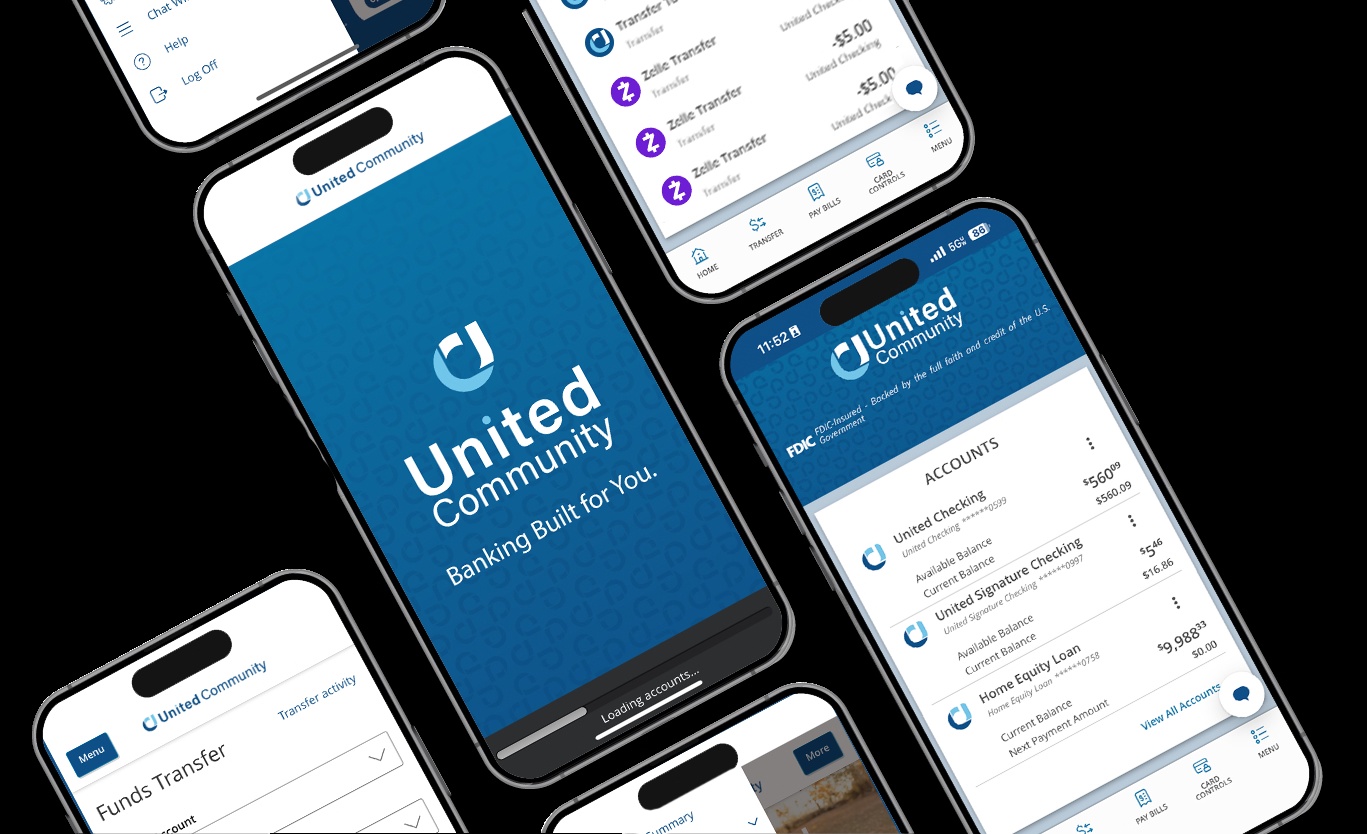
For households, the offering is recognizable: checking, savings, certificates of deposit, home loans, cards and wealth services. Mobile banking supplies check deposits, bill payments, alerts and card controls. These are practical conveniences. A customer should not need an appointment to find out whether a payment cleared.
The more interesting proposition appears when the routine breaks. A family needs to understand construction financing. An owner needs working capital before customers pay their invoices. A business selling overseas needs help with foreign exchange or a letter of credit. United combines deposit accounts with specialists who can address those less ordinary problems.
For businesses, treasury management is part of that usefulness: collecting money, paying suppliers, managing liquidity and controlling payment fraud. United also offers SBA-backed financing and identifies itself as a Preferred Lender. Its published guidance describes a typical SBA process of 60 to 90 days. Borrowers need documentation and patience; a government guarantee does not turn underwriting into an instant checkout.
Competitors such as Regions, Truist, First Citizens and SouthState pursue many of the same relationships. United’s difference is therefore a matter of execution: whether its regional scale supplies enough expertise while the customer can still reach a useful human. Its 2026 Southeast consumer satisfaction recognition from J.D. Power offers evidence for the service claim. It cannot guarantee anyone’s next experience.
“The Bank That SERVICE Built”United Community’s brand promise
The eight-dollar detail
Consider United Checking. In October 2026, the published terms listed $50 to open the account and an $8 monthly service charge, waived through eStatements or a qualifying direct deposit each statement cycle. The opening deposit remains the customer’s money. The recurring charge is the cost to examine.
That distinction makes comparison less glamorous and more useful. Someone comfortable with electronic statements can have a different outcome from someone who ignores the waiver. Eligible accounts also offer complimentary Greenlight access, adding a family finance app and children’s debit cards through a partner. The sensible question is whether these conditions fit the household’s habits.
United earns money through the spread between what it receives on loans and investments and what it pays for funding, alongside service fees. The relationship model connects several needs within one institution. Its economics still depend on credit quality, deposit costs and interest rates. Friendly service cannot cancel those variables.
The business that became too much of the business
Navitas makes the limits concrete. United’s September investor presentation said the subsidiary had reached an internal concentration limit of 10% of the loan portfolio. It also accounted for approximately half of United’s net charge-offs from January 2025 through August 2026. Those figures explain the decision more precisely than a general announcement about focus.
The sale created cash and capital flexibility. United then replaced long-duration, low-yielding securities with shorter-duration investments offering higher yields and paid down borrowings. The old portfolio’s slow income had become costly in a changed rate environment. Management chose to recognize losses and change the assets rather than wait for time to do the work.
Strategy has an entry price. The quarter recorded a $139.7m GAAP net loss.
The bill was substantial. Third-quarter results recorded a $366.1 million securities loss, partly offset by a $62.2 million Navitas sale gain. The company reported a $139.7 million GAAP net loss. Its separately adjusted operating profit was positive. Readers should keep the accounting result and management’s adjustment distinct.
A useful idea, with conditions attached
What can another company copy? Set a concentration limit before success makes the exception tempting. Let a profitable sale finance an overdue simplification. Keep investing where customers already understand the offer. United’s Peach State acquisition in Georgia and October additions to its international banking team point toward greater depth within its existing relationships.
The approach requires capital to absorb a reset and enough demand to put released resources to work. It becomes less convincing if fresh lending sacrifices standards or customers cannot get the promised attention. Higher yields alone do not establish a better bank.
There is a smaller, more accessible idea in its foundation. Employees nominate nonprofits where they volunteer. By September 2026, it reported $2.96 million in grants. That gives “community” a useful mechanism: people close to a problem help direct resources toward it. United’s next chapter will depend on whether its banking decisions stay comparably close to the customer.
Banking & products ↗ · Newsroom ↗ · Product demos ↗ · YouTube ↗