Four thousand people is a peculiar number with which to begin a bank story. It is too many for a founding team, too few for a mass market. Yet roughly that many local shareholders supplied nearly $50 million to help launch TowneBank. On April 8, 1999, three offices opened. Before the bank could make its case across a desk, thousands of neighbors had already made a financial commitment to it.
- Local bankers anchor a regional business serving households, companies and institutions.
- Mortgages, insurance, wealth and real estate extend the relationship beyond a checking account.
- Acquisitions add reach. Shared systems determine whether the service keeps up.
That beginning suggests a useful way to read the company today. TowneBank sells familiar financial products. Its more interesting proposition concerns who delivers them, and how much that person knows about the customer. The question has become harder as the bank has grown: can familiarity survive a much bigger balance sheet?
01 / The person across the desk
Founder G. Robert Aston Jr. remains executive chairman. William I. Foster III, known as Billy, is president and chief executive officer. The institution they lead pairs business customers with local bankers and emphasizes local decision-making. It calls customers “members,” an unusually clubby word for a company whose shares trade on Nasdaq under TOWN.
That vocabulary does not change the ownership structure. It does describe the intended experience. A contractor needs financing that follows the rhythm of a project. A medical practice needs banking that accommodates a working business. A nonprofit needs dependable cash management. TowneBank advertises specialist knowledge across these sectors, alongside dealerships, maritime businesses, schools and government contractors. Knowing the industry gives the conversation somewhere useful to start.
Consider MEB General Contractors, a customer featured by the bank. Founder George Clarke describes bankers who can help with construction and development deals as well as a line of credit. The revealing detail is the range of questions brought to the same relationship. A business rarely encounters its financial needs in tidy departmental order.
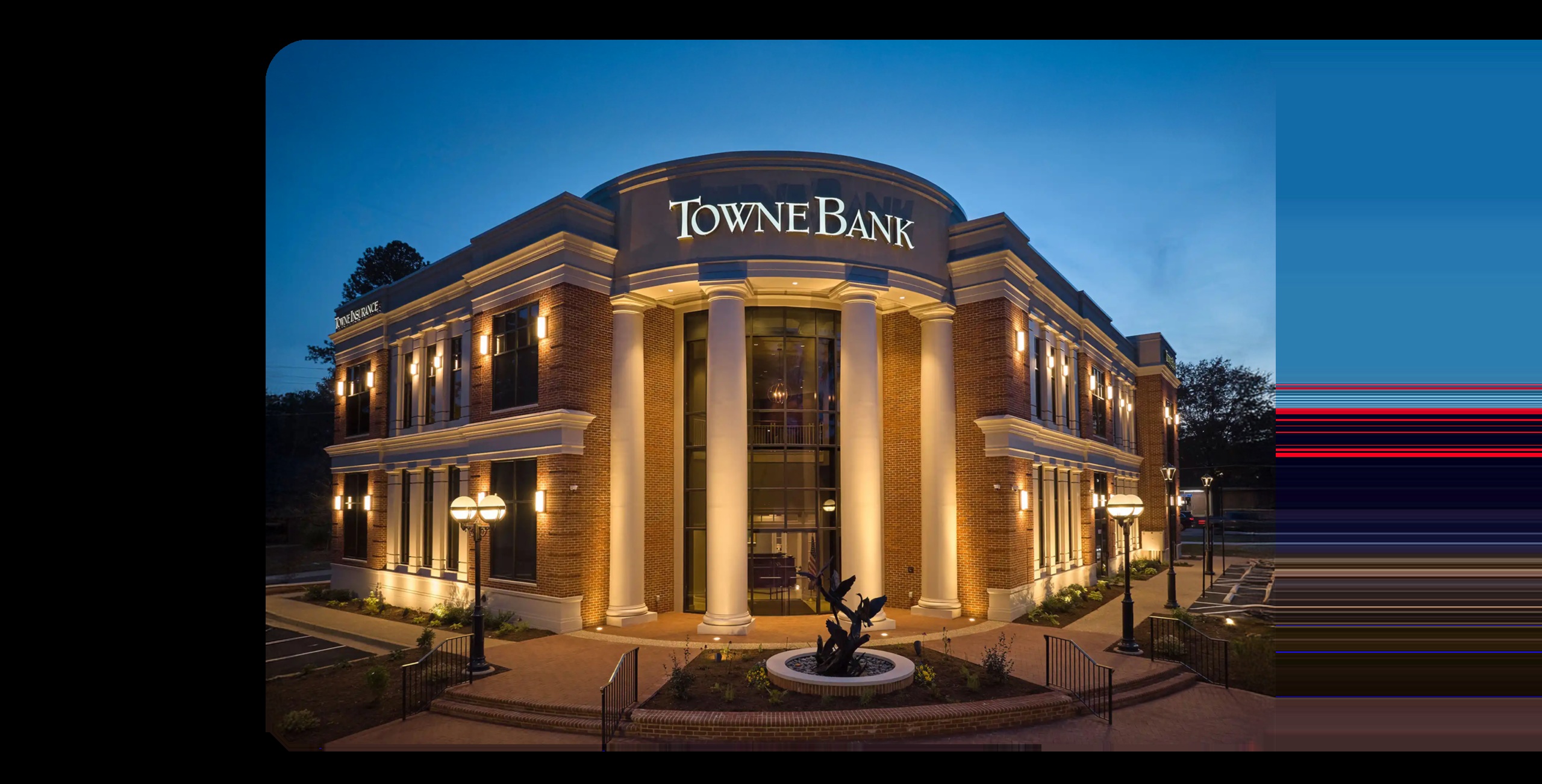
02 / One relationship, several businesses
The product list explains how that relationship can widen. TowneBank provides deposits, consumer and business lending, and treasury services. Its affiliated operations add home loans, insurance, employee benefits, wealth management, trust services and real estate brokerage. Towne 1031 Exchange handles qualifying property exchanges nationwide. This is a regional bank with a financial services business surrounding it.
For a business owner, the appeal is practical. Borrowing for premises, protecting the business and planning personal finances may involve related decisions. Towne can introduce specialists within its wider family. That reduces the work of finding another provider, although customers still have reason to compare prices, terms and advice.
The economics follow two tracks. Loans generate interest income against the cost of funding them, including deposits. Other activities produce fees and commissions. In 2025, TowneBank reported $835.72 million in total revenues and $169.53 million in earnings. Its net interest margin was 3.40%, up from 2.87% in 2024. Relationships operate inside the ordinary arithmetic of banking.
03 / The trouble behind the warm welcome
Growth creates an awkward problem for a business built on knowing people. Internally, the company can become harder to know. A 2024 Baker Hill case study describes acquired banks using different loan origination methods, including spreadsheets and separate software. TowneBank needed common processes while preserving decisions made by bankers in the markets they served.
A selection committee evaluated alternatives. Conversations with other banks and attendance at Baker Hill’s user conference helped inform the choice of NextGen in 2022. Implementation proceeded in phases. The lesson is refreshingly mundane: local judgment benefits from consistent records and fewer repeated tasks.
Customer support had a parallel problem. In a 2025 Talkdesk case study, systems analyst Michelle Davis recalled departments operating separately. “Each specialized area” handled “only their specific inquiries,” she said. Towne built a unified Member Care team and introduced the platform gradually, beginning with core functions before adding more advanced capabilities.
“Start with core Talkdesk functionality”
Michelle Davis, TowneBank systems analyst
The case study reports a 23-second reduction in average handling time. Useful, but a narrower measure than customer trust. Its more transferable point is organizational: give staff access to the information required to solve a problem. Technology earns its place when the customer spends less effort explaining the same thing again. For another growing company, the sequence is worth copying: identify the handoffs, establish a shared record, train one team, then expand. A new platform needs an operating plan attached.
04 / How far can local travel?
The acquisition calendar gives that operating work urgency. Village and Old Point joined in 2025. Dogwood State Bank followed on January 12, 2026, extending TowneBank’s reach across the Carolinas. The closing announcement scheduled Dogwood’s core systems conversion for November. Legal combination and everyday integration are separate milestones.
Expansion has an immediate bill. In the second quarter of 2025 alone, TowneBank reported $18.74 million in acquisition-related expenses associated with Village and the then-pending Old Point transaction. Buying relationships involves paying for the machinery that will support them.
By June 30, TowneBank had $22.6 billion in assets. On October 6, it announced a proposed acquisition of blueharbor bank for approximately $154 million, targeting greater Charlotte and the I-77 corridor. Closing was expected in the first quarter of 2027, subject to approvals. The structure would retain blueharbor chief Jim Marshall as Piedmont regional president.
Keeping familiar leaders makes strategic sense. It also creates a test: shared infrastructure must work without making local responsibility ornamental. A customer seeking nationwide physical coverage may prefer a larger network. Someone choosing primarily on price may find a relationship less persuasive. TowneBank’s proposition depends on customers valuing access to people who understand their circumstances.
Community involvement gives those people another place to meet. Towne’s Going to Towne program supports volunteering and board service; its foundation funds local nonprofits. These activities put the bank in the institutions around its customers. The original shareholders backed a bank close to home. Expansion makes delivering that proximity a daily operating task.
Keep the conversation going
Explore the bank, try the tools, or hear from its members.