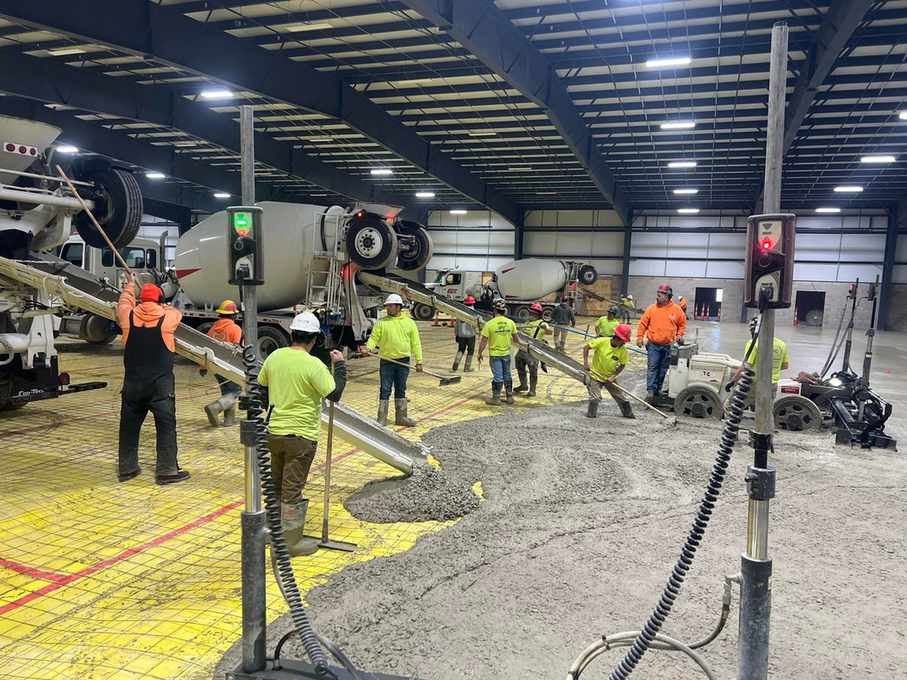
A concrete business needs money before it gets paid. Equipment arrives with a bill. So does payroll. At Hermes-Parker Concrete, a Civista customer founded in 2004, an early line of credit helped bridge that gap. Later came property and equipment financing. Then a different problem arrived: fraudulent checks. In a customer account published by Civista, the contractor describes adopting Positive Pay after the bank helped it respond. The relationship had moved from finding money to protecting it.
- Civista combines everyday banking with commercial lending, treasury tools and wealth services.
- Its regional relationships sit alongside a nationwide equipment-leasing business.
- The Farmers acquisition shows why deposits matter as much as new lending opportunities.
That progression is a useful way into this bank. A checking account can be a commodity. A banker who understands the next awkward stage of a business has a different job. Civista’s proposition is that the same institution can handle both. The interesting question is how well that proposition survives growth.
A familiar face needs useful machinery
Civista occupies the space between a neighborhood institution and a broad financial-services provider. Its customers include households, business owners, commercial borrowers and people managing wealth. Its office network centers on Ohio and southeastern Indiana, with a northern Kentucky presence. Equipment leasing extends its reach across the country.
The business model gives those relationships an economic purpose. The bank earns interest on loans and investments, pays for deposits and other funding, and collects fees from services. A household might start with checking and later need a mortgage. An employer might need credit, payroll payments and a place for reserves. Serving several needs can deepen the relationship, but customers should still compare each offer on its own terms. Ask for account fees, borrowing costs and treasury-service charges together. Convenience has value; an itemized proposal makes that value easier to judge. A familiar name is a starting point for the discussion.
The consumer menu is recognizable: checking, savings, mortgages and personal borrowing. Digital banking supports transfers, bill payments, account monitoring and mobile check deposits. Access Checking is checkless and has no ongoing minimum balance requirement. These features make the local relationship usable on an ordinary Tuesday, when nobody wants to make a special trip to discuss a balance.
For businesses, the less visible products do much of the work. Treasury management includes ACH payments, remote check deposits and sweeps that move funds between checking and a commercial credit line. Positive Pay compares checks presented for payment with the business’s issued-check information and flags mismatches for review. Someone still has to provide accurate information and review exceptions. Automation changes the task; it does not remove responsibility.
“We know who to call.”
Mark Parker, Hermes-Parker Concrete
In Civista’s customer account
The acquisition hiding inside the deposit account
A bank must also find money for its own operation. Deposits are part of that supply. In July 2025, Civista announced an agreement to acquire Farmers Savings Bank in Spencer, Ohio. Management highlighted Farmers’ excess liquidity and a loan-to-deposit ratio of 46%. Civista had a commercial lending platform; Farmers brought a deposit base with room to support more lending.
The announced consideration was $34.925 million in cash plus 1,434,491 Civista shares. At the stock price used in the announcement, that implied approximately $70.4 million. The distinction matters: an announcement value using one day’s share price is not a fixed cash bill. When the acquisition closed on November 6, it added roughly $236.1 million in deposits and $106.2 million in loans and leases.
A deposit base about 2.2 times the acquired loan book. The gap helps explain the attraction.
The parent also sold common shares in July 2025, raising approximately $75.7 million after offering costs. Its filing says the proceeds initially reduced short-term Federal Home Loan Bank advances. Read together, these moves show growth as a funding exercise as well as a sales exercise. More loans require a balance sheet capable of carrying them.
There is work between the announcement and the payoff
Acquisitions bring training, account migrations and technology conversions. Farmers’ technology conversions finished in mid-February 2026. The attractive logic of joining two balance sheets still had to become a functioning bank for the people using it.
Civista’s leasing operation offers a separate reminder of that friction. In its third-quarter 2025 earnings discussion, management linked a $1 million reduction in second-quarter fee income to the leasing core-system conversion. Subsequent results benefited from increased leasing activity. This was an operational setback with a measurable effect, rather than a tidy story in which every upgrade immediately pays for itself.
Equipment finance is nevertheless an important distinction. The business, expanded through the 2022 Vision Financial Group acquisition, serves industries including construction, healthcare, energy and specialty vehicles. Customers can finance productive assets while structuring payments around operations. The bank’s geography becomes less restrictive when the product is specialist equipment expertise.
One relationship, several different decisions
Homeownership assistance offers another specific use. Civista’s Community View Home Loan advertises up to 100% fixed-rate financing, no private mortgage insurance and a $5,000 down-payment grant for eligible borrowers and properties. Income, location and underwriting conditions shape who qualifies. A prospective buyer can ask a lender to test those conditions against an actual property before treating the advertised features as available cash.
Wealth services add planning, portfolio management and trusts. Brokerage and advisory services come through LPL Financial; the bank discloses compensation for referrals. Investment and insurance products have different risks from deposits, including possible loss of value. The common relationship does not make every product the same financial decision.
Getting bigger without becoming a stranger
Maintaining that approach also takes work inside the bank. Its 2022 annual report described a new employee learning platform, launched in January 2023, and a Women in Banking employee resource group supporting mentorship and development. Those are useful organizational details behind the promise of personal service. Customers experience a relationship through individual employees; training and retaining those employees helps give the promise substance beyond a slogan.
Civista has already had to rethink how familiarity travels. In 2015, it replaced its Citizens/Champaign branding with the Civista name, partly to distinguish itself from other Citizens banks. In August 2026, Chuck Parcher became president and CEO, while Dennis Shaffer remained chairman. The next chapter inherits both the relationships and the machinery.
Against a large regional bank, Civista emphasizes access to local people and decisions. Against an online bank, it offers an in-person relationship alongside digital tools. Neither comparison guarantees a lower fee or a better loan. The practical lesson for a business owner is to revisit banking when the business changes: credit, payment controls and surplus cash deserve one conversation. Ask who will answer it.