Who He Is
The Man Who Sold a Community,
Then Bought It Back
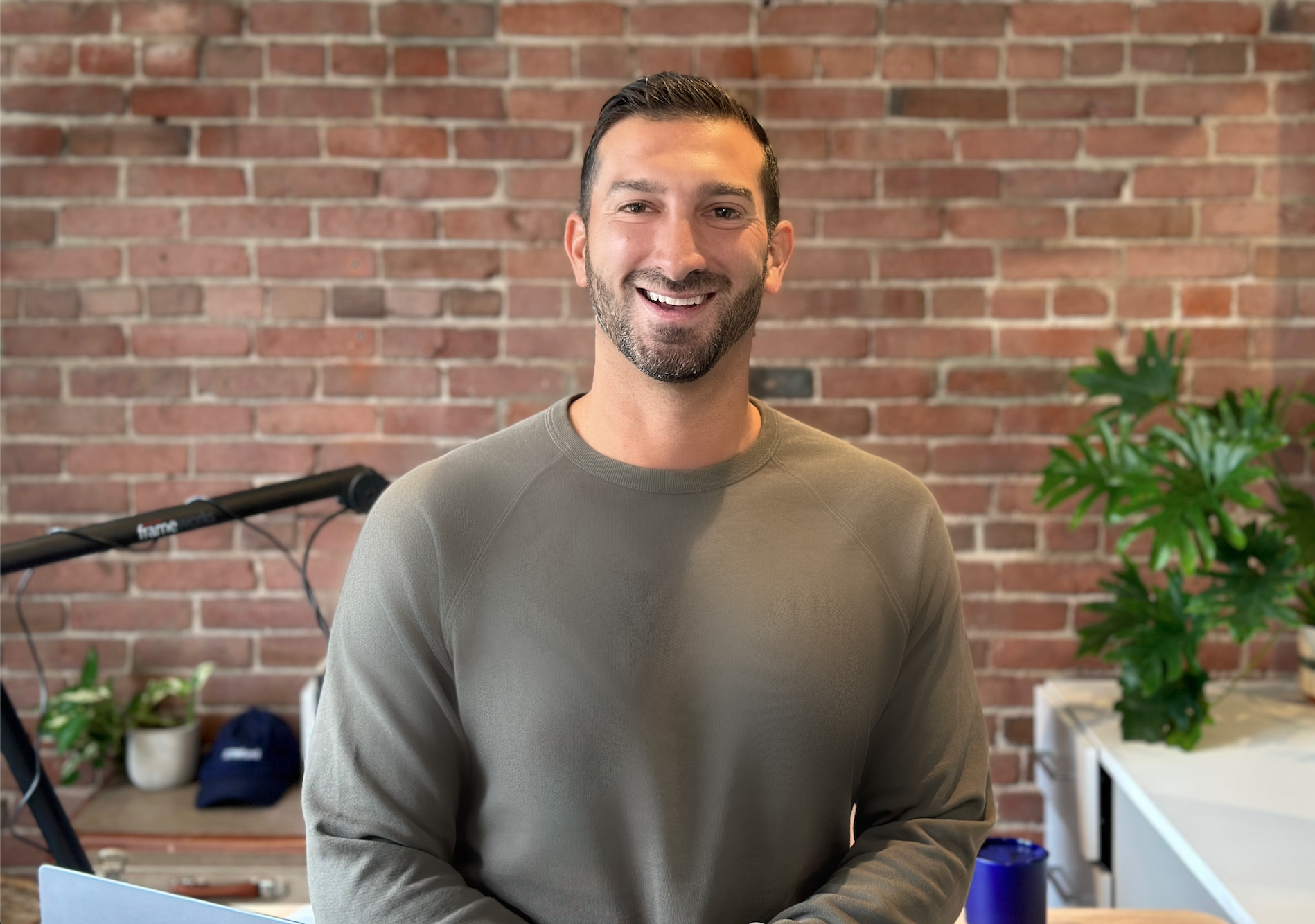
Max Altschuler runs GTMfund out of a second-floor office with his two dogs - one named Brie, one named Tini - and a $54 million mandate to find the next generation of B2B companies before everyone else knows they exist. He was not supposed to be a venture capitalist. He was not supposed to be a media mogul. He definitely was not supposed to be the person who, in 2023, re-bought his own company from the acquirer just to stop it from dying.
He just kept doing the next obvious thing until the obvious thing turned out to be building one of the most influential ecosystems in B2B go-to-market strategy.
The setup: In 2013, Max started writing sales tips on a personal blog called maxtalkshacks.com. A few people read it. He organized a meetup. Four people showed up. By the time he shut off the lights after the first Sales Hacker Conference six months later, 300 people had paid to attend, and the event had grossed more money than his entire annual salary at his day job. The day job never really recovered from that comparison.
Sales Hacker grew into something nobody planned for: a bootstrapped media company with 170,000 subscribers, events on five continents, a strict rule that sponsors could never buy speaking slots, and a culture of practitioners helping practitioners. No brand journalism. No pay-to-play lists. The thing actually worked because Max refused to monetize it the way everyone said he should.
"I didn't want the community to fall into the wrong hands."
- Max Altschuler, on re-acquiring Sales Hacker from Outreach in 2023
Outreach acquired Sales Hacker in 2018. Max joined as VP of Marketing, helped 10x Outreach's revenue during the company's most explosive growth phase, and then left. Three years later, he noticed what was happening to the community he had built and wrote a check to buy it back. He did not explain this as sentiment. He said he wanted to save it from "the wrong hands." That is the kind of sentence that either sounds paranoid or prescient, depending on how well you knew the acquirer. Either way, he did it.
Today Sales Hacker lives again as GTMnow - a newsletter, podcast, and media brand with 58,000 subscribers and a weekly publication schedule that keeps pace with the GTMfund investment thesis. The two flywheels run together: fund invests in companies, companies get content distribution, operators get access to portfolio intelligence, everyone has a reason to show up. It is not accidental architecture. It just started accidentally.
The Hacker Mentality
Long Island Kid with a Playbook Nobody Handed Him
Max grew up on Long Island, New York, the son of a financial advisor father and a yoga teacher mother who split when he was in 8th grade. He does not tell that story to generate sympathy. He tells it because it explains something about what "freedom" means to him - not lifestyle freedom, not the Silicon Valley kind, but the specific freedom that comes from not being dependent on anything outside your control.
He attended Arizona State University, where he studied entrepreneurship and launched a campus bike-sharing program that won a university grant and secured exclusive commercial rights. The financial crisis of 2009 ended it before it started. He ran a profitable social media company with friends from Costa Rica and Nicaragua instead - working remotely, paying Costa Rican prices, earning U.S.-equivalent revenue. He was 22. This was 2010. Nobody called it a digital nomad lifestyle yet.
His approach to travel during that period is a reliable window into how his mind works: he would email hostels before arrival, offer to do chores in exchange for free accommodation, and cover 80+ countries this way over the course of his life. Not because he couldn't afford rooms. Because the optimization was obvious and available, and most people simply did not bother to think of it.
The same logic applied to sales. When he joined Udemy as one of the first business hires, he needed to generate leads at scale without a real budget. So he hired virtual assistants in the Philippines as outsourced SDRs and built web scrapers for lead generation. This was 2011. Most companies were not doing this. He was not ahead of the curve because he read about the curve. He was ahead of the curve because he looked at the problem and thought: what is the cheapest and fastest path to the result? Then he did that.
$20K
Outreach Check Size
$4.4B
Outreach Series H Val.
4wks
To Write a Wiley Book
300+
Operator LPs Fund II
The Investor
$20K into Outreach Before Anyone Knew What Outreach Was
In 2015, Max wrote a $20,000 angel check into Outreach when the company was valued at $3.5 million. Outreach went on to reach a $4.4 billion valuation at its Series H. The same year he made that bet, he invested in Gong - which would become one of the most valuable sales intelligence platforms in history. This is not a pattern of luck. This is a person who spent three years inside Sales Hacker, talking to every serious practitioner in B2B sales, and understood what they were frustrated by before the software that would solve it existed.
GTMfund came from a single email. In 2021, Max sent a note to a list of GTM leaders with a rough concept: pool capital, focus on early-stage B2B SaaS, leverage the collective operator network as a competitive advantage. He was aiming for 20 to 50 investors in 10 companies. He ended up raising $22-23.5 million from 100 operators for Fund I. The LPs were not passive - they were working executives at Salesforce, Okta, Tableau, Datadog, Snowflake, Twilio. The fund's value proposition was not the capital. It was the 100 phone numbers that portfolio companies gained access to when they needed to understand how enterprise buyers make decisions.
Fund II closed in late 2024 at $54 million - oversubscribed above the $50 million target - with 300+ operator LPs and, for the first time, institutional money from Bain Capital Ventures, HarbourVest, and Inovia Capital. TechCrunch ran the headline: "How Max Altschuler accidentally founded a VC firm that just raised another $54M." He did not object to the word "accidentally." The accident was in the intention. The execution was very much on purpose.
1
Built It Bootstrapped
Sales Hacker: 4-person meetup to 170,000 subscribers. No VC. No paid speaking slots. Real practitioners only.
2
Sold It. Grew It. Left.
Sold to Outreach. Helped 10x revenue. Then walked away when the moment was right and the equity had vested.
3
Bought It Back to Save It
Re-acquired Sales Hacker from Outreach in 2023. Reborn as GTMnow. Because sometimes you love a thing enough to own it twice.
The Operator
The Dreamforce Apartment and Other Calculated Bets
In the early years of Sales Hacker, Max needed to be present at Dreamforce - Salesforce's massive annual conference that draws 150,000+ people to San Francisco. Convention center booths cost more than he had. So he rented an apartment with common areas overlooking the event for $10,000 a month, sold sponsorships for the space, and netted a profit on the deal. This story is told frequently in Sales Hacker circles not because it is clever but because it is so obviously clever that nobody else did it.
The same logic runs through his approach to building GTMfund. When most first-time fund managers were approaching institutional LPs with polished pitch decks and ten-year fund returns projections, Max emailed operators - people who had done the job, who understood the domain, who had the pattern-matching that came from running GTM at companies that scaled from $1M to $100M ARR. He turned the LP base itself into a distribution moat.
He wrote the Sales Engagement book in four weeks. Not four months. Four weeks, while also running Outreach's marketing function, to have physical copies ready for the company's Unleash 2019 conference. It was published by Wiley. It worked.
The portrait of Max Altschuler that emerges across a decade of interviews, posts, and profile features is not of a visionary who saw the future. It is of a person who looks at a problem, finds the cheapest path to the result, tests everything, and ships before the window closes. The hacker mentality, applied to every medium he has worked in.
In His Own Words
"Everything should be tested and optimized. Your pitch. Your subject lines. Your framework."
"Empathy is in and uncomfortable aggressiveness is out."
"You can't just throw money or headcount at things. Build efficient teams."
"Success is deeply personal and differs from happiness, which fluctuates."
"Put your head down and work hard."
"Doing more with less." - his core operational philosophy
The Human
Writing Openly About Colitis, Competition, and Turning 30
In his mid-to-late twenties, at the peak of Sales Hacker's growth, Max published a Medium essay called "How I Started to Think About Life at Almost 30." He opened it by mentioning he had Colitis - an intestinal disease he manages chronically. He used it as the entry point into a longer reflection on how external achievement and internal health are not the same problem, and how he had spent years solving the first one while mostly ignoring the second.
This is not the profile of a person who filters his public image to exclude the parts that do not flatter. He has written about the competitive insecurity of "never being good enough," about the years of feeling lost in his late 20s, about his parents' separation shaping his definition of freedom. He gives the same advice to his younger self that does not age well in retrospect: put your head down, work hard, stop reading tech news that does not move the needle.
He lists his core life values publicly as: freedom (time and money together), legacy (impact on people and causes), career satisfaction, wisdom through experience, and health - in roughly that order. He makes a point of separating success from happiness. He says happiness fluctuates. He seems to have made peace with that.
The life he runs today has a specific texture: a Miami base with his girlfriend Ashley and their two dogs (Brie and Tini), three children, occasional guest lectures at the University of Washington, a golf habit, and a fund whose deployment pace means he is evaluating 10-20 companies per week. He has visited 80+ countries and intends to keep adding to that number. He still does some of this by email, probably.