He moved into a slice of the spectrum nobody could use, and started renting it out to carmakers.
Matthew Carey builds hardware that sees what human eyes and every existing car sensor miss. His company, Teradar, makes a solid-state device that reads the world in the terahertz band - the thin, long-ignored strip of the electromagnetic spectrum wedged between microwaves and infrared. Radar can punch through fog but paints the world in blurry blobs. Lidar draws crisp pictures but chokes on rain and glare. Carey's wager is that terahertz gives you both, in silicon, for a few hundred dollars.
In November 2025, after roughly five years of near-total silence, Teradar walked out of stealth with a $150 million Series B and a claim big enough to make investors flinch. Two months later, at CES 2026, it put a name and a face on the hardware: Summit, a long-range, all-weather vision sensor with no moving parts. Carey says five top automakers in the U.S. and Europe are already kicking the tires, along with three Tier 1 suppliers, with a 2028 model-year vehicle in the crosshairs.
The origin isn't a lab notebook. It's a funeral. A close friend of Carey's died in a crash under conditions that no sensor on the road could have untangled - low sun, thick fog, the exact overlap where cameras wash out, lidar scatters, and radar can't resolve. That single corner case became the company's reason to exist, and Carey's yardstick for everything it ships.
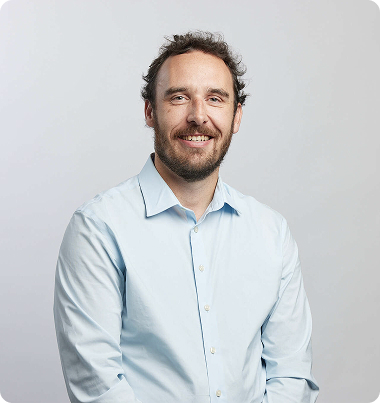
"It was one of those weird corner cases where, between the sun and the fog, it couldn't have been solved by any existing sensor."
Move along the electromagnetic spectrum and you make a trade every step. Microwaves see through weather but not detail. Infrared and visible light see detail but get blinded by fog and sun. In between sits the terahertz band - long neglected because it was fiendishly hard to build cheap chips for. Carey's team, led by chip architect Nicholas Saiz, decided that gap was the whole point.
| Capability | Radar | Lidar | Teradar (THz) |
|---|---|---|---|
| Sees through fog & rain | Yes | Struggles | Yes |
| High-resolution image | No | Yes | Yes |
| No moving parts | Yes | Often no | Yes |
| Mass-market price | Low | High (~$1,000) | Target: a few hundred $ |
Carey would rather hand you the hardware than walk you through slides. When investors say "I don't believe you," he calls that the sweet spot - because the fog test settles arguments faster than a pitch.
"How do we get the sensor on every single vehicle?" A $1,000 lidar never rides on a Ford Focus. Affordability isn't a marketing line for Carey; it's the constraint the whole product bends around.
"Our main job is to make sure our sensor gets on all automobiles, and whatever the best way to do that is, that's what we're going to pursue." Ideology optional. Ubiquity mandatory.
Cuts his teeth as an electro-mechanical and automation designer at L3Harris, Rethink Robotics, and General Dynamics Advanced Information Systems.
Joins Humatics, the precision-positioning startup, in strategic business development and product management.
Earns an MBA from MIT's Sloan School of Management - the business polish on an engineer's spine.
Becomes Director of Product Management at Humatics, where he crosses paths with future CTO Gregory Charvat.
Co-founds Teradar with Charvat and chip architect Nicholas Saiz. The bet: tame terahertz for cars.
Takes the CEO seat and disappears into stealth to prove a physics-hard idea works.
Teradar captures its first terahertz image on a chip - proof the Goldilocks band can be silicon.
Exits stealth in November with a $150M Series B from Capricorn, Lockheed Martin Ventures, Ibex, and VXI Capital.
Unveils the Summit sensor at CES, aiming it squarely at 2028 model-year vehicles.
Around 2021, weighing job offers back inside the auto industry, Carey talked the sensing problem over with Gregory Charvat - a Humatics colleague who had nursed a long fascination with terahertz imaging. That hallway conversation turned into a company incubated in the orbit of MIT.
The cap table reads like a hedge across worlds: Capricorn Investment Group, Ibex Investors, Lockheed Martin's venture arm, and VXI Capital - a defense fund led by the former CTO of the Pentagon's Defense Innovation Unit. Cars and defense, same sensor.
It was one of those weird corner cases where, between the sun and the fog, it couldn't have been solved by any existing sensor.
'I don't believe you' is right where we want folks.
How do we get the sensor on every single vehicle? I drive a Ford Focus, and there's zero chance you're putting a $1,000 lidar on it.
Our main job is to make sure our sensor gets on all automobiles, and whatever the best way to do that is, that's what we're going to pursue.
The goal isn't a spec sheet. It's a world where the crash that killed Carey's friend - sun, fog, and no sensor that could see - simply doesn't happen anymore.