lidar-alternative
(4)
Leaf Jiang Spent 12 Years Building LiDAR. Then He Bet on Two Cameras.
The NODAR founder knows laser ranging from the inside. His contrarian wager is that autonomy will scale when inexpensive cameras learn to hold their geometry in a vibrating, rainy world.
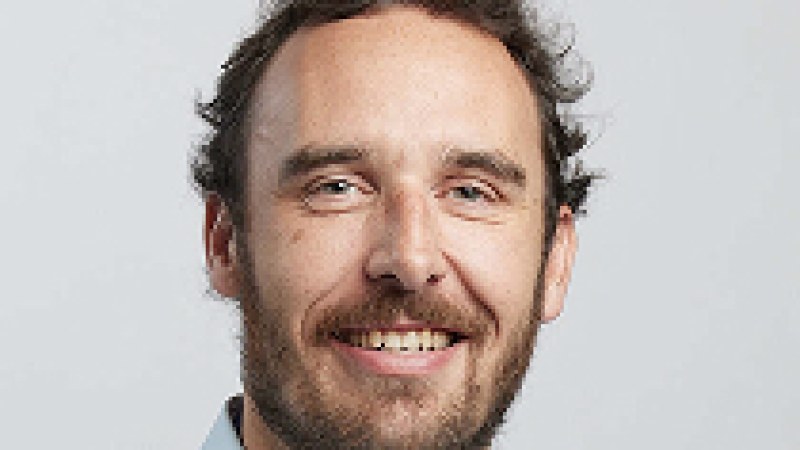
Matthew Carey
Matthew Carey is the co-founder and CEO of Teradar, a Boston deep-tech company building a solid-state automotive sensor that sees in the terahertz band of the electromagnetic spectrum, the sliver between microwaves and infrared. His pitch is blunt: combine radar's ability to punch through fog and rain with lidar's crisp resolution, then make it cheap enough to bolt onto a Ford Focus. After a friend died in a car crash that no existing sensor could have prevented, Carey teamed with terahertz specialist Gregory Charvat and chip architect Nicholas Saiz in 2020. In November 2025 the company left stealth with a $150 million Series B and claims to be validating its tech with five global automakers.
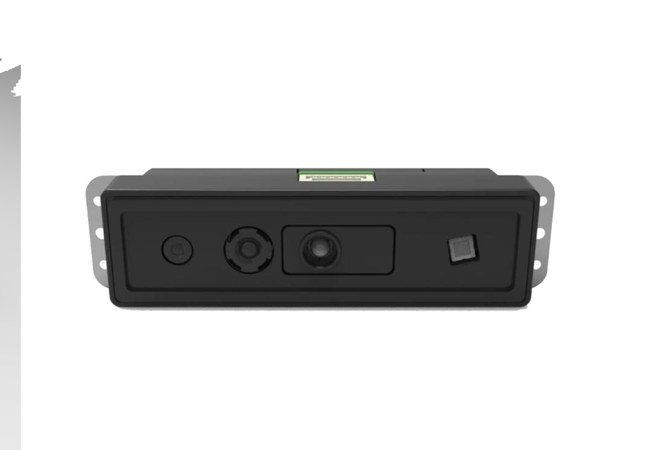
Deptrum
Deptrum (光鉴科技) is a Chinese 3D vision company founded in 2018 by three Silicon Valley scientists, including a former Apple depth-hardware lead. It builds full-stack 3D depth-sensing solutions - nanophotonic chips, structured-light and Time-of-Flight cameras, and AI perception algorithms - that let machines see and measure the physical world. Its hardware powers robots, smart cockpits, palm-payment terminals, smartphones and new-retail systems across finance, automotive and IoT.
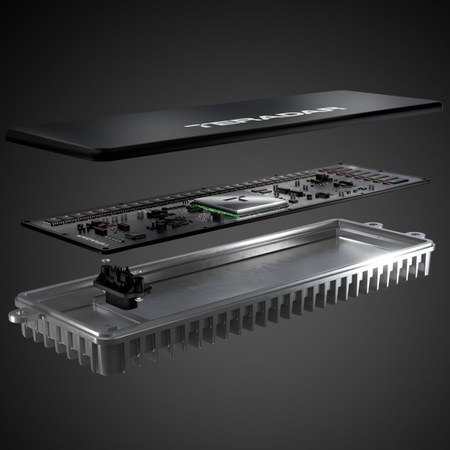
Teradar
Teradar is a Boston deep-tech company building the first commercial sensor that sees using the terahertz band of the electromagnetic spectrum - the slice between microwave and infrared. Its solid-state Modular Terahertz Engine combines radar's ability to punch through rain, fog and snow with resolution approaching that of lidar, claiming up to 20x the detail of today's automotive radar with no moving parts. Founded in 2020 and out of stealth in November 2025 with a $150M Series B, Teradar is working with eight global automakers and Tier-1 suppliers and aims to put its sensor in a production vehicle by 2028.