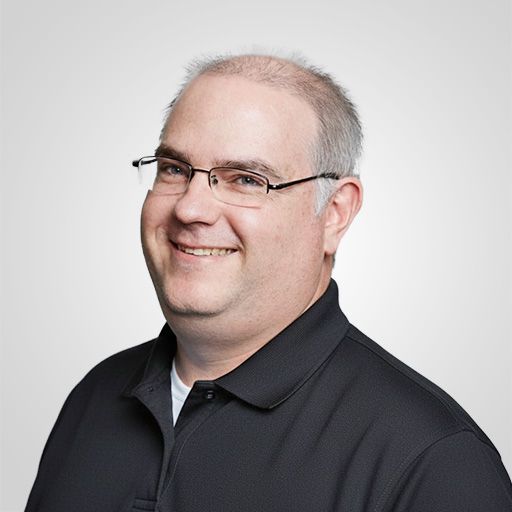
A $100 million homework problem
Before a carmaker lets its emergency braking, lane-keeping, or blind-spot warning ship to millions of drivers, someone has to prove the software works. Not mostly. Not usually. In the rain, at dusk, with a cyclist half-hidden behind a parked van. Proving it, the old way, can cost more than $100 million per vehicle model and take over a year of manual, painstaking sensor-data review.
Joseph Burke looked at that number and saw a business. Ottometric, the company he co-founded in 2019 and runs as CEO from Waltham, Massachusetts, automates that grind. Its platform ingests the flood of camera, radar, and lidar data a test car generates, then distills it into structured, human-readable insight about where the driver-assistance software got confused, missed something, or quietly failed. The pitch is blunt: what takes months, Ottometric delivers in days.
The category has an ungainly name - ADAS, for Advanced Driver Assistance Systems - and it covers all the features that increasingly do the driving while you think you are. Adaptive cruise. Automatic braking. The gentle tug on the wheel when you drift. Every one of those features is a machine making a prediction about the physical world, and every prediction is a chance to be wrong.
"Our role is to help companies find and fix bugs in ADAS software to make these features as accurate as possible."
Distill, don't hoard
The instinct in autonomous driving has always been to collect more data. More miles, more edge cases, more petabytes. Burke's contribution is a quieter idea: most of that data is noise, and the value is in finding the handful of moments that actually matter. Ottometric calls it data distillation - proprietary technology that classifies raw sensor streams into structured insights, shrinking datasets while keeping the safety-critical scenarios intact.
That approach reflects how Burke organized the company itself. Ottometric's engineering runs on three specialized teams: computer vision to interpret what the sensors saw, insights analysis to figure out what it means, and customer visualization to make it legible to the humans who have to act on it. Raw data in one end, a clear picture of a bug out the other.
The customers are the giants of the industry - OEMs and the Tier-1 and Tier-2 suppliers who build the guts of modern cars. Their current methods, as Ottometric describes them, are manual-intensive, slow, and expensive. Burke's wager is that an automated layer sitting on top of all that testing is not a nice-to-have but a structural necessity as ADAS features multiply.
"We are transforming a cumbersome, manual process into an automated, scalable solution that delivers actionable insights in days rather than months."
From Cork to the crash lab
Burke did not arrive at self-driving cars through Silicon Valley. He studied engineering at University College Cork in Ireland, then earned an MS in Engineering at Northeastern University in Boston, and later added an executive business management certificate from MIT. His first long chapter was at Analog Devices, where he spent the better part of a decade as an engineering project manager - deep in semiconductors, the physical layer beneath everything that would later matter.
The turn came in 2010. An airbag manufacturer hired him to commercialize pre-collision radar - the technology that lets a car sense an impact before it happens. His team went on to build blind-spot detection and forward-collision avoidance, features that are now standard equipment on ordinary cars. Burke was there for the birth of the ADAS decade, not as an observer but as a builder.
By 2019 he had seen enough of the problem from the inside to name it. He co-founded Ottometric alongside automotive veterans drawn from General Motors, Autoliv, NVIDIA, and Optimus Ride - a roster that reads like a map of who built the modern driver-assistance stack. The company name itself is a small joke for engineers: part odometer, part metric. A machine for measuring what cars actually do.
The uncomfortable truth about your car
Burke says something most of the industry would rather whisper: these systems are never 100% accurate. Not his product's failure to state - a fact of the physics. A camera can be blinded by glare. A radar can misread a manhole cover. The job is not to pretend perfection exists but to find the failures before a driver does.
He has also noticed something about the humans on the other side of the windshield. Drivers, he observes, have grown dependent on these features - trusting the car to catch the mistake they used to catch themselves. That trust is exactly why validation matters. The more we lean on the machine, the higher the cost of the machine being quietly wrong.
It is a founder's argument dressed as a safety argument, and both halves are sincere. Burke is selling software, but he is also making a case about a world where more of the driving is automated every year and almost nobody is checking the automation at scale. Ottometric, he likes to point out, is the only company in the world that does what it does.
A founding team from the ADAS decade
A validation company only works if it understands the thing being validated better than the people who built it. Burke stacked the deck. Ottometric's founders came out of General Motors, Autoliv, NVIDIA, and Optimus Ride - Detroit iron, tier-one safety, the GPU maker that powers most autonomous compute, and a Boston self-driving startup. Between them they had spent the previous decade shipping the exact systems the company now audits.
The investor list rhymes with that thesis. Goodyear Ventures and Proeza Ventures bring the automotive supply chain. Rally Ventures and Schooner Capital bring the enterprise-software discipline. Trucks VC brings the mobility lens. It is a cap table assembled less for hype than for domain knowledge - the kind of backers who can tell whether a claim about sensor fusion is real or marketing.
Burke is candid that being first in a category is a mixed blessing. Being the only company in the world that does what you do means there is no playbook to copy, no competitor to define the market for you, and no easy answer when a customer asks who else does this. The upside is obvious. The loneliness of it is the part founders rarely advertise, and the part Burke seems most clear-eyed about.
These systems are never 100% accurate.
We're the only company in the world that does what we do.
On scaling, and knowing when to let go
Ask Burke what keeps him up and he does not reach for the technology. He reaches for the people. The toughest part of building Ottometric, he has said, is the human calculus of growth - knowing when someone has outgrown a role, or when a role has outgrown the person. It is the kind of decision that founders often get wrong out of loyalty or fear.
His method is characteristically engineering-minded: bring in advisors, seek an outside read, refuse to trust his own bias. He is not afraid of the hard conversations. He just wants to be sure he is not making the wrong call. For a company spread across Boston, San Jose, Detroit, and Serbia, that discipline about people may matter as much as any line of code.
The money has followed the thesis. A $4.9 million seed round led by Rally Ventures - with Goodyear Ventures, Proeza Ventures, and Trucks VC alongside - gave way in April 2025 to a $10 million Series A led by Schooner Capital. Roughly $14.9 million total, aimed at a market where a single validation program can cost more than the entire round. The bet is that automating that cost is one of the better deals in the automotive world.
"I'm not afraid of having these conversations. I just want to make sure I don't make the wrong decision."
Measuring what the machines miss
There is a version of the autonomous-vehicle story that is all spectacle - robotaxis, hands-off highways, the promise of a car that needs no driver at all. Burke's story is the unglamorous one underneath it. Someone has to prove the software is safe, over and over, cheaply enough that the industry can actually afford to keep improving. That work does not trend on social media. It also does not go away.
Under the hood, Ottometric's own stack tells you where the field is going: Anthropic's Claude and Meta's Llama 3 sit alongside PyTorch, TensorFlow, and vector databases like Pinecone. The company that grades AI-driven cars is, itself, increasingly built on AI. Burke, the semiconductor engineer who once helped teach cars to see, now runs a company teaching itself to judge what those cars perceive.
The through-line across every chapter - Cork, Analog Devices, the airbag radar, Ottometric - is the same stubborn question. Not "can the machine do it?" but "how do we know?" It is a less exciting question than the one most of the industry asks. It may also be the more important one. And for now, at least, Joseph Burke has it mostly to himself.
If he is right, the payoff is not a flashy demo but something more durable: a car whose blind-spot warning fires a fraction of a second sooner, a braking system that no longer freezes at a misread shadow, a validation cycle cheap enough that suppliers stop treating safety as a cost center. Those wins are invisible by design. Nobody notices the crash that never happened. Burke has built a company around exactly that kind of quiet, unglamorous, life-or-death accuracy - and he seems perfectly content to let the robotaxis get the headlines while he keeps score.