At Southcenter Mall near Seattle, the early Remitly team set up a booth outside an established money-transfer business. The signage involved Scotch tape. For a company hoping to change how money crossed borders, the operation was agreeably short on grandeur. It put the founders close to the people they needed to understand: customers deciding how to send money to someone far away.
Matt Oppenheimer and his colleagues discovered that their preferred technology did not settle the matter. They had emphasized mobile wallets. Customers wanted other ways for relatives to receive the money, including cash pickup, bank deposits and delivery. The booth gave a young company an opportunity to be corrected before its assumptions became expensive habits.
“We had to follow customers.”
Matt Oppenheimer, reflecting on Remitly’s early pivot
That small encounter helps explain a career often told through much larger numbers. Oppenheimer co-founded Remitly in 2011 and spent nearly fifteen years as CEO. The company listed on Nasdaq in September 2021. By the time he handed over the chief executive’s job in February 2026, an experiment in earning trust had become a public company moving money around the world.
Boise was the beginning, not the boundary
Oppenheimer grew up in Boise, Idaho, in a family where business was familiar. His grandfather started a company that his father and uncle went on to run, combining food distribution with real estate interests. He saw enterprise at close range, including its effects on employees, customers and the surrounding community. Starting something of his own was an ambition with local examples.
His first efforts at organizing people came well before Remitly. In high school, he created a lobbying organization intended to give people under eighteen a voice in decisions affecting them. In 2000, the Idaho Democratic Party invited him to deliver the keynote at its state convention. Charlton Heston delivered the Republicans’ keynote that year. Idaho’s political speaking circuit offered quite a double bill.
There was also a less formal project. Seeing friends who needed somewhere to gather, he organized free, supervised parties at his family’s house. Some drew more than five hundred people. His parents, or his grandmother when they were away, were present. He hired security. Even the teenage version of Oppenheimer seems to have understood that a welcoming experience required rather a lot of operational preparation.
He graduated from Dartmouth in 2005 with a degree in psychology, then worked in investment consulting at Cambridge Associates. His clients included endowed nonprofits, and his work involved venture capital and private equity. Harvard Business School followed. He earned his MBA in 2009, then joined Barclays, working first in London and subsequently in Kenya.
Three currencies, one stubborn problem
In Nairobi, Oppenheimer led mobile and internet banking initiatives for Barclays Bank Kenya. The assignment put him near a practical change in how people used financial services. Kenya’s M-Pesa mobile wallet demonstrated what a phone could make possible for domestic money movement. International transfers presented a different set of difficulties.
His own finances provided an education in the inconvenience. He was paid in British pounds, lived in Kenyan shillings and eventually needed to move money back into US dollars. The conversion and transfer process was cumbersome and expensive. Friends receiving money from relatives overseas faced problems with greater consequences for their household budgets.
In his account of Remitly’s origins, the contrast matters. A troublesome transaction could be an expatriate banker’s administrative nuisance. For someone depending on support from abroad, the same friction could interfere with paying for everyday necessities. Oppenheimer began to see a business problem whose importance was measured at the receiving end.
He returned to Idaho and worked as an entrepreneur in residence at Highway 12 Ventures. The business was initially called Beamit. An early proposed solution was a comparison site for remittance services. That idea gave way as he worked toward a service that could move the money itself. The question was clear sooner than the answer.
By October 2011, the young company was preparing to serve the Philippines. Oppenheimer explained at the time that entrepreneurship required testing and revising a concept. The familiar story in which an idea appears fully formed would have saved him some work. His own story involved considerably more editing.
A small map, drawn carefully
Remitly’s founding team brought together Oppenheimer, Josh Hug and Shivaas Gulati. The company participated in Techstars Seattle in 2011. Hug supplied product expertise; Gulati brought engineering skills. Oppenheimer’s early responsibilities included getting obstacles out of their way, whether that meant licenses, premises or the less ceremonial business of taking out the trash.
The distinction is useful in a founder profile. Oppenheimer’s contribution was partly the work of making other people’s contributions possible. A company biography can turn three complementary people into one central character if it is careless. He has been explicit about how much Remitly depended on his co-founders.
The initial market was deliberately narrow: money sent from Washington state to the Philippines. In a later reflection, Oppenheimer described how that focus made fundraising harder. Investors wondered whether the business could work elsewhere. A bigger map might have made for an easier presentation. The company concentrated on learning to operate in its first corridor.
There is a practical logic to that restraint. A transfer connects two places, two sets of expectations and a recipient who may need a particular way to collect the funds. Adding a country name to a slide is easy. Making the service useful there involves the unglamorous details that the mall customers had already begun teaching the founders to respect.
Oppenheimer chose Seattle for its talent and for proximity to the communities the company served. The city offered people who could build the technology, alongside people whose experiences could challenge the assumptions behind it. For this business, both kinds of proximity mattered.
The company’s later filings describe customers who send repeatedly for recurring, everyday needs. Its larger receiving markets include India, Mexico and the Philippines. Money can end its journey in a bank account, a mobile wallet or a cash collection. A sender’s phone is only one part of that journey. The rest has to make sense to the person waiting for the funds.
That helps explain why the founders’ early correction was consequential. A service can be convenient at the sending end and awkward at the receiving end. The family experiences the whole transaction. A payments company has to pay attention to both halves, even when only one person is holding its app.
The argument moved to the payment rails
As Remitly grew, Oppenheimer took its concerns into public discussions of how money moves. In 2017, he testified before a congressional subcommittee about making legitimate remittance services accessible, affordable and safe. The subject took him well beyond customer acquisition. Access to a service also depended on the institutions and rules around it.
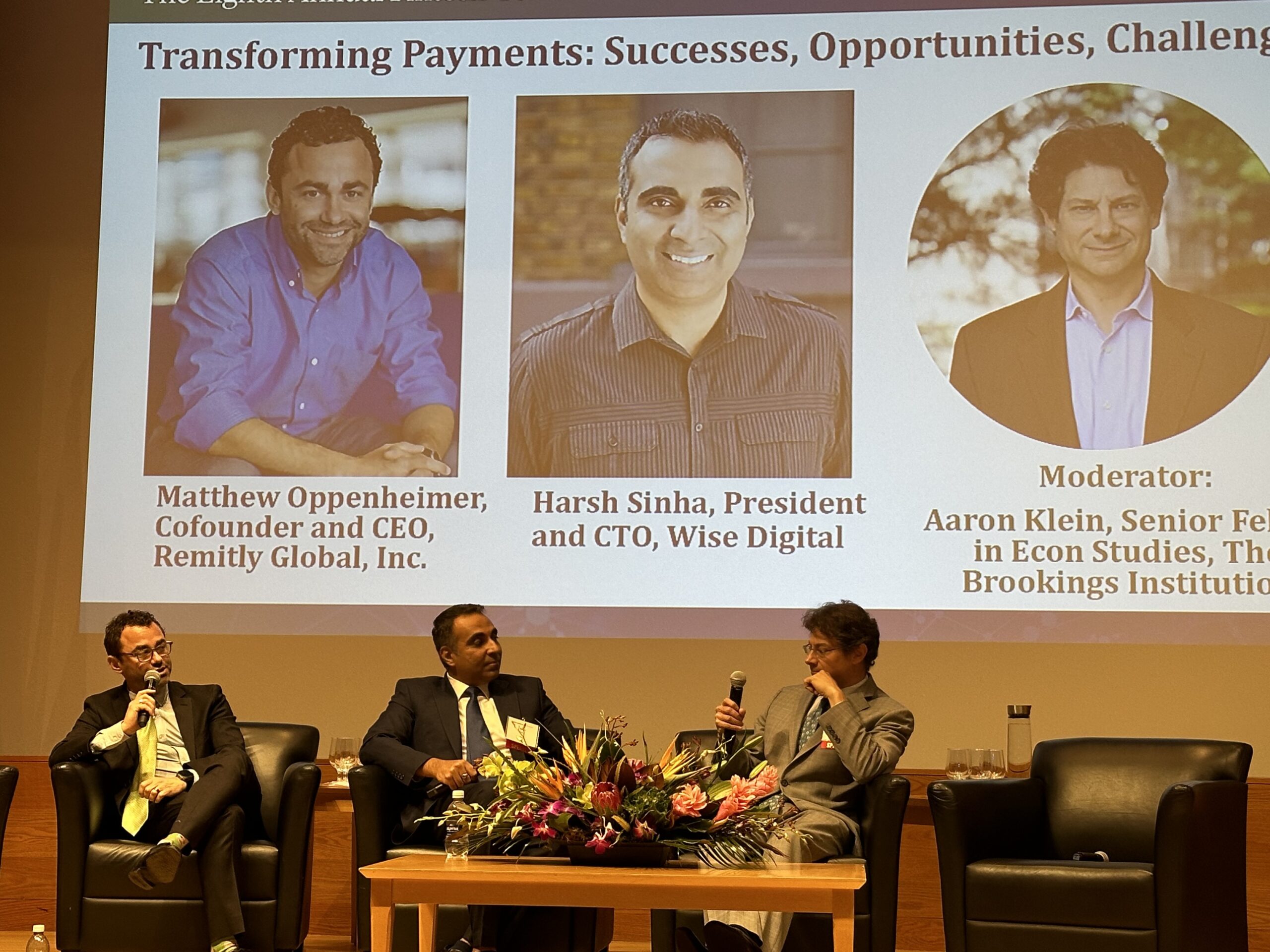
In October 2024, he appeared at the Federal Reserve Bank of Philadelphia’s fintech conference alongside Harsh Sinha of Wise, with Aaron Klein moderating. Competitors had reason to share a stage. Their discussion included direct access to US payment systems for nonbank remittance providers, and the potential to reduce costs through access to FedNow.
The vocabulary had changed from mall-booth conversations to payment infrastructure. The underlying concern remained recognizable: how much time, money and uncertainty should a person have to spend getting funds to a relative? Oppenheimer argued that the plumbing mattered to the customer’s eventual experience, even when the customer never saw it.
He also built relationships outside the company. He joined BECU’s board in 2018. In an earlier interview, he named Capital One co-founder and QED Investors leader Nigel Morris as someone he admired as an operator and mentor. Founding a business gave Oppenheimer a title; it also gave him a continuing need for other people’s judgment.
Learning to hand over the keys
The scale at the end of his CEO tenure was substantial and specific. Remitly processed $74.9 billion in send volume in 2025. That is the amount customers sent, distinct from the company’s $1.6 billion in revenue. It reported $67.9 million in net income and its first full year of profitability under generally accepted accounting principles.
Different measures, different meanings. Send volume belongs to the customers’ transactions; revenue measures the company’s business.
On February 18, 2026, Remitly announced that Sebastian Gunningham would become CEO the next day. Oppenheimer continued as chairman and ceased being an employee. Gunningham brought experience from Amazon and other technology and financial businesses. The change gave the founding chief executive a new relationship with the company he had spent much of his working life running.
Under the new CEO, Remitly reported 10.2 million quarterly active customers for the second quarter of 2026. That later milestone belongs to the company’s continuing story. Oppenheimer’s role had become supporting its leadership from the board rather than managing daily execution.
By September, he was speaking about the satisfaction of mentoring and coaching. Dartmouth inducted him into its Entrepreneur Hall of Fame that month. His reflections returned to people: understanding them, connecting with them and finding a role where those abilities were useful. The psychology graduate had found plenty of practical applications.
His September appearance on David Cohen’s Give First podcast revisited the early business and the handoff. The mall booth remained part of the conversation. It is a useful place to leave him: close enough to hear an objection, interested enough to change his approach, and aware that the person sending money home has a more immediate concern than a founder’s attachment to his first idea.
Keep the conversation going
Find Oppenheimer on LinkedIn, X and Facebook, or visit his personal bio. Explore Remitly and its company profile.
Watch · Remitly · 2021The origin story, in his own words ↗Watch · Paris Fintech Forum · 2025A conversation about finance and the founder’s journey ↗Listen · Give First · September 2026From a mall booth to a public company ↗Read · GeekWire · September 2026Dartmouth’s honor and the work of a chairman ↗Board biography · The leadership announcement · His Boise-to-Seattle story · Earlier writing