A robot ought to be an excellent thing to bring to an investment meeting. It moves. It demonstrates. It saves everyone from another slide containing a very large market and a very small company. For Martin Hitch and his Bossa Nova co-founder Sarjoun Skaff, however, the robot became a problem. Their pitch began with the machine. Investors struggled to get past it.
The solution was unusually economical: change the order of the presentation. Put the inventory data first. Explain what a retailer could do with it. Move the robot backstage, where it could perform the humbler but commercially essential job of collecting that data. The demonstrations went away. The fundraising began to work.
Bossa Nova’s surviving pitch archive preserves the distinction with almost comic clarity. There is a $5 million Series A presentation that failed and a $10 million presentation that worked. The more expensive proposition became easier to understand once its most entertaining object stopped introducing itself.
That reversal makes a useful entrance to Hitch’s career. He has spent years bringing machines into places where people already have habits, expectations and work to finish. His professional territory includes toys, store aisles and loading docks. Across those settings, the awkward question keeps returning: what useful thing happens after everyone has admired the technology?
A dinosaur with manageable expectations
Before supermarket inventory, there was Pleo. At Ugobe, Hitch helped introduce a robotic dinosaur whose appeal depended on people accepting an artificial creature as something worth touching and playing with. During its German launch in 2008, he explained a practical benefit of choosing a dinosaur: nobody could insist that the real animal would have behaved differently.
A robotic dog has a demanding comparison waiting at home. Real dogs move quickly, jump into laps and greet people at doors. A dinosaur offered greater artistic freedom over movement, sound and appearance. Extinction had proved unexpectedly helpful to product design. The animal could be convincing without passing an examination set by a Labrador.
Hitch came to Bossa Nova in 2009 with experience at Mattel and Hasbro. The company already existed, with roots in Pittsburgh’s robotics community and toys called Penbo and Prime-8. He became its CEO and would later be identified as a co-founder of the business that emerged from those beginnings.
Those toys were hardly solemn ambassadors for advanced engineering. Penbo was a pink penguin; Prime-8 was a yellow gorilla capable of charging about, guarding a hallway and producing conspicuously unrefined sound effects. The machinery had to survive contact with an audience unlikely to read a technical specification before deciding whether it was any fun.
There is a revealing continuity here. Selling a toy requires someone to decide, quickly, what it does and why they want it. Selling a business robot introduces procurement departments and longer meetings, but the question of intelligibility survives. Hitch’s later fundraising experience would give that old product lesson a rather costly new setting.

Rosie goes looking for a job
In 2012, Hitch stood before a RoboBusiness audience and introduced a new direction for Bossa Nova. The company had sold its children’s robotics business. Its next machine, mObi, arrived with a tablet for a head and ambitions that reached toward the personal robot familiar from The Jetsons.
The stagecraft mattered. Hitch invited the machine forward after getting a signal from the engineers. There were three robots, with handlers guiding them. Anyone who has watched a live demonstration knows the special suspense: the audience wants the future to arrive, preferably without requiring a restart. Here, the machines made their entrance.
By 2013, Hitch was demonstrating a retail prototype at WPP’s Future of Retail forum. The machine balanced on a ball, carried imaging equipment and pointed toward a specific occupation: looking for gaps on store shelves. A robot once imagined as a general companion was beginning to acquire the responsibilities of a very particular employee.
That early prototype also exposed how much work lay between taking a picture and producing a useful instruction. Its shelf photographs still went to a person for interpretation. Computer analysis was part of the development plan. The balancing act could impress a room immediately; the business depended on making those photographs useful, reliably and repeatedly.
Hitch’s later account of customer discovery was straightforward. Bossa Nova explored different settings and initially considered robots that would assist shoppers. Retailers kept returning to inventory. Their problem was familiar to anyone who has stood before an empty space where a necessary purchase ought to be. An engaging robot could wait. The missing product could not.
Making a robot feel like a creature
Looking for gaps on shelves
Checking what enters the truck
The shelf is a place, not a spreadsheet
A store can know what arrived through its loading bay and what left through its tills while still having an incomplete account of the shelf between them. Products move. A box lands in the wrong place. A price label disappears. Stock exists somewhere in the building but remains unavailable to the person who wants to buy it.
For Hitch, that middle stretch became the commercial opportunity. The retail robot collected visual information, checked product availability and passed problems to store employees. People still did the physical work of putting merchandise where it belonged. Identifying a gap and carrying a replacement carton are different jobs, even when the customer experiences them as a single failure.
The distinction also shaped his argument about work. At a 2019 industry gathering, he described the difficulty of building robots that could safely manipulate the enormous range of products in a store. Observing inventory offered a more bounded task. Human workers would interpret and act on the information, while the machine repeated the inspection.
And the inspection had to happen during business hours. Hitch explained at a Burbank demonstration that checking while customers were buying allowed the store to spot a shortage sooner. If an aisle was crowded, the robot could leave it for another and return. Supermarkets already contain enough disputed rights of way without adding a machine determined to win.
This was also a social design problem. The robot had to share an aisle with people who had never agreed to participate in a robotics experiment. A 2019 interview described a deliberate decision to keep it from talking. Conversation could attract a crowd and interrupt the inspection. Silence, in this setting, was a useful product feature.
“We want people to be engaging with people.”Martin Hitch · 2019
Scale brought a different examination
Bossa Nova’s archive records deployment across 600 Walmart Supercenters, with robots scanning three times a day, seven days a week. That is a long way from persuading one machine to make a dignified entrance onstage. Repetition changes the question from whether something can work to whether an operation can keep it working.
Hitch addressed that distinction as Walmart expanded its trials. A larger set of stores would test the support infrastructure and help reveal what wider deployment would require. The useful unit of progress was becoming an operating system of people, maintenance and information, spread across locations. A demonstration could establish possibility; stores supplied the recurring examination.
The Walmart relationship eventually ended in 2020. About 500 robots were in stores when the retailer stopped the program, despite earlier plans to reach 1,000. That outcome belongs in the story alongside the deployment. A customer’s decision to continue paying is part of the commercial test, however much engineering has already been accomplished.
Hitch’s subsequent advisory connection with InOrbit took him toward the machinery behind the machinery: monitoring fleets, diagnosing trouble and keeping deployments running. InOrbit announced him as an adviser in November 2020 and credited his Bossa Nova tenure with raising more than $40 million in venture investment. His comments emphasized coordination between the fleet platform and partners doing field maintenance.
The less glamorous work has its own demands. A robot in a shop is also a maintenance commitment, a stream of information and somebody’s responsibility when something goes wrong. Hitch’s path through the business gives those obligations a visible place beside the photographs of machines gliding neatly past merchandise.
Three scans a day. Seven days a week.
The operating rhythm recorded in Bossa Nova’s deployment archive.
The next missing thing was a parcel
By late 2021, Hitch was CEO of Coros, applying computer vision to parcel movement. The business announced a $6.1 million seed round led by Dynamo Ventures. Its cameras examined packages at loading points, helping reconcile warehouse records with what physically entered a trailer. The shelf problem had acquired wheels of a different sort.
In a warehouse podcast that December, he discussed a system whose placement had changed through development: cameras moved from inside the truck to just outside it. One iteration involved a pick-to-light arrangement within a delivery vehicle. These are small, physical choices, inseparable from whether the person loading a package can get on with the job.
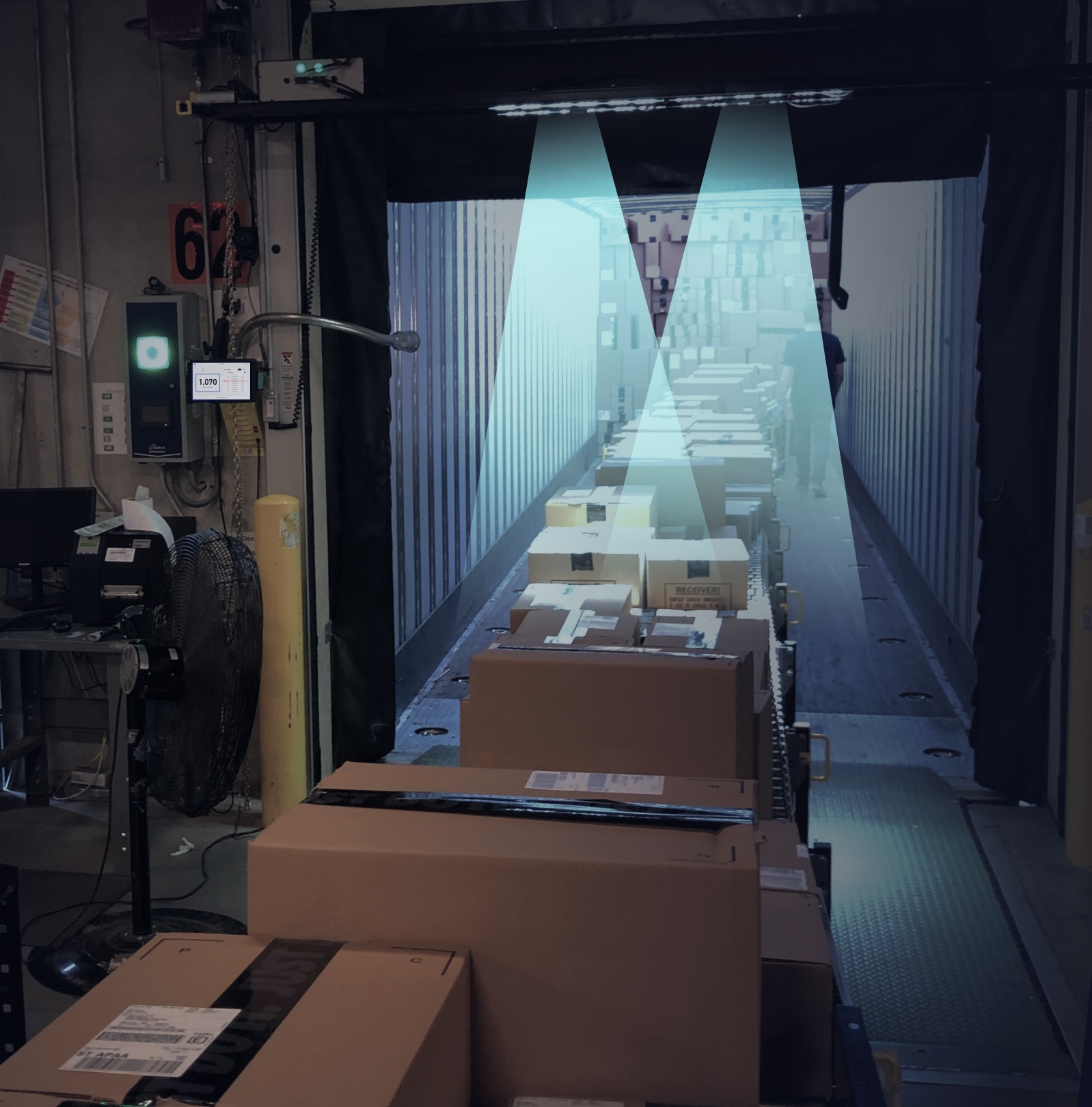
There is a family resemblance between a missing carton in a trailer and a missing item on a supermarket shelf. Both can hide behind records that appear perfectly orderly. Looking at the actual handoff supplies another check. Hitch’s businesses have repeatedly worked in that space between a system’s account of events and the objects moving through the building.
His public profile now describes a COO position at a stealth startup building foundation models for Physical AI. The vocabulary has changed since the days of pink penguins. The practical setting remains a world of objects and people, where a technical capability needs a place in the working day.
Away from product descriptions, Hitch has written affectionately about the Bay Area after moving from London. His initial impression of San Francisco was underwhelming. Over time, his attachment grew around its people, the family he raised there, his friendships and the possibilities California offered. It is a more personal account of changing one’s mind than a revised pitch deck.
He and Skaff have joked about writing a book on Bossa Nova. There is already material enough for a chapter about the presentation that improved when its star attraction stayed away. Hitch’s career supplies a pleasing complication to the usual story of invention: sometimes the useful breakthrough is learning where to direct everybody’s attention.
Keep following the story
- Martin Hitch on LinkedIn
- Bossa Nova: lessons from the business
- The two Series A pitch decks
- Watch: Walmart’s shelf-scanning trial
- Watch: Bossa Nova’s robot development archive
- Listen: Hitch on Coros and parcel visibility
- Read: Coros’ $6.1m seed round
- Read: Hitch on retail work and inventory
- InOrbit’s advisory announcement
- Bossa Nova company profile