Before there was a robot in the grocery aisle, there was a yellow gorilla with questionable manners. Prime-8 could race around on its arms, roar, and make the sort of noises that delight a child and diminish a dinner party. Sarjoun Skaff had helped give sophisticated robotics an unusually undignified first assignment. There was serious engineering inside the joke.
The connection began with children watching RHex, a six-legged research robot, move around Carnegie Mellon’s campus. They ran toward it, retreated, and squealed. Skaff saw an audience that needed no explanation of why a moving machine might be interesting. In 2009 he described toys as a way to introduce robotics to the public. A research demonstration had become an invitation to play.
The arithmetic was less playful. RHex was a $20,000 machine; a toy needed a price a parent could entertain. Bossa Nova’s early challenge was to move the underlying ideas out of a laboratory and into something affordable, repeatable, and sturdy enough for children. The purchaser of a robotic gorilla is unlikely to accept a doctoral dissertation as an explanation for why it has stopped moving.
Skaff’s route to that problem ran through Beirut and Pittsburgh. He studied mechanical engineering at the American University of Beirut, moved to Pittsburgh in 1999, and earned a master’s and a doctorate in robotics at Carnegie Mellon. His research included navigation for RHex and work on Skyworker, a robot conceived for assembling and maintaining large structures in space. The destinations ranged from orbit to the living-room carpet.
“My life revolved around Carnegie Mellon.”
SARJOUN SKAFF
A manufacturing education, with penguins
Bossa Nova began in 2005. An early account places Skaff and David Palmer together in Pittsburgh’s Oakland neighborhood, discovering a shared interest in robotics and bossa nova music. There is something pleasing about a company name that comes from a conversation rather than a branding workshop. Martin Hitch later became a central business partner, helping carry the machines into the market.
Skaff went to China and spent two years studying toy manufacturing. It was a substantial apprenticeship for someone whose training concerned how robots moved. A clever mechanism still had to become a product that a factory could make, a retailer could stock, and a customer could afford. Each participant had a different definition of working.
Prime-8 had company. Penbo, a pink robotic penguin, carried a baby and responded to touch; the pair could interact and play games. Later came Mechatars, which connected physical toys with an online world. The work required attention to play as well as locomotion. A robot that entertained its designers still needed to earn a place in a child’s afternoon.
By Skaff’s account, Bossa Nova sold more than half a million toy robots before changing direction in 2012. Some products worked commercially and others did not. He described the move toward business customers as a way to reduce market risk and use the team’s skills in robotics and AI. The toys had reached buyers. They had also taught their makers how much could go wrong between an invention and a sale.
What an empty shelf can teach you
The new assignment was deceptively modest: find out what was actually on a store shelf. An inventory system could contain a product while the place where a shopper expected to find it stood empty. A price label could be wrong. An item could be in the wrong location. Skaff’s machines would travel the aisles, photograph shelves, and turn those observations into work for store employees.
A grocery store was a demanding place to send an autonomous machine. It had people who had come to shop, merchandise that changed, and aisles whose purpose was emphatically not to provide an accommodating robotics course. Bossa Nova’s Pittsburgh testing space included mock grocery aisles stocked with products such as canned soup. Even the laboratory had to learn to look ordinary.
Skaff was precise about the job. In a 2019 conversation, he explained that the robots identified whether a shelf slot was occupied, which product was there, and the associated price. They were not peering through the front package to count every unit behind it. Useful observation depended on understanding the limits of the view. A camera does not acquire X-ray vision merely because a business plan would appreciate it.
There was another adjustment: the map of what should be on a shelf could differ from reality. Bossa Nova had tried matching observations to store planograms, but those plans changed too often. Its response was to provide a record of what the robot actually saw, leaving customers to compare it with their planned arrangement. The distinction sounds small until an entire system is confidently consulting yesterday’s map.
The aisle gets crowded
In 2017, Skaff said the team had spent four years testing its retail robots. The visible machine was the result of a long stretch of development. Customers entering a store could see a tall tower on wheels. Behind it lay the problem of making observations reliable enough that somebody would act on them.
Human expectations required their own engineering. Bossa Nova wanted the robots to yield to people and make their movement understandable. Skaff resisted giving the machine an overtly human character; it was intended to feel like a tool. That is a revealing choice from someone who had once helped build a theatrical gorilla. A toy benefits from demanding attention. An inventory scanner has to deserve the space it occupies.
The contrast also clarifies his approach to usefulness. The robot’s work continued beyond the moment it took a picture. Information had to reach an employee who could fix a problem. At a shift’s start, a useful list could tell someone what needed restocking or correcting. Without that next action, a photograph of an empty shelf was simply a well-documented disappointment.
At Carnegie Mellon in February 2020, Skaff presented stores as places where roboticists could learn what failed and iterate. His talk concerned machines sharing space with people and with one another, coordinating their work at scale. The setting was familiar, but the engineering questions were extensive. Getting along in public was part of the product.
Six hundred stores, and a reversal
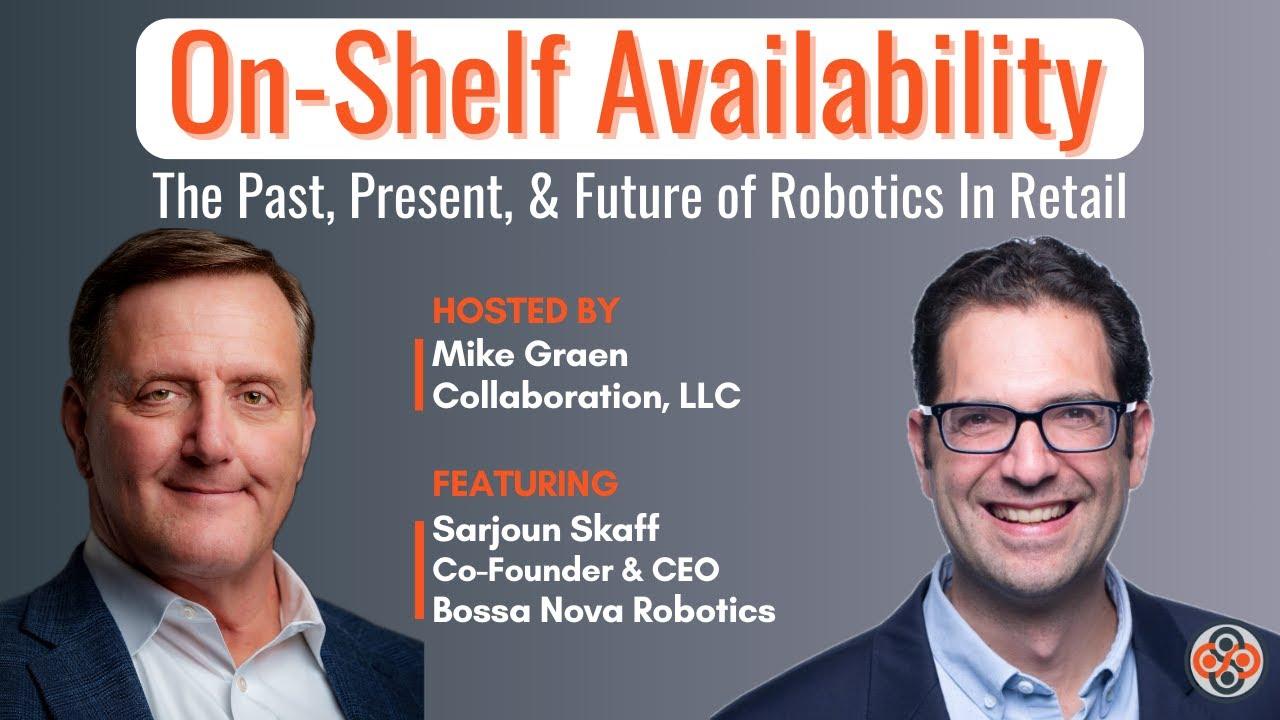
Bossa Nova’s retrospective records deployment in 600 Walmart Supercenters, with robots scanning aisles three times daily, seven days a week. Skaff’s biography puts the wider seven-year effort at $120 million in venture funding, more than $90 million in revenue, and an operation of 230 people. Those are historical totals from the company’s own account. They describe the scale of the undertaking, not a valuation or an annual sales figure.
In November 2020, Walmart’s decision to end the shelf-scanning contract became public. Earlier expansion plans had pointed toward 1,000 stores. The reversal belongs in Skaff’s story alongside the deployments. Large installations can demonstrate a team’s ability to build and operate technology while leaving its commercial future unsettled. The customer still decides whether the system fits the work.
Skaff defended the technology and said the company would continue working with partners. Contemporary reporting also described Walmart finding a better fit in employees’ inventory observations. It would be too tidy to turn that decision into a universal verdict on robots. For Skaff, it was a concrete business reversal after years spent converting a difficult technical idea into an operating service.
The documents he wished somebody had written
Long before that reversal, Skaff had been writing about what founders needed to know. In September 2014, he explained that his partners had gathered advice from entrepreneurs, consultants, and reports while building their first product. They had wanted a book that described the steps of a hardware business. His essays were an attempt to assemble the missing pages himself.
The subjects are refreshingly resistant to glamour. One essay considers distributors: they take a margin but can finance inventory, promote a product, and absorb risks that would otherwise sit with its maker. Another explains why selling directly to retailers can increase both control and exposure. Skaff had learned to look past a purchase order toward the cash tied up in goods.
His broader guide asks founders to test whether customers will pay before committing heavily to manufacturing. It also puts trust first when choosing co-founders, followed by ability and complementary skills. These are working preferences rather than an invented account of his private temperament. The person visible in the writing wants enthusiasm accompanied by evidence, and a partner whose judgment can be relied upon.
That habit now has a larger home. Bossa Nova’s website offers redacted business documents that other founders can copy, including fundraising material, financial planning, manufacturing agreements, and employee onboarding resources. It also preserves videos of the toys and the later machines. The archive gives administrative work a place beside the robot demonstrations. A company must learn to do both.
Skaff has continued in robotics: Cartesian Kinetics lists him as Head of Product, working in a business focused on automation for existing warehouses. His career has moved through different settings, but it keeps returning to the distance between a mechanism and a useful product. Someone has to pay for it, make it reliably, and find room for it in a day already full of other tasks.
There is a fitting generosity in making that distance visible to the next founder. The videos preserve the motion; the documents preserve some of the work that made motion possible. Prime-8 could perform a convincing show of mischief. A manufacturing agreement offers fewer laughs. After years spent getting robots into other people’s lives, Skaff has made room in the exhibition for the paperwork.
Follow the machines, read the fine print
Essays, conversations, and a few doors into the archive.