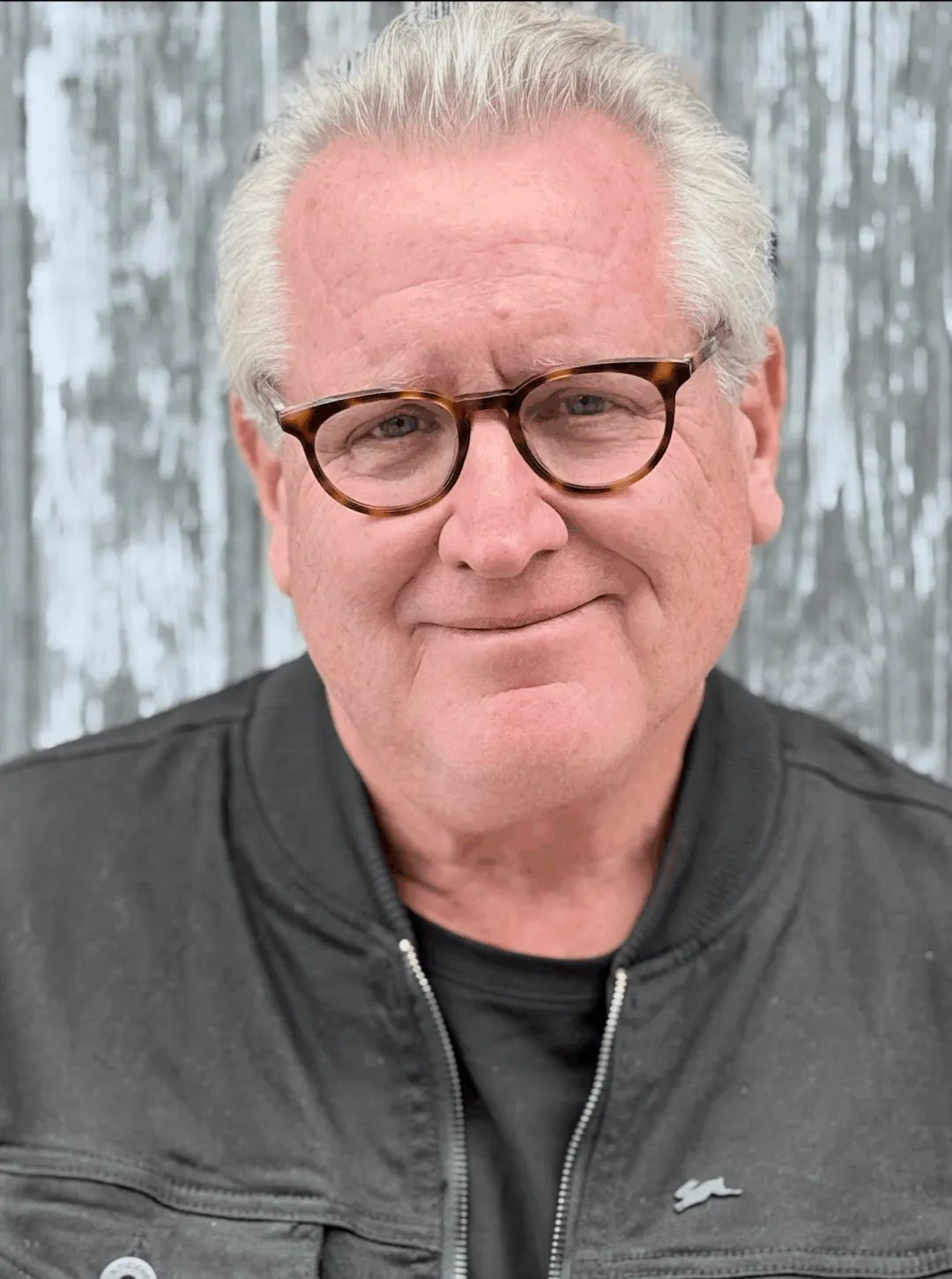
The Profile
He wrote the first book
on influencer marketing.
In 2012.
There is a man in Tennessee who keeps bees, holds seven aluminum-packaging patents, and happens to have invented a new branch of marketing theory while most executives were still arguing about whether Twitter was real. His name is Mark Schaefer, and he is constitutionally incapable of being late to the party - mostly because he builds the venue.
Before "influencer marketing" was a LinkedIn buzzword, before brands were paying people to hold protein shakes in hotel rooms, Schaefer published Return on Influence in 2012. The American Library Association called it essential. Nobody else had written it because nobody else had thought to. That's the pattern with Schaefer: he sees the shape of something before it has a name, writes the defining text, then watches the industry spend the next decade catching up.
He spent 21 years at Alcoa before any of this - negotiating a $5 billion contract with Anheuser-Busch (Alcoa's largest ever), inventing packaging technologies that earned him patents in multiple countries, and building one of the earliest corporate intranets in the world when the internet was still mostly a science project. The man who now argues that technology will never replace human judgment was, for two decades, one of the engineers proving that technology could do most things better. He knows both sides of the equation.
"Creating great content is not the finish line. It's the starting line."
- Mark Schaefer
The pivot happened in 2008. He left Alcoa, launched Schaefer Marketing Solutions, and started a blog called {grow} - now consistently ranked among the top five marketing blogs in the world. He also walked into Rutgers University and taught what may have been the first college-level social media marketing class anywhere, at a time when most universities were still deciding whether Facebook was a fad. Rutgers kept him. He's still there.
The books came fast. The Tao of Twitter became the world's best-selling book on the platform. KNOWN (2017) became the definitive work on personal branding - translated into 15 languages, shelved in 750+ libraries, adopted as a textbook at 70+ universities. Marketing Rebellion (2019) took the argument to its logical extreme: when technology commoditizes every marketing tactic, the only remaining advantage is the one robots can't replicate. Humanity.
Six of his twelve books have hit #1 in marketing on Amazon. This is not a coincidence. It is a pattern: write the book that the moment requires, write it clearly, and write it before anyone else gets there.
"Nobody is born a thought leader. It's something you need to earn in the mind of your audience, slowly over time."
- Mark Schaefer
There's a Drucker thread running through all of it. At Claremont Graduate University in the early 1990s, Schaefer spent three years studying under Peter Drucker - the man who essentially invented the concept of modern management. He still references Drucker's five questions in his blog posts in 2026. Some lessons are slow to exhaust. The idea that purpose precedes strategy, that questions beat answers, that the customer's reality is the only reality that matters - these are Druckerian positions, and they became Schaefer's foundation for everything that followed.
The Marketing Companion podcast ran for 12 years before its final episode on December 29, 2025. It was downloaded 1.5 million times. Its final episode was titled "My Fond Farewell." Not dramatic. Just done. That's a Schaefer move: build something substantial, give it everything, then exit with dignity when it's time.
What replaced it is more interesting than what it was. In 2025, he published Audacious: How Humans Win in an AI Marketing World - his sixth #1 Amazon book and the first book ever to feature an AI-activated augmented reality cover. He also launched MarkBot, a custom AI trained on his entire body of work. The man who built his career on the argument that humans are irreplaceable responded to the AI era by building an AI version of himself. Not to prove his philosophy wrong. To demonstrate how the philosophy works in practice: use the tools, keep the soul, don't confuse one for the other.
He speaks in 35-40 countries. He's been on CNN, NPR, the BBC, the Wall Street Journal, the New York Times. He holds his annual "Uprising" retreat - an intimate, invitation-only gathering of marketers who don't need to be sold on the idea that the room is the point. His honey won the blue ribbon at the Tennessee State Fair. He's been on the Habitat for Humanity board since 1995. He's been mentoring through the Knoxville Leadership Foundation since 2007.
The through-line is not complexity. It's consistency. Show up. Think clearly. Write things down. Be useful. Stay human. He's been saying this for 17 years, and he was right in 2008 and he's right now, and the gap between those two moments is the distance between a blog post and a movement.
Peter Drucker once said the most important thing is to know what you don't know. Schaefer adds a corollary: know it early, put it in a book, and get there before the conference circuit does.