In January 2018, Maria Fujihara asked her parents for a plane ticket home to Brazil. Her attempt at entrepreneurship in California had run short of money. She needed to leave the United States or find a way to stay legally. A flight would have settled the question. Her parents offered to pay for a visa application instead.
It was an unusually practical form of encouragement: enough money to keep trying, with the destination removed. Fujihara filed company paperwork and applied for an O-1 visa. Two months later, it came through. “I was the only person at the company, hiring myself!” she recalled. There are more glamorous founding stories. Few capture the administrative character of starting over quite so well.
The business became SINAI, whose software helps companies work out the economics of reducing their emissions. Its customers have included steelmakers and manufacturers, enterprises with physical equipment, long investment cycles and expensive decisions. Fujihara had arrived at a question that would occupy her for years: how do you turn an environmental intention into something a company can actually choose to do?
The buildings were only the beginning
Environmental work was familiar territory. Both her parents were forest engineers. Her father worked at Brazil’s environmental agency, IBAMA; her mother managed São Paulo’s Burle Marx Park. As a child, Fujihara found the adults’ occupations sufficiently mysterious that she told friends her parents were involved with the mafia. The family business was rather more interested in trees.
She initially studied economics with diplomacy in mind, attracted by travel, culture and the wider world. Architecture became her direction. At university, she wanted to understand sustainable construction, but found little attention paid to it in her classes. A professor pointed her toward Green Building Council Brasil, where she began working on the environmental standards that would shape her early career.
At the council, she helped bring green building certification into Brazilian practice. That meant dealing with the decisions behind houses, buildings and neighborhoods: materials, resource use, waste and planning. She argued that better planning could reduce waste and change the economics of construction. The eventual software founder was already interested in the relationship between environmental performance and cost.
Her postgraduate work at the University of São Paulo widened the frame again. A 2016 thesis examined greenhouse gas accounting for Parque da Cidade, an urban development in São Paulo. It considered stationary energy, ground transportation and household waste, adapting established calculation methods to a neighborhood. The comparison extended to inventories from São Paulo and Recife. A building could have a certificate; a neighborhood still needed its emissions counted.
A nonprofit education in making money
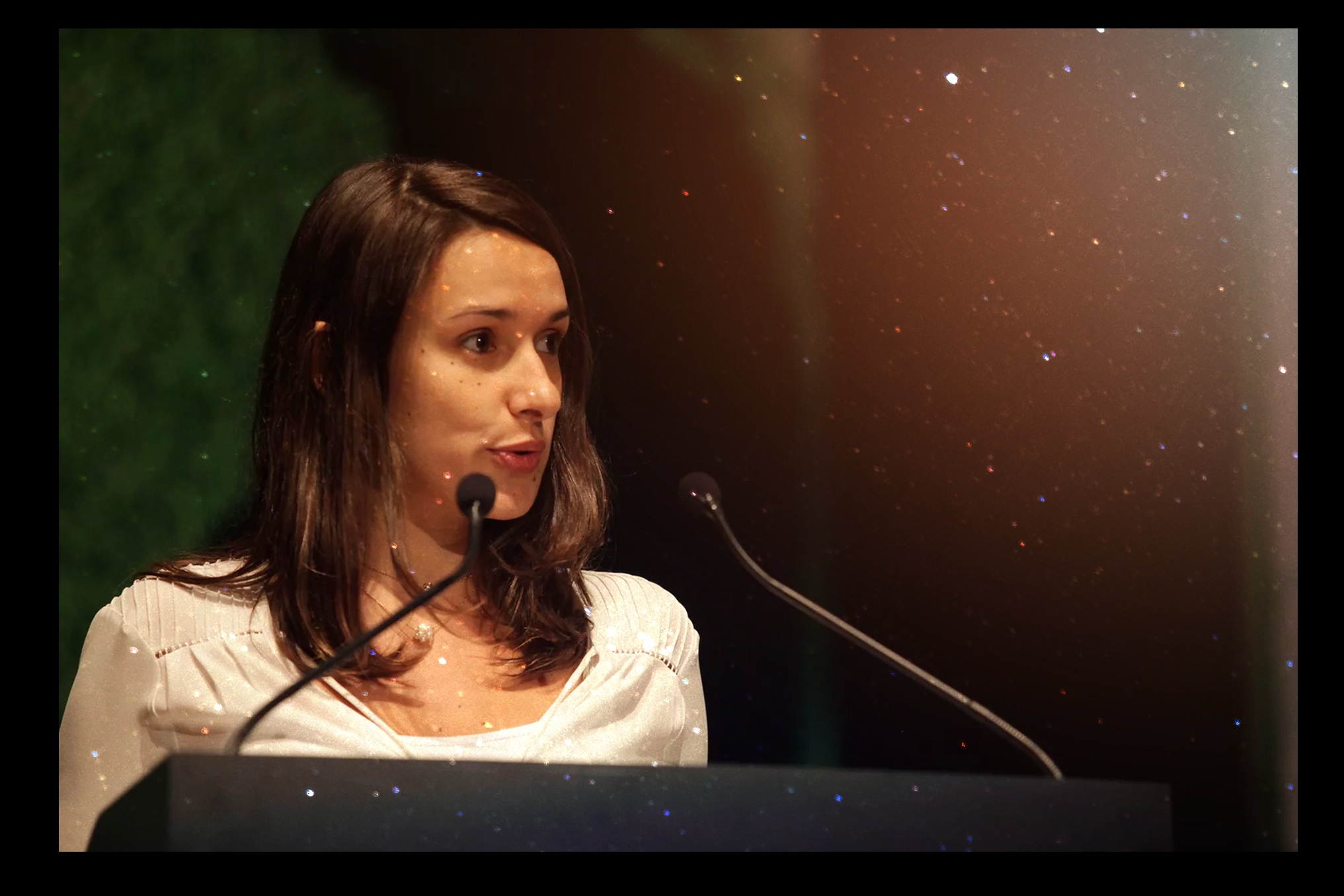
Fujihara’s preparation for business included a detail that gets lost when careers are divided neatly into public purpose and private enterprise. At Green Building Council Brasil, she had to help the organization sustain itself financially. Developing products and finding sponsors were part of the work. She had already been learning how to persuade someone to pay for an environmental proposition.
When she decided to build a business, however, she still needed to learn how a technology company took shape. Singularity University provided an introduction to iteration and incubation. The experience gave her a setting in which ideas could be tested, changed and narrowed, rather than defended indefinitely because they sounded worthy.
SINAI was founded in 2017. Fujihara also brought experience as an adviser to Project Drawdown, the climate solutions organization. By Winter 2020, SINAI was in Y Combinator. Those institutional names trace a transition from construction standards and environmental research into the commercial routines of enterprise software. The underlying concern remained recognizable; the method of pursuing it kept changing.
The first customer had notes
One of the early reviews of her software was admirably unromantic. A customer thought it looked like something from the 1990s. For a founder trying to address climate change, this might seem an unfairly small complaint. For the person expected to use the product, it was a perfectly reasonable one.
Fujihara had begun with sketches, working across paper, whiteboards and an iPad. Rough prototypes let prospective users respond before the product hardened into something more costly to change. The unflattering design verdict became useful information. She revised the platform.
“If you’re proud of your first sketches or even your first product, you’ve launched too late,” she said. It is an architect’s education put through a software deadline: make the drawing, let somebody object, revise. Her willingness to show unfinished work matters in a career devoted to problems that offer endless reasons to keep preparing. A customer can be more helpful than another month of private certainty.
An accent in the room
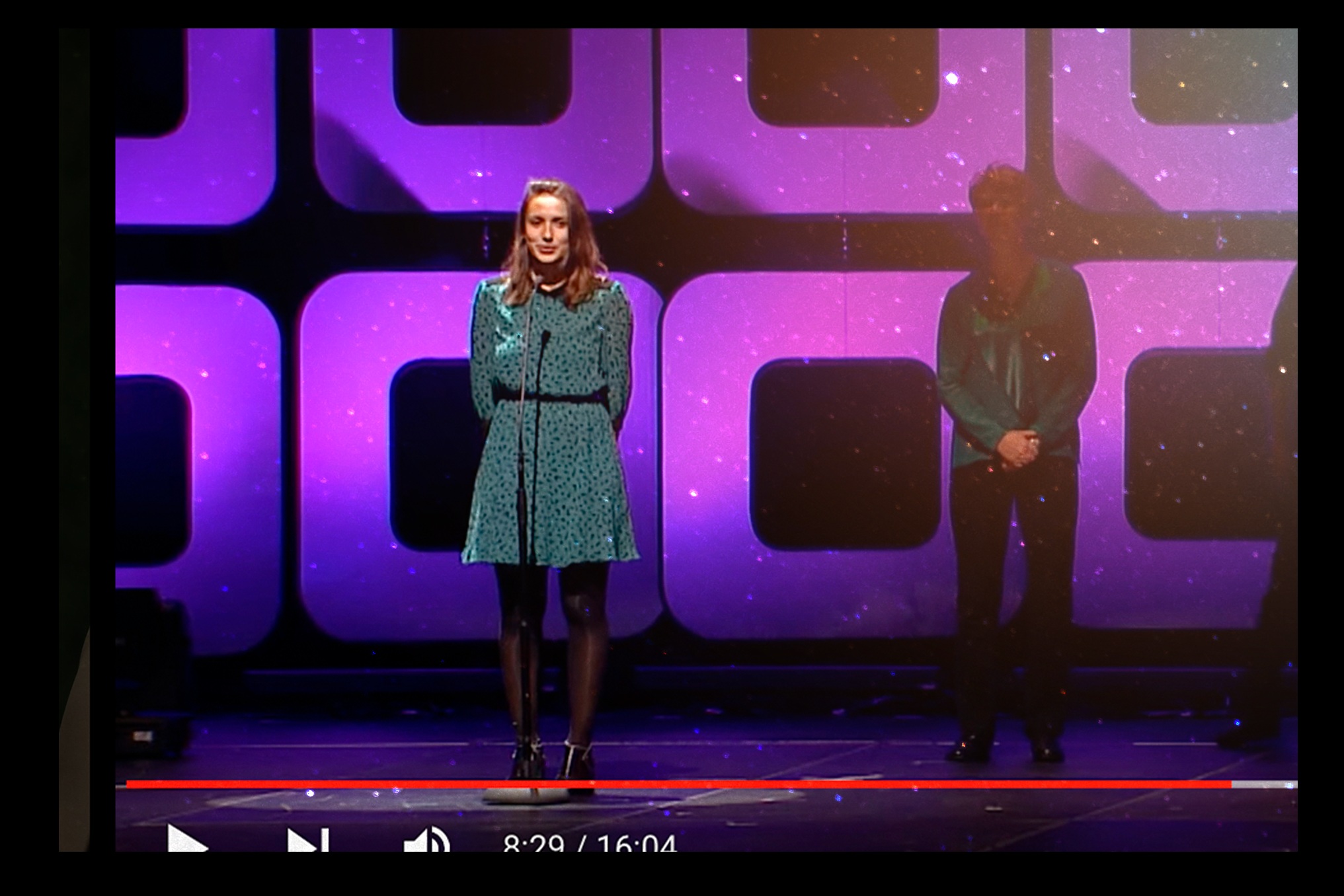
The difficulties were also personal and social. In 2021, Fujihara described building a life in the United States at the same time as building a company. She felt judged on her appearance, gender and accent while she was still finding the confidence to position herself as a founder.
Networking, that agreeable word for a collection of expensive activities, had its own admission price. She wanted to make friends but could not afford the dinners and social occasions that helped relationships form. Her account gives a more specific meaning to the idea of starting from scratch. It includes the evenings you cannot join, as well as the presentations you have to give.
She described relying on her own judgment, passion and intuition to keep going. That is her explanation, and it deserves to remain hers. The point is less tidy than a lesson about confidence: technical knowledge and professional experience did not spare her the work of persuading other people that she belonged in the room.
The customer with the smokestack
Fujihara chose customers whose operations made the climate problem difficult to ignore. In a 2020 interview, she named ArcelorMittal and Brazilian wastewater business BRK Ambiental among SINAI’s early customers. She was explicit that the company was not targeting small and medium businesses.
Inside those larger organizations, the sustainability department would gather information from operations, engineering, finance and other teams. The information then had to reach the people making strategic and financial decisions. An emissions inventory was consequently also an organizational exercise. Someone had to persuade departments accustomed to different priorities to work from the same picture.
Her argument for software included a very human benefit: releasing people from time spent collecting and processing data so they could work on solutions. She wanted sustainability teams to have room to identify opportunities and think creatively. The attraction was partly the prospect of returning a skilled person’s attention to the work that required judgment.
By 2021, SINAI had raised a $10 million seed round led by Obvious Ventures. Its software was organized into modules, and customers could involve colleagues across the company. The product’s purpose reached beyond producing an account of past emissions. It helped model what future reductions might cost.
“Accounting is just the starting point.”
Maria Fujihara, 2021
The distinction has consequences. A company can know its footprint and still be uncertain which equipment to replace or which project to fund. Fujihara’s work brings that uncertainty into a financial discussion. A target acquires a schedule, competing options and a claim on the budget. The boardroom has a remarkable ability to become attentive when a proposal arrives with a price.
How much does standing still cost?
In explaining SINAI’s work, Fujihara has emphasized the physical assets behind emissions: factories, transportation, steel production, agriculture and mining. These businesses cannot make their operations different merely by changing their language. Their assets and processes have to change, and those changes have to be evaluated.
She describes scenario analysis as a way to compare the cost of pursuing emissions reductions with the cost of maintaining existing operations. Capital expenditure, operating costs and net present value belong in the same discussion as carbon. The customer’s question is both environmental and financial: what will this transition require of the business?
Her approach to working with established companies favors questions that get them to reconsider their assumptions. She has described SINAI as helping such organizations examine their own future and find solutions in which they can invest. It is patient work with customers whose decisions may involve equipment, suppliers and commitments extending far beyond a software contract.
SINAI’s Series A, led by Energize Ventures.
Energize’s 2022 investment put another number beside the ambition. The firm led a $22 million Series A, joining investors including Obvious Ventures and Afore. Its explanation focused on the difficulty of combining operational data with the financial analysis needed to plan reductions.
There was an instructive pair of figures in that assessment: for the previous year, SINAI had tracked more than 35 million tons of customer emissions and helped model over $5 billion in potential mitigation investments. Those were inventories and possibilities, rather than a claim that every proposed project had been built. For Fujihara, the terrain was the space between identifying emissions and deciding to spend money changing them.
Changing the job, keeping the question
In September 2024, Fujihara announced that she would move from CEO to founder and president after six and a half years in the chief executive role. Jess Waldeck became CEO. She said her work would focus on customers and strategic initiatives. SINAI’s current leadership page lists her as co-founder and board chair.
Her public work has continued to include education and discussion. In June 2025, she appeared on the program for Mitsidi’s Women in Energy event in São Paulo, alongside participants addressing business, energy and carbon. Her own website gives climate leadership and climate education separate space, extending the conversation beyond the software.
She writes about compassion and empathy alongside knowledge and technology, and about leaders who treat environmental responsibility as a cause they personally share. It is a revealing emphasis from someone who has spent years translating emissions into financial terms. The calculation is necessary. Getting people to act on it takes another kind of attention.
As far back as 2019, Fujihara described buying locally, sharing rides and swapping clothes rather than always buying new ones. Her home, she said, looked like a forest. There is something pleasingly consistent about that detail. The career travels through construction, urban planning, software and corporate finance, while the house keeps making room for plants.
Follow the conversation / Watch, listen, read
- Maria Fujihara’s website
- Twitter / X
- SINAI Carbon Management
- Watch: Crossing Borders with Nathan Lustig
- Watch: starting her own business
- Read: early days of SINAI
- Read: building the first product
- Read: her account of founding as an immigrant
- Read: carbon pricing and SINAI
- Listen: Entrepreneurs for Impact
- Read: the Series A investment
- Read: her life and early career in Brazil
- Read: SINAI’s 2020 customers and approach
- Read: nonprofit lessons and starting SINAI
- Explore: current SINAI leadership
- Explore: Women in Energy IV
- Explore: Singularity speaker profile
- Explore: Y Combinator profile