When Marc Whitten left Xbox in 2014, the farewell came with an unusually practical instruction: you could still find him on Xbox Live. His gamertag was notwen. After fourteen years helping build the platform, three console generations and a job as chief product officer, he remained another person you might meet in a game. Corporate departures generally leave a forwarding address. This one left a player handle.
It is a useful place to begin with Dolby’s new chief executive. Whitten’s career has moved through Microsoft, Sonos, Amazon, Unity, Cruise and Meta. Read as a list, it looks restless. Follow the products, though, and a recurring question appears: how much complicated machinery can you put between a creator and an audience before the audience notices?
Sometimes his teams made the machinery recede. Sometimes the business arrangements around it became impossible to ignore. Both experiences belong in the story of an executive who now leads a company whose work is often encountered through somebody else’s screen, speaker or cinema.
The living room has too many buttons
Whitten holds a computer science degree from the University of North Texas. He joined Microsoft in 1997 and the Xbox team in 2000, before the first console shipped. His years there covered the original Xbox, Xbox 360 and Xbox One. That is a substantial stretch of entertainment history to spend thinking about what happens after someone turns on a television.
By 2010, he was discussing Project Natal, the motion-sensing effort that became Kinect, in distinctly domestic terms. Count the buttons in a living room, he suggested, and the result would be alarming. Experienced players could manage triggers and controllers; other people could feel excluded by them. Cameras and three-dimensional sensors offered another way in: let people move rather than learn another sequence of buttons.
The ambition went beyond games. He imagined entertainment systems responding to what viewers did and said. There was something wonderfully optimistic about that picture of the living room: the electronics would finally learn the household’s habits, instead of requiring the household to study theirs. Anyone who has negotiated with a remote control can appreciate the appeal.
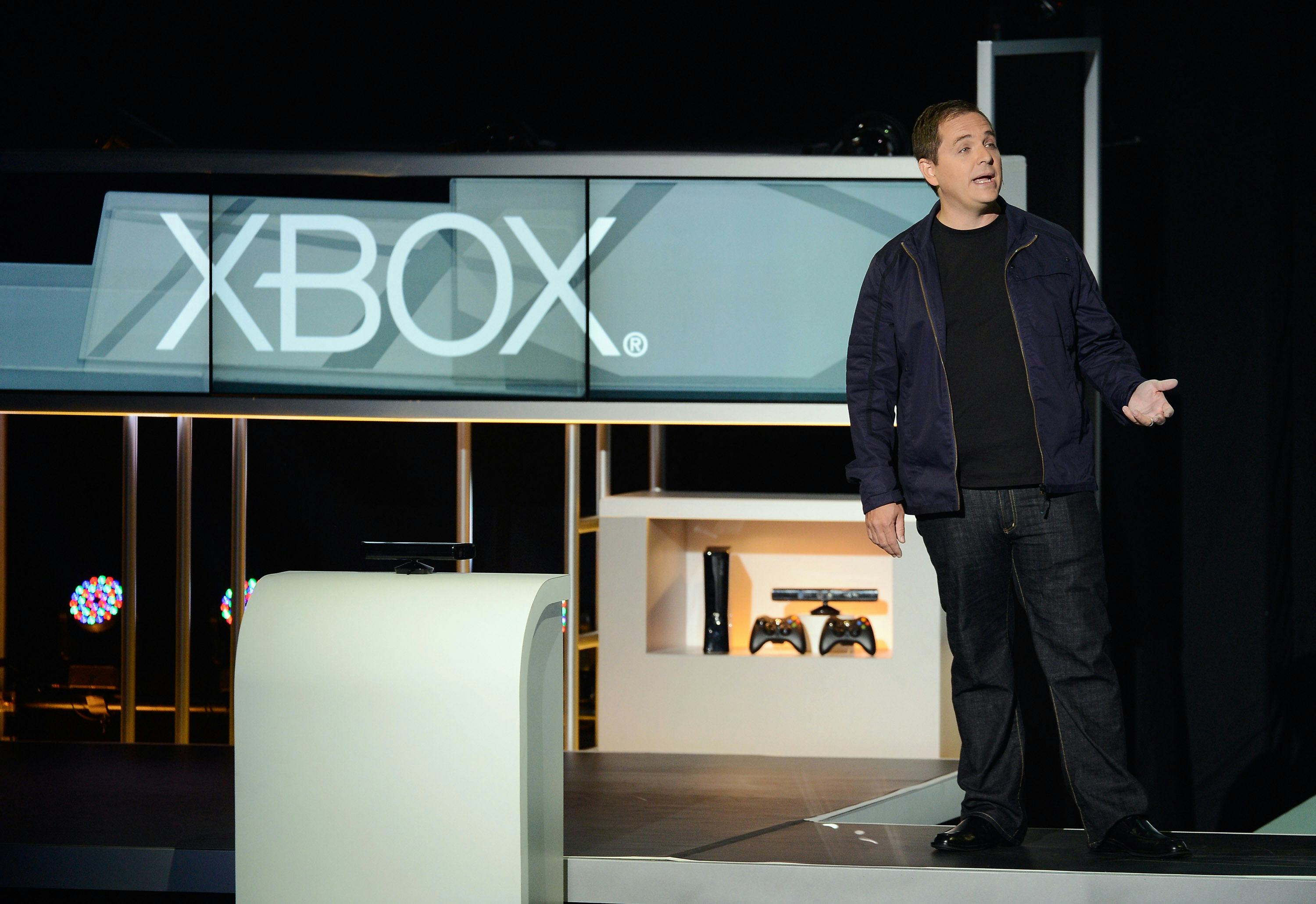
When asked to explain his job in 2013, he called himself “the platform guy.” The description covered the cloud, Xbox Live and apps. It also explained his vantage point. A platform executive has to think about the relationships among things: the game and the console, the developer and the store, the player and the friends who are already online.
A friends list becomes an institution
Xbox Live made that last relationship part of the console itself. Looking back in 2021, Whitten described an early ambition to make PC-style online play “console simple.” Matchmaking, leaderboards and a common friends list were concrete starting points. The larger consequences came from what developers and players chose to do with the connection.
By his departure in March 2014, Xbox reported that its online community had 48 million members across 41 countries. Those figures describe the scale of a team achievement. They also give some weight to that farewell gamertag. A name on a friends list had become a durable connection, something that could survive a change of employer.
At Whitten’s Xbox departure, March 2014. Console count describes his Xbox tenure.
There was a harder side to building the digital living room. During the Xbox One launch period, Whitten defended the advantages of a digital collection: access across consoles, family sharing and less dependence on carrying discs. Players also had questions about ownership and restrictions. A technically coherent future could still be an awkward proposition for the people expected to buy it.
That tension would follow him. The designer sees a system that can do more. The customer wonders what familiar freedom might disappear along the way. The distance between those two views can be measured in very uncomfortable interviews.
The speaker learns the room
Sonos brought the problem down to furniture. Whitten became its chief product officer in 2014. The company’s Trueplay software, released in November 2015, addressed a nuisance that good speakers cannot solve on their own: people put them in actual homes.
A kitchen cabinet, a wall and a pane of glass all affect what reaches the listener. Trueplay used a tone from the speaker and the microphone in an iPhone or iPad to measure the room, then adjusted the speaker’s sound. Sonos described a process taking a minute or less. The listener supplied the room; the software did the acoustic homework.
Whitten’s explanation included a telling detail. The update worked with the original Play:5, a speaker already more than six years old, even as Sonos was selling its successor. He said “a great experience is one that also stays current.” For a hardware company, improving an old purchase is a particularly persuasive way to introduce a new capability.
“A great experience is one that also stays current.”
Marc Whitten, on Sonos Trueplay, 2015
The idea carries a certain courtesy. A customer has already made space for a product, paid for it and learned its habits. Software can reward that commitment. The exciting announcement, in this case, could arrive through a speaker that was already sitting on the shelf.
One more screen, one less obstacle
At Amazon, which he joined in 2016, Whitten’s remit included entertainment devices and services. By September 2020, Fire TV had sold more than 100 million devices worldwide. Its next software experience emphasized finding things to watch, individual profiles and deeper Alexa integration. The television had acquired an enormous catalog; choosing something from it had become a product problem of its own.
That same month, Amazon introduced Luna. The cloud gaming service proposed playing on equipment customers already owned, including Fire TV, PCs, Macs and web apps on iPhones and iPads. The computing happened remotely. An optional controller connected directly to the cloud. Amazon’s pitch was fewer downloads, fewer configuration chores and an easier move between screens.
Whitten wrote the announcement when early access began on October 20. Hundreds of thousands of people had requested invitations, he said. He asked the first participants to report what worked, what disappointed them and what they wanted built next. The launch was being treated as an invitation to keep adjusting the service.
There is a family resemblance between that approach and the older Sonos update. A product’s release opens a continuing relationship. Its usefulness has to be maintained after the presentation ends and the audience goes home. For the executive on stage, that is a less photogenic job. It is also where people spend most of their time with the product.
When the platform changes the bargain
Whitten moved to Unity in February 2021, leading its Create business. Here he worked on the tools used to make experiences, rather than primarily the devices used to enjoy them. In a 2022 conversation with N’Gai Croal, he discussed Unity’s Azure partnership and the practical needs of teams working in different locations: shared assets, accessible hardware and tools that could travel with the work.
It was familiar territory from the other end of the connection. If production became easier, more work could reach an audience. But tools are also businesses, and their customers build budgets and livelihoods around the terms of use.
In September 2023, Unity’s proposed Runtime Fee provoked a backlash over charges associated with game installations. As the head of Create, Whitten published an open letter that began with three plain words: “I am sorry.” He acknowledged that Unity should have consulted more developers and incorporated more feedback before announcing the policy.
The revised proposal protected existing projects unless developers moved to a future version and offered qualifying customers a choice of fee calculations. The reversal did not end the episode. In September 2024, under CEO Matt Bromberg, Unity canceled the Runtime Fee for games altogether and returned to its established subscription approach.
This belongs alongside Whitten’s launches. The same dependence that makes a platform valuable also makes unexpected changes consequential. Developers need to know what they can count on. An apology can begin the repair; the terms of the relationship have to do the rest.
A detour through the physical world
In June 2024, Cruise named Whitten its next CEO. He moved into autonomous vehicles with a background in consumer technology and platforms. By December, General Motors had decided to stop funding Cruise’s robotaxi development, citing the resources and time required to scale it and the competitive market. It planned to combine technical efforts around autonomous and assisted driving for personal vehicles.
The sequence resists a neat career lesson. He arrived at an existing business, and its parent changed the investment decision within months. In February 2025, he confirmed another move, to lead Meta’s new humanoid robotics team. Screens and speakers had given way to systems intended to act in physical space. The reach of his jobs had widened; the outcomes remained dependent on more than a product executive’s intentions.
Back to the audience
Dolby appointed Whitten president, CEO and a director on August 27, 2026, succeeding Kevin Yeaman. The appointment puts him back among familiar concerns: creators, distribution partners, devices and the people at the receiving end. Dolby’s technologies travel through that whole chain. Making them matter requires cooperation across it.
The attraction of his career is in its recurring practical questions. Can a friends list make a console more welcoming? Can software improve a speaker someone bought years ago? Can a game reach the screen already in a player’s hand? And can the company providing the connection keep the confidence of everyone who depends on it?
At Xbox, Whitten’s farewell left people a way to keep playing with him. At Dolby, the audience is larger than a friends list, and many listeners will never learn his name. They will still pass judgment in the ordinary way: by pressing play.