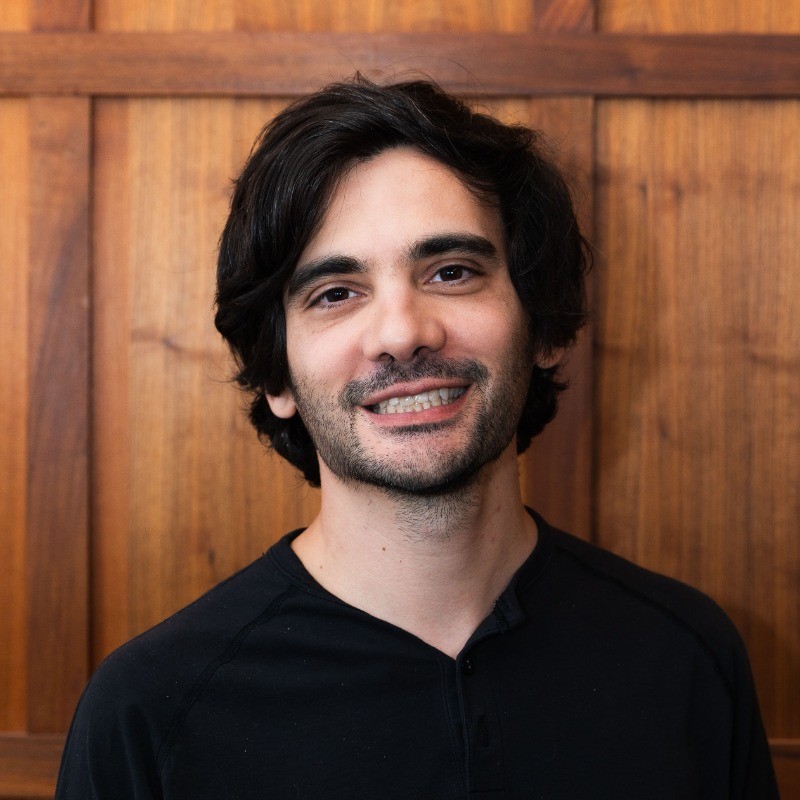
Profile
The Guild Name That Became an Empire
Paris, sometime around 2005. A teenager obsessed with World of Warcraft has a problem: the mods and add-ons that make his game better are scattered across a dozen unreliable websites. He decides to fix it. He builds a hub. He names it after his guild - the one tearing through European raid content - Curse.
That instinct to solve the problem in front of him, rather than wait for someone else to do it, became Hubert Thieblot's defining professional move. Repeated, compounded, and applied at scale, it produced one of the internet's largest gaming media networks before most people in venture capital had ever heard of "gaming content."
Today, Thieblot operates from a 42,000 square foot campus at Fort Mason on San Francisco's waterfront, writing the first checks into companies building hardware, AI, web3 tools, and AR/VR systems. The founders who come through Founders, Inc. - many of them facing exactly the kind of scattered-resource, no-clear-path problem he faced at 20 - find someone who has lived the full journey.
"The only real startup advice: work on something you care deeply about. You are not lasting 10 years without that."
- Hubert ThieblotDropping Out Into Something Real
The Swiss IT program Thieblot enrolled in after leaving Paris existed in a parallel universe from what he was already building. By 2006, Curse was real - real users, real traffic, real complexity. The program was theoretical. He incorporated the company, hired his brother as the first employee, and left the classroom for good.
This was not the dramatic dropout narrative that gets retroactively polished into founder mythology. It was a quieter calculation: one path was already producing results, the other was producing grades. He relocated to the United States in 2008 when the platform's growth demanded it.
Curse expanded beyond mod repositories into wikis, news, video, forums, databases, and desktop applications - Curse Client and Curse Voice gave millions of gamers a communications stack before Discord existed. By 2013, 30 million unique visitors arrived monthly. The Inc. 500 had noticed in 2011. Ernst & Young named him an Entrepreneur of the Year semifinalist for Northern California in 2012.
In 2009, a cash crisis threatened everything. An investor told Thieblot to step down and let a "professional CEO" take over. He rejected the advice, walked out of the meeting, and raised $600,000 from angel investors. The company survived. The lesson stuck.
The Void That Came With the Acquisition
When Twitch - the Amazon-owned streaming platform that had itself ridden the gaming wave into a multi-billion dollar acquisition - bought Curse in 2016, Thieblot found himself sitting with paperwork that should have felt like the end of a long race.
It didn't. He has described the moment of signing as "total void, zero excitement." Thirteen years of building had produced a company worth acquiring by one of the internet's dominant platforms, and the emotional response was hollowness. This is not a complaint he makes. It's a data point he shares openly with founders who are running toward their own exits - a heads-up about the gap between the milestone and the meaning.
He joined Twitch as Vice President of Emerging Markets and Mobile, working on features like Squad Stream and international expansion for the platform he had just sold to. The operational knowledge of building community at scale transferred directly. The gaming media world and the live-streaming world had more in common than the org charts suggested.
What Founders, Inc. Actually Is
In 2022, Thieblot became General Partner at Founders, Inc. - a venture fund with an unusually physical footprint. Most venture capital happens in conference rooms and decks. Founders, Inc. happens at Fort Mason, a 42,000 square foot space where founders don't just pitch - they build, eat, argue about product decisions, and run into each other by accident.
The mission, as Thieblot states it plainly: help hundreds of thousands of founders start companies, regardless of whether Founders, Inc. funds them. The fund writes initial checks between $100,000 and $250,000 into early-stage startups working in AI/ML, hardware, web3, AR/VR, B2B software, robotics, and other territories that larger funds approach cautiously. The 6-week intensive programs on campus collapse the feedback loop between idea and reality.
Portfolio Companies
Investment Focus
What He Looks For - and What He Doesn't
Thieblot's investing approach reflects his own biography: he was not polished when he started. He built something real first and learned to articulate it later. That sequence - build, then explain - is what he watches for in founders.
"If you spend more time on your pitch deck than actually building the product, I have bad news for you." The quote is blunt enough to scan as a tweet but it's actually a filter: the founders who pass through Founders, Inc. are builders who need capital and community, not performers who need an audience.
He writes checks from $5,000 to $50,000 at the angel stage, with a sweet spot around $25,000. The fund follows on with larger positions as companies develop. The sectors are frontier tech - hardware, AI/ML, web3, AR/VR - categories where patient capital and genuine technical community matter more than quick pattern-matching on metrics.
On Founders Who Are Running Out of Runway
There is a specific kind of founder Thieblot talks about - not as a cautionary tale but as a portrait of what the work actually looks like. "Imagine pitching your startup while debt collectors are blowing up your phone." He has funded that founder. He knows that founder. He was, in some ways, adjacent to that founder during the 2009 cash crisis when Curse came close to failing.
The 2009 episode is worth dwelling on. An investor delivered what must have seemed like a rational analysis: the company needed adult supervision, a proven CEO. Thieblot's response was to reject the premise, leave the room, and find different investors. This is not stubbornness as a personality defect. It is the founder's necessary capacity to hold the line on the thing that is true while everything else is uncertain.
"All a founder needs is a problem to solve and the stubbornness to figure it out."
- Hubert ThieblotThe Immigration Problem He Keeps Naming
Thieblot navigated the transition from French teenager to US-based founder and operator over two decades. From that vantage point, he watches skilled immigrants move through the system today and says, plainly, that it is devastating. "I meet founders every day that are afraid of not being able to stay in the country who went to schools here."
This is not abstract policy commentary. The Founders, Inc. campus in San Francisco fills with founders from dozens of countries. The bureaucratic risk attached to a visa has direct consequences for early-stage company formation: founders who cannot guarantee their right to remain cannot make long-term bets. Thieblot is vocal about this in ways that cost him nothing to say and might eventually matter to someone who can change it.
Career Timeline
In His Own Words
Our mission is to help hundreds of thousands of founders start a company, regardless of whether we fund them.
You can't stop thinking about all the problems and doubts; it just feeds on itself. There's no one to talk to, just you alone with your thoughts. Then the next morning, you still have to show up for your team.
This country has made skilled immigration pathways extremely hard. I meet founders every day that are afraid of not being able to stay in the country who went to schools here. Devastating.
Details Worth Knowing