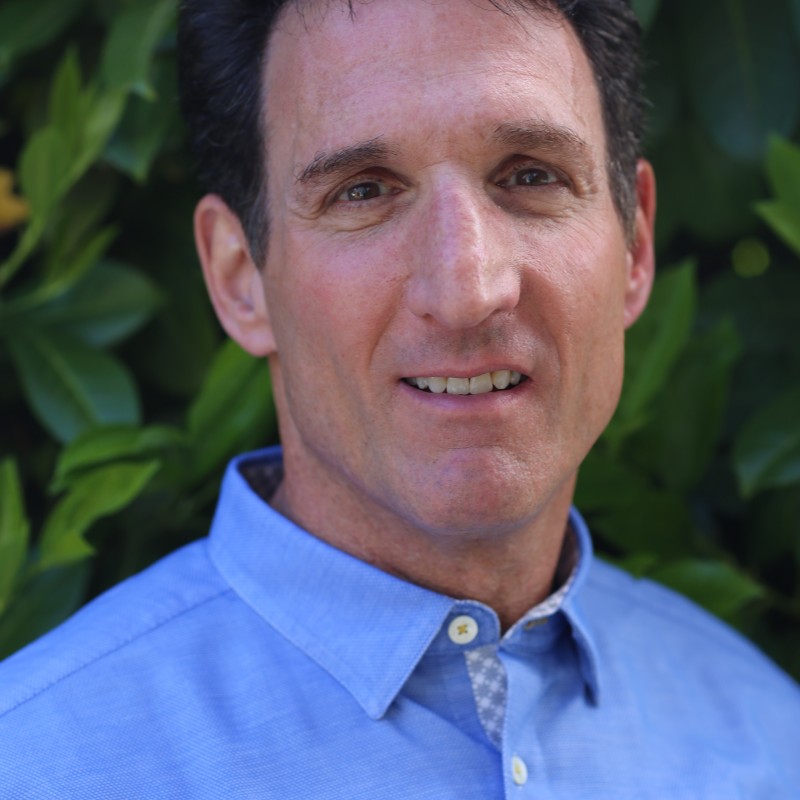
Running Fraud Detection at Internet Scale
Most people have never heard of Sift. Every time they buy something online without getting defrauded, they have. Marc Friend runs the company that makes that invisible protection possible - a platform quietly processing over a trillion behavioral signals a year across 34,000+ websites and applications.
Friend became CEO of Sift in December 2022. The company was already the category leader in digital trust and fraud prevention, serving more than 700 global enterprises. His job: keep it there, and push the frontier of what AI-powered fraud decisioning can actually do at internet scale.
What makes Friend an unusual choice for this role - and probably the right one - is the breadth of his toolkit. He's seen companies from both sides of the cap table. He's written venture checks and cashed them. He's been a CFO when things were tight and a CEO when things needed turning around. By the time he arrived at Sift, there were very few operational surprises left.
Grow fearlessly, unlocking revenue, strengthening trust, and empowering customers to scale with confidence.
- Marc Friend, CEO of SiftMIT Circuits to Harvard Strategy
Friend is MIT Class of 1986 - a double-dip, earning both a bachelor's and master's in Electrical Engineering before pivoting toward finance and strategy at Harvard Business School (MBA, 1994). The engineering-to-business move is a familiar Silicon Valley origin story. But the path Friend took between MIT and Harvard and then again between Harvard and the companies he'd help build is worth tracing.
He started in venture, joining Charles River Ventures as an associate in 1988 to do early-stage diligence. This is the kind of work that teaches you what good companies look like before they look like good companies. From there he moved to US Venture Partners, became a General Partner, and invested specifically in enterprise software and internet businesses - the exact arena he'd eventually operate in.
Summit Partners came next (2001-2005) - a $20 billion growth-stage firm where he sharpened the lens for identifying companies ready to scale rather than just survive. Then Partech International. By the time Friend crossed from investor to operator, he'd seen hundreds of companies up close.
From Sun Basket's Profit Run to Nokia's Acquisition
Friend's operating career reads like a deliberate curriculum in how to improve companies fast. At Sun Basket, the meal-kit delivery company, he arrived as CFO and - in 18 months - turned a money-burning DTC brand into a profitable business. That's the kind of result that builds a reputation.
At PubNub, the real-time data streaming platform, he built the company's first cross-functional compliance team from scratch, alongside the financial infrastructure a fast-scaling API business needed. He didn't just manage the books; he built the operating system around them.
Then came Rapid. In April 2023, Friend took the CEO role at Rapid (formerly RapidAPI), an API marketplace once valued at $1 billion. He succeeded founder Iddo Gino and pivoted the company toward a verticalized go-to-market approach. Nineteen months later, Nokia acquired Rapid - a clean outcome for a company that needed direction. Friend had provided it.
That track record is exactly what Sift was hiring for when it brought him aboard in December 2022. Sift isn't a turnaround - it's a market leader looking to press its advantage in an industry that is genuinely accelerating. AI-powered fraud is getting more sophisticated. The platforms defending against it need to move faster still.
He's been a VC partner, a CFO at three companies, and a CEO at two. By the time he arrived at Sift, there were very few operational surprises left.
- YesPressA Trillion Events and the Machine Behind Them
Sift's core claim is straightforward: its platform processes more than 1 trillion events annually across 34,000+ sites and applications, turning that data into real-time fraud signals. When a suspicious login happens at 2am, or a payment pattern looks off, or an account shows signs of takeover - Sift's AI models are supposed to catch it before the damage lands.
The platform covers digital trust across multiple vectors: payment fraud, account takeover, content abuse, policy violations, dispute management. For the 700+ enterprises running their transactions through Sift - including players across fintech, e-commerce, food delivery, travel, and online gambling - this is infrastructure-level protection they'd rather not build themselves.
Under Friend's leadership, Sift claimed the #1 position in Fraud Detection on the G2 Grid for Winter 2026, a ranking based on real customer reviews. That's the kind of outcome you get when the product works and the customers notice.
The company also runs what it calls a Global Data Network - a consortium model where signals from across the customer base strengthen the model for everyone. Fraud patterns detected on one platform inform defenses across all of them. The data flywheel is real, and at 1 trillion events a year, it's moving fast.
What Gets Done
The Detail That Actually Tells You Who He Is
Here's the thing about Marc Friend that doesn't appear in any press release: he funded a named scholarship at MIT - the Judy & Phil Friend '58 Scholarship, one full-tuition merit award per year - and then ran the Class of 1986's leadership giving campaign for a decade (2006-2016). That's not an afternoon of philanthropy. That's ten years of sustained commitment to a place that shaped him.
He also competes in Ironman triathlons. The Ironman is not a casual hobby - it's a 2.4-mile swim, 112-mile bike, 26.2-mile run. People who finish them tend to have a specific relationship with discipline and discomfort that explains a lot about how they operate under business pressure.
His LinkedIn headline - CEO of Sift | Chairman at Simon AI | Ironman - lists the triathlon credential alongside his board roles. That's intentional. The endurance athlete and the turnaround operator are the same person running the same playbook.
He also serves as Chairman at Simon AI and as a Venture Partner at Techne Infiniti Ventures, which suggests he's kept the investor antenna active even while deep in operating mode. The pattern across three decades is someone who wants to see the whole game, not just the part he's playing.