The revealing detail in Lauren Craigie’s account of hiring Mad Creative Agency is the pull request. A new brand and website were the assignment. But the finished website also had to fit the way her team worked: they wanted to keep editing it with Claude and Cursor. Beautiful was part of the brief. Being able to change beautiful was part of it, too.
Craigie, at Inngest, had interviewed nine other agencies. She says MAD accepted the partly completed rebrand, agreed to deliver through a pull request rather than a content management system, and brought the actual lead designer, Breana Panaguiton, into the second call before the contract was signed. Those were her stated reasons for choosing the team.
There is a useful buying lesson here. A portfolio shows you what a studio can make. A conversation about unfinished work tells you something about how it will behave. Would it respect decisions already made? Could it work inside someone else’s tools? Who would actually turn up? These are less photogenic questions than which shade of blue to choose. They are also questions a client will eventually have to answer.
A studio comfortable with someone else’s starting point
Founded by Madeline Eckles, MAD presents itself as an extension of a client’s team. Its services cover brand identity, digital products, and physical experiences. That makes it a business selling creative expertise and execution: a client can commission a visual system, an interface, a website, a campaign, or an event.
The interesting distinction is how those capabilities meet. For a small company, a new identity may immediately need to become an app. For a fashion label, it may need to become a room full of guests. The work can cross the boundaries that separate a branding studio, a software design consultancy, and an event producer. MAD’s portfolio makes that positioning tangible.
Consider Bellhop, a branding agency focused on hospitality and travel. An agency hiring another agency has a pleasing symmetry. Bellhop already had a vivid identity; MAD’s assignment was to translate it into wireframes, interface design, and a developed website. The buyer did not need to surrender its own expertise to buy a different kind.
“They’re able to take complex concepts and convey them as organized, clear visuals.”
Mike Jones, Science, Inc. · Client testimonial
That testimonial describes a practical service. A complex business does not become understandable merely because its team understands it. Someone has to decide what the visitor sees first, which pieces belong together, and how the explanation survives contact with a screen.
The brand leaves the screen
For FARM Rio, the medium was a rooftop farm in Brooklyn. MAD describes a schedule measured in weeks between kickoff and the event. Its tasks included finding the venue, coordinating vendors, styling the space, and overseeing the buildout. Here, a brand’s appearance depended on a series of physical arrangements.
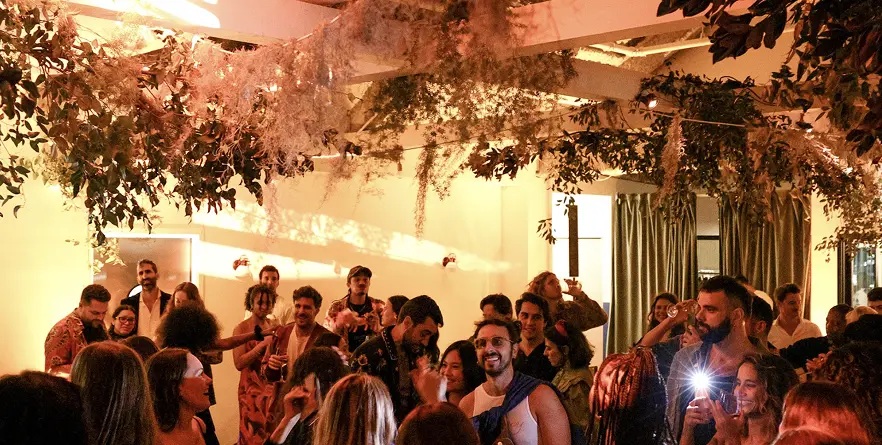
A shopper can close a browser tab. An event guest has already arrived. The layout, atmosphere, and movement through the space must hold together in person. This is what makes the agency’s production responsibilities worth reading: the person coordinating a vendor contributes to the experience as surely as the person choosing a color.
The Basquiat assignment pushed that practical side further. MAD says it worked with The Bishop Gallery, Hennessy, and the Thurgood Marshall College Fund on a six-stop tour of historically Black colleges and universities. There was one week before the first stop. The remit included moving artworks, preparing printed materials, producing exhibitions, and coordinating receptions, panels, and artist talks.
Project scope and lead time reported in MAD’s Basquiat case study.
The two numbers describe pressure, not a formula to imitate. A short runway can require quick decisions about what must happen first and which tasks depend on others. Anyone commissioning an exhibition can borrow the exercise: write down transport, installation, printed information, and programming separately. A handsome invitation does not get a painting to its destination.
A bird on the home screen
Robyn AI brings the story back to a much smaller space. MAD’s case study describes a conversational app built around personalized support and insights, with an Apple Health connection. Its contribution included brand strategy, the character, messaging, design systems, and the app experience. The portfolio image puts a blue bird on the phone’s home screen.
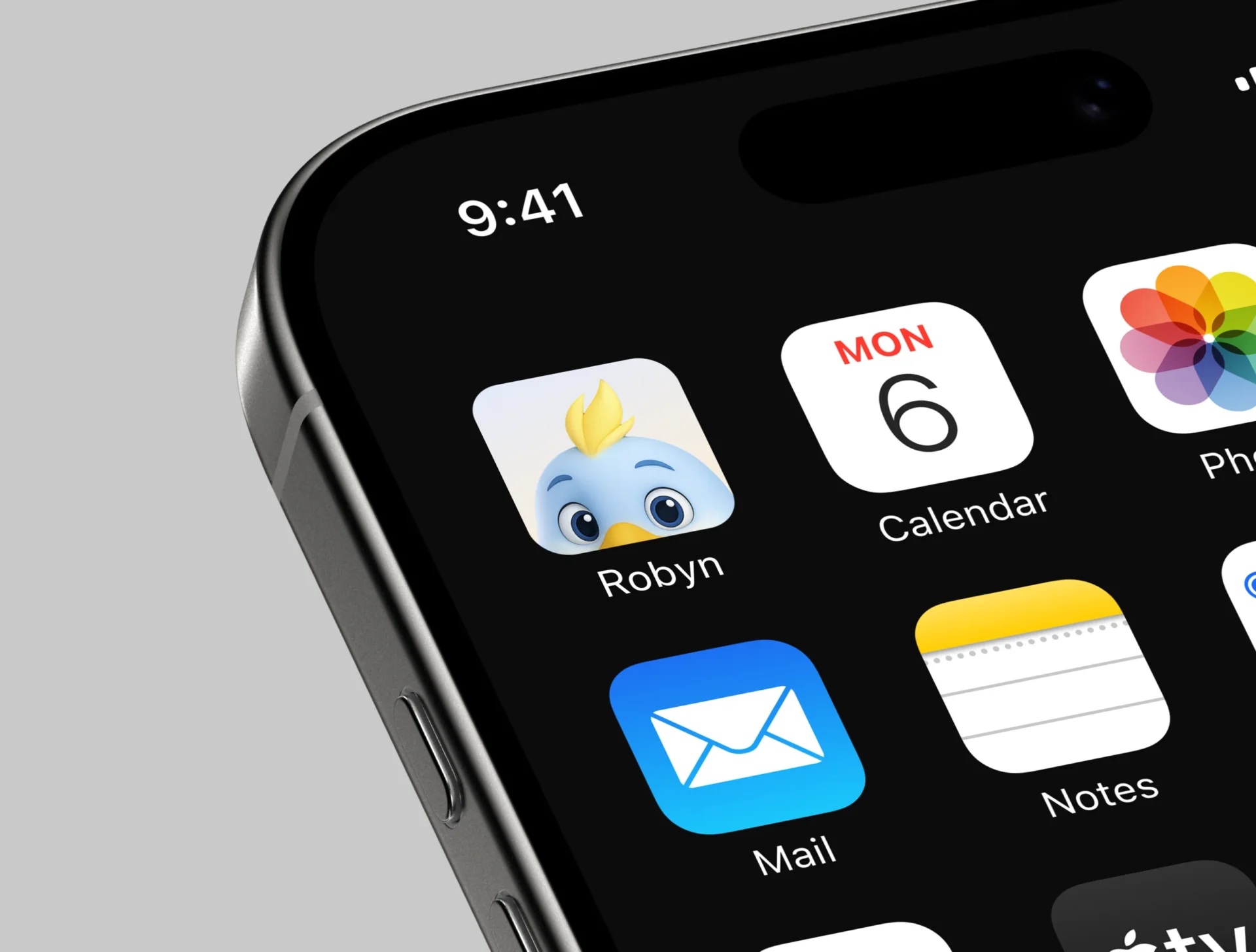
A character sets expectations before a user opens an app. The interface then has to carry those expectations through the experience. Bringing character design and interface design into one assignment offers a way to keep them coherent. It also gives a client something more specific to evaluate than a logo in isolation: does the personality make sense once someone starts using the product?
Altar posed a different translation problem. The jewelry brand’s emphasis on ethical, small-batch design became the basis for an identity overhaul. MAD describes mood boards, a logo, and a complete brand kit. The useful deliverable is the system: something a business can apply repeatedly as it presents new pieces, rather than a single attractive announcement.
ONE QUESTION: WHERE WILL THE BRAND LIVE?
Read the credits, then the price
MAD’s work for Vogue Italia provides a good reminder to read past the client name. For an Isabella Rossellini cover film, the studio supplied animated text treatments for title cards and the Vogue logo. Its credit is precise. That precision helps a prospective client understand the contribution and keeps a small piece of a large production in proportion.
The Billabong case likewise describes collaboration, naming TRM Studio and listing separate creative credits. MAD’s stated services include campaign design and motion graphics for a natural-rubber wetsuit campaign. The agency can occupy a defined role inside a wider team. That is a useful option for a buyer whose existing creative relationships already work.
DesignRush lists MAD with a minimum-budget band of $10,000 to $25,000 and an average hourly rate of $200. Treat those as directory figures when planning a conversation. They do not establish what the rooftop event, the app, or any other named project cost. A useful brief still needs deliverables, revisions, responsibilities, and the terms of the handoff.
For a buyer considering alternatives, the tradeoff is scope. A specialist may suit an isolated requirement. A broader studio becomes interesting when several requirements need to agree with each other. The code handoff Craigie wanted also presumes a team able to maintain that code. Another buyer might sensibly make an easy editing system a condition of the same website assignment.
Bring the unfinished version
Kadara founder Alexa Gray offers another example of a project arriving with history. She describes gathering feedback and running a survey before a six-week sprint with MAD sharpened the minimum viable product and clarified the technology stack. The engagement had a defined job within a longer process of figuring out what to build.
Across these accounts, the lesson a reader can copy is to make the starting point explicit. Show the work already completed. Name the choices that are fixed, the ones still open, and the people who will inherit the result. Ask to meet the working designer. Describe what your team needs to do the week after delivery.
That final question gives creative work a useful destination. For one client, it is an editable website. For another, it is a coordinated opening night. MAD’s most instructive projects begin with circumstances already in motion. The unfinished version belongs in the brief.