A voting line is a peculiar kind of event. Nobody bought a ticket. The start time is elastic. The venue may be a school gym, a church basement or a sidewalk behaving badly. Guests arrive with conviction and leave, ideally, with a sticker. In between lies the awkward human problem of waiting. Liz Castelli has spent most of her working life solving versions of that problem: how to keep a group attentive, comfortable and moving toward a shared purpose.
Her new board seat at Pizza to the Polls makes the connection unusually literal. The nonpartisan nonprofit sends food to people participating in civic life, including voters caught in long polling-place lines. Pizza is the cheerful part. Underneath it sits dispatch, timing, partnerships, fundraising and the stubborn fact that melted cheese respects neither traffic nor democracy.
Castelli arrives with an operator's résumé and a designer's appetite for surprise. She is the co-founder and CEO of Tinsel Experiential Design, the Brooklyn-born agency now inside Stagwell. Before rooms filled with flowers, light and brand strategy, there were rooms filled with middle schoolers. Before the executive title, there were test tubes, lesson plans and bar shifts. The route sounds crooked. The skill underneath it is remarkably consistent: read the room, build the system, keep people engaged.
The laboratory had the wrong kind of drama
Castelli grew up on Long Island's south shore in Sayville. Her mother worked as a speech pathologist. Her father drove buses and finished college when Liz was about 11, an early demonstration that education does not have to arrive on schedule to count. At George Washington University, Castelli studied biology and mineralogy. She worked in a Smithsonian mineralogy lab, examining eclogites and doing the repetitive rituals that make scientific certainty possible.
She discovered that the lab's quiet did not suit her. Research pointed toward more papers; Castelli did not particularly want a life spent writing them. Teaching supplied what the laboratory lacked: immediate feedback, difficult personalities and the chance to make curiosity contagious. She earned a master's in education at Columbia, paying her way in part by bartending, then taught science in New York. Her sweet spot was roughly fifth through ninth grade - students old enough to question everything, young enough to enjoy the answer.
Castelli has joked that bartending and teaching middle school are surprisingly similar. Both demand quick triage, calibrated authority and an ability to spot the person about to derail the room. The joke carries a management manual inside it. The useful leader is rarely the person speaking most. It is the person noticing first.
“Our style is a bit like musical improvisation.”Liz Castelli on Tinsel's design practice
Three voices, six hundred dollars
The future founders of Tinsel had already learned to listen to one another. Castelli, Adette C. Contreras and Erica Taylor Haskins met through GW Vibes, their college a cappella group. Years later, their separate careers converged around a shared love of making things. Castelli's own New York wedding suggested that a memorable party could be designed on a disciplined budget. A conversation over Taco Tuesday on the Lower East Side helped turn the instinct into a business.
They began in 2010 with $600. Weddings came first. One early Gatsby-themed Long Island affair involved satin, beads, flowers, ostrich feathers and a sparkler sendoff. The founders were still doing event work on the side, but the event supplied three useful findings: they loved the work, they could do it, and clients might pay them to do it again. A side project was becoming a company in the old-fashioned way - one improbable load-in at a time.
The operating arc
None of the three had followed a conventional route into events. That became an advantage. Tinsel hired people from sound, interiors, television sets and other disciplines. Castelli took charge of production and daily operations while her partners developed other parts of the business. The firm learned to make a hundred moving pieces appear like one fluent gesture.
Its projects expanded from weddings to global experiences for brands and cultural institutions. There were 400 paper airplanes for a KLM pop-up, a VIP dinner in Barcelona, work around the Whitney Art Party and assignments for names including Spotify, Vogue and Mercedes-Benz. Castelli's science background appeared in the method: diagnose the space, test an idea, account for variables. Her taste supplied the controlled mischief.
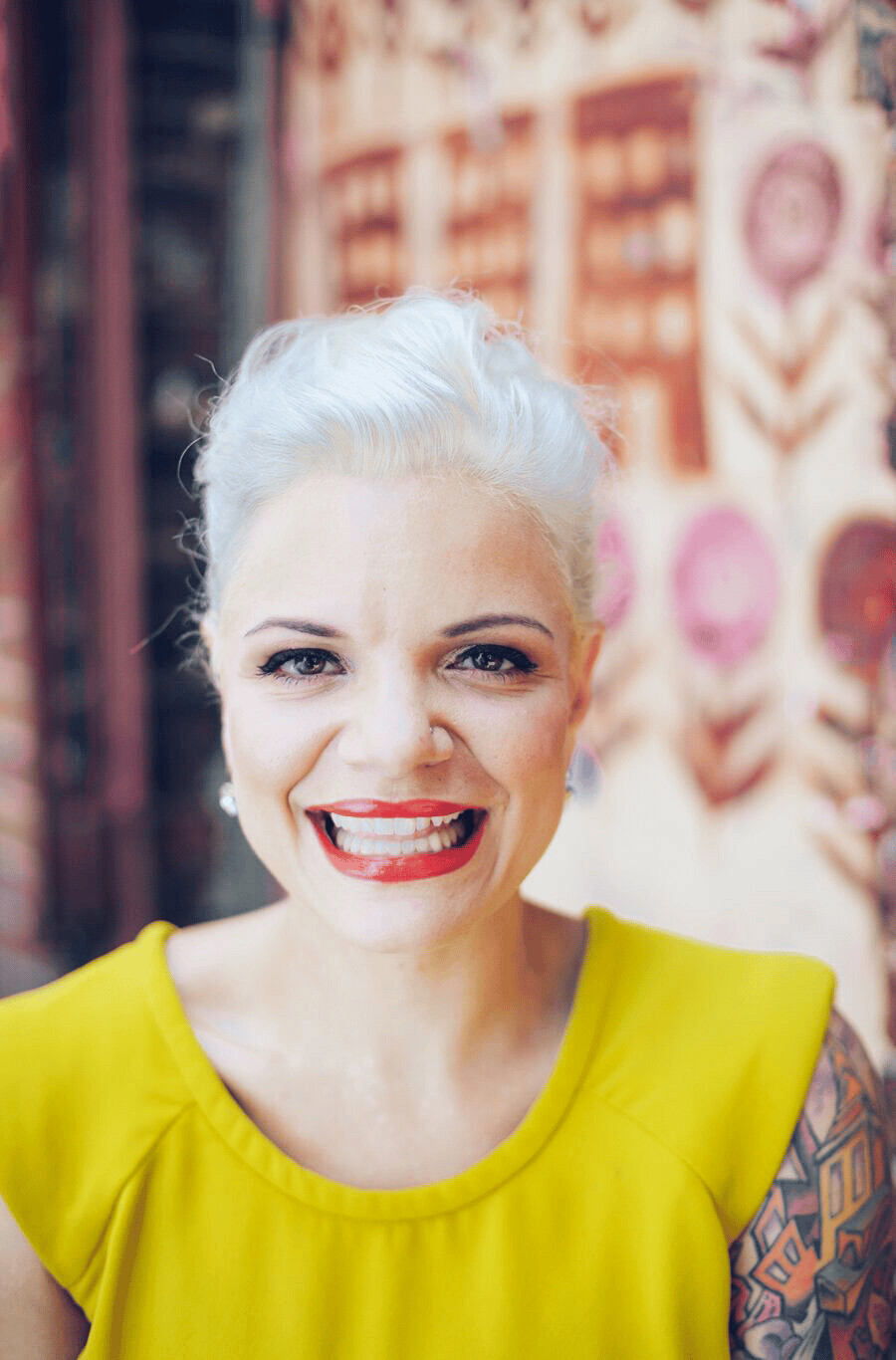
The spectacle needs an operating system
The event business invites a misleading obsession with surfaces. Guests see the iridescent flowers, the lighting cue and the candy store. They do not see schedules, vendor calls, budgets, staffing plans or the weather report being refreshed with religious intensity. Castelli's work lives in that gap. A successful experience feels spontaneous because someone has been almost offensively prepared.
She and her co-founders also understood that an event now has two audiences: the people in the room and the people who encounter its afterlife on a screen. The design must leave a visual artifact that carries the idea beyond attendance. That is less about manufacturing envy than making the purpose legible. A party, product launch or fundraiser must explain itself before the viewer scrolls away.
In 2019, BizBash named Castelli among its Top 50 Event Designers, noting the blend of analytical problem-solving and whimsy in her work. The honor arrived after an earlier Fresh Faces recognition for the three founders. Awards are pleasant punctuation. The more revealing detail is Tinsel's durability. Partnerships built among friends can fracture under growth; creative businesses can become prisoners of the style that first got attention. Tinsel kept changing format while preserving the founders' division of trust.
Closing a deal from the jungle
By 2022, Castelli had entered Berkeley Haas's Executive MBA program. She served as co-class president and found language for a leadership instinct refined in classrooms and production meetings: influence works better than power. The timing was not theoretical. Tinsel was entering an acquisition process, and Castelli was trying to scale a company without treating its culture as packing material.
The deal produced a scene no banker would dare put in a pitch deck. During a study program in Brazil, Castelli was aboard a riverboat in the Amazon as final negotiations continued. The internet connection did not. She walked through the jungle until she found a small school with Wi-Fi, then used it to communicate with lawyers and help steer the closing with her partners. The image is comic and exact: the former teacher borrowing a classroom signal to sell the company she built after leaving the classroom.
Stagwell acquired Tinsel in 2023. Castelli became CEO after the transaction. Her stated priority was not merely to preserve the agency's culture but improve it through the change - listening to the team's concerns, revisiting values with the acquiring company and communicating directly. Acquisition announcements favor the language of fit and scale. Employees experience them as uncertainty. Castelli's job was to make the bridge sturdy enough for people to cross.
“The biggest lesson ... was the importance of leading through influence rather than power.”Castelli on her Berkeley Haas experience
Hospitality enters the public square
Pizza to the Polls began in 2016 after software developer Scott Duncombe saw Cleveland voters waiting for hours and ordered food to the line from Oregon. The organization grew the gesture into a nationwide operation, delivering free food at polling places and nonpartisan civic events focused on education, registration and turnout. Its premise is disarmingly humane: participation is demanding enough without hunger joining the queue.
Castelli joined the board in January 2026 as part of a group of eight new members. She described civic engagement and community impact as part of her DNA, linking her years teaching in Harlem to the company she helped build. The appointment joins two worlds that are less separate than they look. Both live events and civic programs are temporary systems organized around people who may be tired, distracted or unsure what happens next.
The clever bit is not pizza. The clever bit is noticing that a small act of hospitality can protect a larger act of participation. A warm slice cannot shorten a line. It can make the wait feel recognized. It can tell a stranger that somebody beyond the rope line has registered the cost of staying.
Castelli's career has been a study of that recognition. The science teacher makes an abstract idea graspable. The producer translates creative ambition into a room that actually opens on time. The acquisition CEO turns corporate change into conversations people can survive. The board member helps a cheerful nonprofit scale an act of care without sanding off the cheer.
She has said her long-term ambition is to guide change at the organizational level, working with motivated teams to create value and impact. It is a sensible executive answer, though her life offers a more colorful translation. Find the room where people might drift away. Bring a plan, a little whimsy and, if circumstances demand it, enough pizza. Then keep the signal alive.