BOOTSTRAPPED $1.8M annual revenue, zero VC FIRST CUSTOMER two days after launch ZERO dollars spent on advertising 30 languages, early on FROM freelancers to Google DARTMOUTH Division I lacrosse PROFITABLE in year one BOOTSTRAPPED $1.8M annual revenue, zero VC FIRST CUSTOMER two days after launch ZERO dollars spent on advertising 30 languages, early on FROM freelancers to Google DARTMOUTH Division I lacrosse PROFITABLE in year one
Co-Founder & CEO / PlaybookUX

Lindsey
Allard

She made the most dreaded part of building a product, talking to users, take an afternoon instead of a quarter. Then she built a company on it without borrowing a cent.

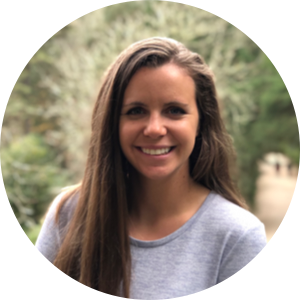
Lindsey Allard, co-founder and CEO of PlaybookUX
Lindsey Allard. The smile of someone whose first customer showed up two days after launch.
$1.8M
Annual revenue, bootstrapped
$0
Spent on advertising
30
Languages, early
2018
Year founded
The Story

A company that never bought an ad, and never needed to.

Most software founders raise money, hire a sales team, and buy their way to attention. Lindsey Allard did none of that. PlaybookUX, the user-research platform she co-founded in 2018, got its first paying customer two days after launch and turned a profit inside its first year. The growth came from blog posts and YouTube videos the founders had published before the product even existed. By early 2022 the company was doing roughly $1.8 million a year, still fully self-funded.

The product solves a problem Lindsey lived through. Before founding the company, she ran product and UX teams at three startups, and watched how slow, expensive, and awkward it was to get real feedback from real users. Recruiting participants took weeks. Talking to business users (the B2B kind, the ones who do not hang around consumer testing panels) was nearly impossible. So she built a tool to collapse all of it: recruit verified testers, capture video of them using your product, and get the analysis back, fast.

Her benchmark for the product was deliberately small and stubborn. "I wanted to make sure that any freelancer with an idea could sign up and talk to target customers within hours," she has said. That single sentence explains the whole company. PlaybookUX prices itself so a solo designer can afford it, and builds itself well enough that a Fortune 500 team like Google uses it anyway. The same dashboard serves both ends of the market, and that range is the whole point: research stops being a privilege of the well-funded and becomes a default tool, available to anyone with a question and an afternoon.

PlaybookUX recruits testers verified through LinkedIn, which is the unglamorous detail that makes the whole thing work for business software. If you sell to marketers, you need to watch marketers use your product, not whoever happens to be in a generic panel. The platform handles recruiting, incentives, video capture, and increasingly, AI-assisted analysis to pull patterns out of hours of footage and cut down on the bias that creeps into human note-taking.

She runs the company at a pace that is almost contrarian in startup land. "Entrepreneurship is a marathon, not a sprint," she says, and she means it as an operating principle, not a motivational poster. No venture money means no pressure to grow at any cost, and no investor clock. It also means every customer matters, which loops neatly back to her favorite piece of advice: talk to them, early and often.
We haven't spent a dollar on advertising nor done any outbound outreach.
Lindsey Allard, on how PlaybookUX grew
Before The Company

Tickets, lacrosse, and a family that builds things.

Lindsey grew up in the Boston area and went to Dartmouth, where she played Division I women's lacrosse and studied psychology, finishing in 2014. Her first job out of college was selling tickets at Madison Square Garden, which she calls one of the best learning experiences she has had. It also turns out to be excellent founder training. "As a founder, I'm always selling," she says. "I'm selling all day long."

Entrepreneurship is practically inherited. Her great-grandfather opened a sports store, her grandfather scaled it across the country, and her father founded and sold companies in sports and aviation. Lindsey is the fourth generation to build. She also went back to school while working, earning her MBA in the very first graduating class of Quantic, where the famously hard part, the finance, became the part she now uses for pricing and modeling.

The co-founder she already trusted

She did not go looking for a business partner on a networking app. She called Kristen Giovanniello, a teammate from the Dartmouth lacrosse field. Two former athletes who already knew how the other one handled pressure, splitting the work of building a company from scratch. The team stayed small on purpose; the ambition did not.

The Path

Zero to one, the slow way.

2014
Graduates Dartmouth, where she played Division I lacrosse. First job: ticket sales at Madison Square Garden.
2016
Earns her MBA in the first-ever Quantic cohort while working as a product manager.
2016 - 2018
Runs product and UX at three innovation-based startups, living the pain of slow, costly user research.
2018
Co-founds PlaybookUX in New York with college teammate Kristen Giovanniello. First customer lands two days after launch.
2019
Profitable within the first year. Growth comes entirely from organic search and word of mouth.
2020
Demand jumps as companies move research remote. The product was already built for it.
2022
Around $1.8M in annual revenue, still bootstrapped, hiring its first dedicated enterprise sales role.
In Her Words

Founder, translated.

I love building things. I love the idea of taking something from 0 to 1.
You should talk to your customers early and often. Customers are extremely helpful in determining what to build next.
Looking back, I realize we could have spent years building and I still wouldn't have felt ready.
As a founder, I'm always selling. I'm selling all day long.
You don't know what you don't know. That quote drives me to seek out information constantly.
Any freelancer with an idea could sign up and talk to target customers within hours.
The Bootstrapper's Math

No investors. No ad budget. On purpose.

There is a quiet radicalism in how PlaybookUX was built. The standard playbook for a software company is to raise a seed round, spend it on paid acquisition and headcount, and chase growth fast enough to justify the next round. Lindsey ran the opposite experiment. The company never took venture capital, never bought an ad, and never did outbound sales. Every dollar of growth had to be earned by the product being good enough that people found it, paid for it, and told someone else.

That constraint shaped the early strategy more than any board deck could. Before the product launched, the founders wrote blog posts and recorded YouTube videos about user research, the methods, the tradeoffs, the how-to. By the time PlaybookUX existed, there was already an audience searching for exactly what it sold. The first customer arrived two days after launch, pulled in by content that had been quietly compounding in search results. Word of mouth did the rest.

The timing helped, too, though not by luck so much as by readiness. When 2020 sent research teams home, the in-person usability lab evaporated overnight and remote, unmoderated testing became the only option. PlaybookUX had been built for that world from day one. Demand jumped, and because the company was already profitable, it could absorb the growth without scrambling for emergency funding.

Lindsey is honest that the patience was a choice with a cost. "Looking back, I realize we could have spent years building and I still wouldn't have felt ready," she has said, a reminder that the marathon mindset is not the same as endless preparation. At some point you launch, you talk to customers, and you let them tell you what to build next. That feedback loop, the same one her product sells to everyone else, is the one she runs her own company on.

Lately the frontier is AI. PlaybookUX has leaned into using machine analysis to summarize hours of user video, surface patterns, and trim the human bias that creeps into manual note-taking. For Lindsey, the goal is the same one she started with, just sharper: make rigorous research something a small team can actually afford and act on, not a luxury reserved for companies with a dedicated insights department.

The Bigger Game

More chairs at the founder's table.

Lindsey has been candid that since starting PlaybookUX she has met a lot of impressive founders, and most of them have been men. She values learning from them, and she also thinks the lack of visible female founders is itself part of why fewer women start companies. Exposure matters; you build what you can see. So she puts time into mentorship and networking, trying to widen the path she walked.

She reaches for role models who share her temperament. She cites Ray Dalio's Principles for its emphasis on transparency, and admires Sallie Krawcheck's work building Ellevest. And she has a soft spot for the underdog customer: the nonprofit, the freelancer, the small team trying to build a better experience with a budget that would make a venture-backed startup laugh. PlaybookUX was designed so that those teams get to do real research too.

Entrepreneurship is a marathon, not a sprint.
Her operating principle, not a poster
Field Notes

Things that make her her.

01

Fourth-generation entrepreneur. The family business lineage runs from a sports store to aviation.

02

Her co-founder is a former Dartmouth lacrosse teammate. They knew each other's competitive streak before they knew each other's cap tables.

03

Graduated in the very first MBA class at Quantic. The finance she once found hardest now runs the pricing model.

04

One product, two extremes: a solo freelancer and Google can both be customers on the same plan menu.

05

Cut her teeth selling tickets at Madison Square Garden, the job she credits for her always-be-selling instinct.

06

Translated the platform into 30 languages early, betting global before most bootstrappers bet at all.

Follow The Trail

Where to find her.

Share this: LinkedIn Twitter / X Facebook Instagram
Reporting drawn from public interviews, podcasts, and company sources. Built for the curious.