A supermarket shelf is an unforgiving place to learn business. Nobody awards points for the meeting that ran late, the forecast that looked elegant or the enormous effort involved in getting the bottle there. The shopper reaches out a hand. Something gets chosen. Linda Rendle started learning about that small, consequential moment before she had a job title.
Her father worked in consumer packaged goods. As a child, she went along on store checks; in high school, she worked in stores herself. Years before she would run Clorox, she was getting an education in the distance between what a manufacturer intends and what a customer actually wants. A shelf has a useful way of keeping a business honest.
It is a fitting beginning for an executive whose public manner resists the theatrical version of corporate leadership. Rendle has described herself as an introvert, someone who would rather be reading. Her career nevertheless carried her through sales, supply chains and operating divisions to the chief executive’s office. Along the way, she learned to imagine a job she once had trouble picturing herself doing.
An apprenticeship in the aisle
Rendle studied economics at Harvard, then worked in sales management for Procter & Gamble in the Boston and Charlotte markets. She joined Clorox in 2003 as a senior sales analyst. Her opening assignment covered charcoal and insecticides, a combination unlikely to feature in anyone’s dreamy description of executive life.
Yet the practical questions were substantial. How much would a customer order? How would goods move? What would persuade a retailer to give a product space? Selling an everyday item requires a whole organization to keep a series of rather exact promises. The glamour is optional. The delivery is considerably less so.
Her responsibilities broadened across sales planning and the customer supply chain. She became vice president of sales for Cleaning, then vice president and general manager of Home Care. In 2016, she took charge of Cleaning as a senior vice president and joined the executive committee. Professional Products followed in 2017. Strategy, international operations and wider functional responsibilities came next.
- 2003Senior sales analyst
Charcoal & insecticides - 2016Senior vice president
Cleaning - 2020President in May
CEO in September - 2024Chair of the board
Added in January
By May 2020, as president, she oversaw the company’s businesses and five core global functions, including marketing, product supply and information technology. The breadth matters. Before taking the top job, she had worked on several sides of the same problem: making something people choose and building the machinery that lets them choose it again.
The reader in the room
When her appointment as CEO was announced in August 2020, she was 42 and had spent 17 years at Clorox. Benno Dorer, whom she would succeed that September, remained executive chair. An internal candidate was taking responsibility for a company she knew through a succession of increasingly wide assignments.
Rendle’s own account of that ascent is less tidy than the dates suggest. She did not arrive with a fixed plan to stay for nearly two decades and become chief executive. She considered other possibilities. She kept finding shared values and opportunities to develop at Clorox. Staying was a decision renewed over time.
At a Bay Area business gathering in 2021, she explained that her earlier picture of a CEO had left little room for someone like her. Mentors helped her recognize the usefulness of listening. Her description of an informal advice circle, including family friends and a former assistant, suggests a willingness to hear from people whose authority comes from knowing her.
“Super-big introvert, would rather be reading than doing anything else.”
Linda Rendle, describing herself in 2021
There is something refreshingly inconvenient about that detail. A chief executive who likes listening complicates the familiar idea that leadership belongs to whoever fills the silence first. Reading, observing and asking a good question are harder to photograph than a speech. They can still change the quality of a decision.
A little less polite, a little more useful
At Duke’s Fuqua School of Business in 2024, Rendle described an ambition to make Clorox more comfortable with honest disagreement. She wanted people to say what colleagues needed to hear. In a large organization, excessive politeness can become a surprisingly efficient delivery system for unfinished problems.
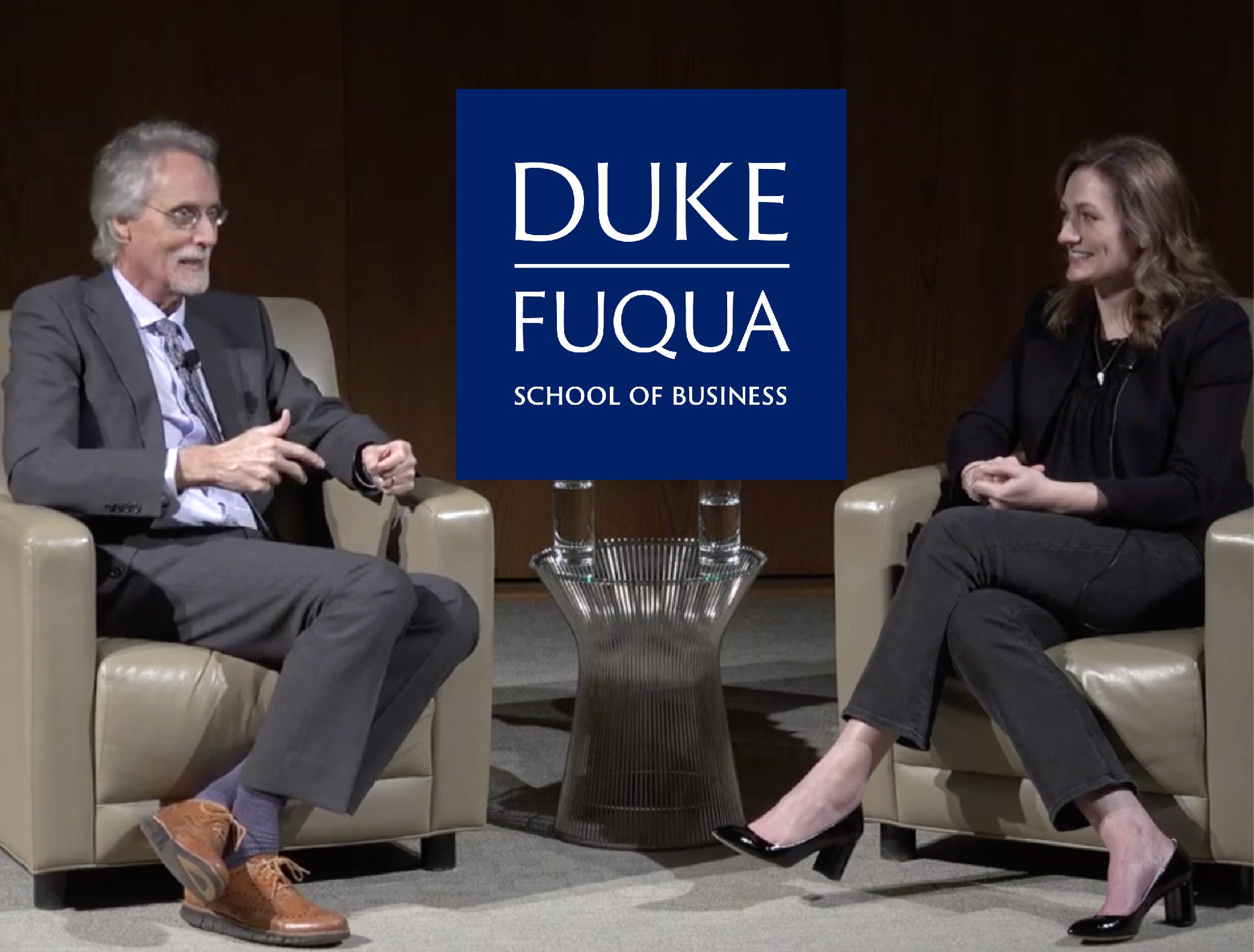
She also described judging managers by their results and their treatment of people. Destructive behavior does damage even when a target gets met; consideration for colleagues still has to accompany delivery. That expectation puts a demanding question inside the performance review: what happens to the team while its manager is pursuing the number?
Her account of mentorship makes the question personal. An earlier boss helped her rethink the practical demands of returning to work after becoming a mother. Another leader helped her imagine herself running a company. Those conversations changed the possibilities she could see. They also help explain her insistence that senior executives create opportunities for people further down an organization.
For women and people of color, she has argued, access to consequential assignments needs attention before the final promotion decision. A company builds its future candidate pool through the work it offers today. Waiting for a more representative group to appear at the top is a remarkably leisurely approach to a problem made of daily choices.
Practice before the scoreboard
Rendle played team sports growing up, with volleyball her primary sport. Asked about teams and leadership, she has returned to preparation: the game reflects the work that happened beforehand. Shared expectations and practice shape what a group can do when the moment becomes difficult.
That perspective makes her long tenure easier to understand. She has described Clorox as a place that initially developed her, then increasingly offered a chance to influence its culture and people. The relationship changed as her responsibilities grew. Learning the organization eventually gave her the authority to change parts of it.
In discussing innovation with Stan McChrystal and Chris Fussell, she described the practical value of small early wins. A team could invest behind products already working, see an effect and gain confidence for wider changes. She also described assigning different teams to immediate needs and longer-term work. Asking everyone to live in both timeframes can make each harder to manage.
It is a recognizable operating habit: define the work, give people room to do it and examine the result. A theory of leadership becomes rather more persuasive when somebody can explain who is supposed to act on Monday morning.
The machinery behind the promise
Rendle’s years as CEO have included expensive, unromantic work on how Clorox runs. In 2021, the company outlined approximately $500 million of planned investment over five years in digital capabilities and productivity improvements, including replacing its enterprise resource planning system. That is the infrastructure behind orders, inventory and a business’s ability to see itself clearly.
Approximate planned investment over five years in digital capabilities and productivity improvements.
A stated investment plan, not a measure of realized returns.Organization changed too. In 2022, Rendle announced a shift of more reporting lines into business units, making those units responsible for growth, margins and customer needs. Clorox expected ongoing annual savings of roughly $75 million to $100 million. The restructuring also eliminated nearly 100 positions that calendar year. Becoming faster had consequences for people as well as reporting charts.
The work was interrupted by an August 2023 cyberattack. Rebuilding retailer inventories and distribution became immediate priorities. For a business built around familiar household products, the disruption exposed how much the ordinary act of buying depends on systems the shopper never sees. A recognizable label offers little comfort when its place on the shelf is empty.
An editorial illustration of the connected work running through Rendle’s career.
The later stages of the technology program brought their own difficulties. In April 2026, Rendle reported mixed performance and said improvement in parts of the portfolio was taking longer than expected. Higher supply-chain costs and delayed savings accompanied the priority of stabilizing the new system. Installing capability and obtaining its benefits were proving to be separate jobs.
The experience gives her preference for direct conversation a concrete setting. A delayed saving needs a decision. A costly disruption needs an owner. Systems projects involve people learning new ways to work while continuing to serve customers. Their effects arrive in operating results, making it difficult to keep the discussion safely abstract.
For Rendle, the task brings together the different kinds of work she has done: understanding retail demand, coordinating supply and setting expectations across functions. The job descriptions grew broader; the need to connect one decision with another remained. Her emphasis on execution can sound plain until those connections stop working.
An unfinished handover
In May 2026, Clorox announced a search for Rendle’s successor. She remains chair and CEO during the search, with an advisory period planned after the new executive is appointed. The announcement creates a future handover while leaving her responsible for the present business.
By August, she was describing fiscal 2026 as a transition year, pointing to the completed U.S. systems implementation and the need to turn foundational investments into better execution. She also reported progress at Glad and Hidden Valley Ranch while acknowledging continuing pressure elsewhere. Her stated ambition remained more consistent growth. The language of completion still had to meet the discipline of repeatable results.
That leaves her story close to where it began: with the small decisions of people buying everyday products, and the considerable work required to earn them. A career can travel a long way from an analyst’s desk. The shelf keeps asking its brief, awkward question. Will somebody choose this?