Sam Hazen has reached the corner office and kept a place in his week for homework. In 2026, he described blocking at least ten hours on his calendar to study, examine the business, walk around or make calls. A chief executive’s diary usually tells a story about demand. This particular entry tells a story about preparation.
There is something quietly amusing about spending decades earning the authority to make decisions, then protecting time in which to reconsider them. The meeting invitation has become a badge of importance in office life. An appointment with your own unfinished thinking has considerably less glamour. It may also be harder to keep.
Hazen became chief executive of HCA Healthcare on January 1, 2019. He had already spent years handling its money, running regional operations and overseeing the wider business. The title arrived after a succession of jobs that required him to understand what happened beneath it. His career is interesting partly because the ascent took so long.
Before the title, a suggestion from Dad
Hazen was raised in the coal-mining communities of rural Kentucky. His parents lived there throughout their lives. That background belongs in his story without being recruited to explain every subsequent decision. A childhood can establish a place and a family; a working life still has to be built, year by year.
His father supplied one consequential suggestion. Hazen has credited an idea from his dad with helping him discover HCA. In recalling the company’s appeal, he emphasized the chance to work around capable people and to develop himself. The attraction, in his telling, was company in the older sense of the word: people worth spending your working days beside.
He graduated from the University of Kentucky in 1982 with a degree in finance. Looking back in a 2025 alumni publication, he remembered a senior-year portfolio management class and information in the career placement office as part of the route to his first opportunity. There is a pleasing lack of theatre in that account. A class, a placement office, a training program. An opening noticed.
The familiar executive biography often compresses this stretch into a line about education. Here it deserves a little room. Career offices are modest places to begin a story that ends in a boardroom, which is precisely their charm. They make the future available in the form of something practical enough to apply for.
A finance education with several postcodes
In 1983, Hazen entered Humana’s financial management training program. His early responsibilities included chief financial officer positions at hospitals in Georgia and Nevada, as well as a regional finance role in Kentucky. The names of the jobs matter. He began with a discipline in which a promise eventually has to meet a number.
He completed an MBA at the University of Nevada, Las Vegas in 1988. Education and employment ran alongside one another. The geography of those early years also complicates the tidy picture of a career spent sitting still inside a single institution. His responsibilities took him across different places before the larger titles arrived.
In 1994, he became chief financial officer of HCA’s North Texas Division. A year later, he took the same finance title for the Western Group. That group role lasted until 2001. These were substantial stretches of working time, long enough for a role to become an education in its own right.
A résumé makes six years look small. It fits between two dates. Living those years means dealing repeatedly with the consequences of decisions, discovering which assumptions survive the next budget and learning the difference between knowing a figure and understanding the operation that produced it. Those are the ordinary demands of financial management, and Hazen spent his early career inside them.
- 1983Financial management training
- 1995Western Group CFO
- 2001Western Group president
- 2011President of operations
- 2019Chief executive officer
Ten years running the western half
The move from Western Group CFO to Western Group president came in 2001. Hazen remained in the presidency through 2011. The group encompassed HCA’s operations west of the Mississippi River and represented roughly half the company’s revenue. A promotion had expanded the question from how the numbers worked to how the whole operation worked.
A decade is a useful corrective to the language of rapid ascent. It is long enough for the excitement of appointment to disappear into the daily requirements of the job. For Hazen, the Western Group presidency was a major chapter rather than a decorative stop on the way to something else.
He became president of operations in 2011, chief operating officer in January 2015, and president and chief operating officer in November 2016. The changes were incremental in title and consequential in responsibility. Each brought him closer to the centre of a company whose regional workings he had already spent years learning.
When the University of Kentucky celebrated his induction into the Gatton College Alumni Hall of Fame in April 2017, he was still president and COO. The recognition came before his appointment as chief executive. By then, his career already provided plenty to discuss without borrowing prestige from a job he had yet to receive.
By 2016, he and his wife, Glenna, were living in Nashville and had two sons. These are the family coordinates alongside the professional ones: a home city, a marriage and children, while the public record of his work records one expanding responsibility after another. The titles occupy most of the biography, but they were never the whole of his life.
The promotion announced in September
On September 10, 2018, HCA’s board announced that Hazen would succeed R. Milton Johnson. He joined the board that day; the CEO transition would take effect the following January. Johnson’s retirement and the planned subsequent change in board chairmanship made this an arranged succession, with dates attached and responsibilities specified.
It is easy to make a dramatic scene out of a change at the top. The documented facts here offer something more measured: a president and COO moving into the chief executive role after a long series of senior assignments. The business was handing responsibility to someone already familiar with its internal demands.
The interval from the 1983 training program to the 2019 appointment was about 36 years. That span gives the story its proportions. Hazen had occupied the supporting positions, the financial positions and the operating positions. The succession announcement is a milestone, but much of the explanation sits in the dates that precede it.
Even the ceremonial moment carries the texture of continuity. Johnson endorsed his successor, and Hazen acknowledged the appointment. A public company’s transition can be painstakingly formal. In this case the formality suits the career: responsibility accumulated in stages, then the next stage was put on the calendar.
From the 1983 training program to the CEO appointment in 2019.
The distance between headquarters and everybody else
By 2024, Hazen was explaining a different kind of organisational change. Retirements at the end of 2022 had created an opportunity to rethink the structure. HCA moved from two corporate group offices to three. His explanation centred on bringing corporate leadership closer to facilities and divisions, while opening opportunities for employees to change roles or cities.
The arithmetic is small enough to fit on a napkin: two offices become three. The organisational question underneath it is larger. How far does a decision have to travel? Who gets the chance to take responsibility? What does the structure make possible for someone whose career is still in its early chapters?
His discussion of recruitment in 2023 was similarly concrete. He said the company had almost doubled its recruiting capacity. He also described changes to compensation and benefits as part of efforts to retain employees. The vocabulary is practical, concerned with the machinery through which an employer tries to meet the needs of its workforce.
His own experience gives that subject a personal connection. Hazen has credited tuition reimbursement with helping his progress. A development program can look like an administrative expense when viewed from one desk and a door opening when viewed from another. His biography contains the view from both sides.
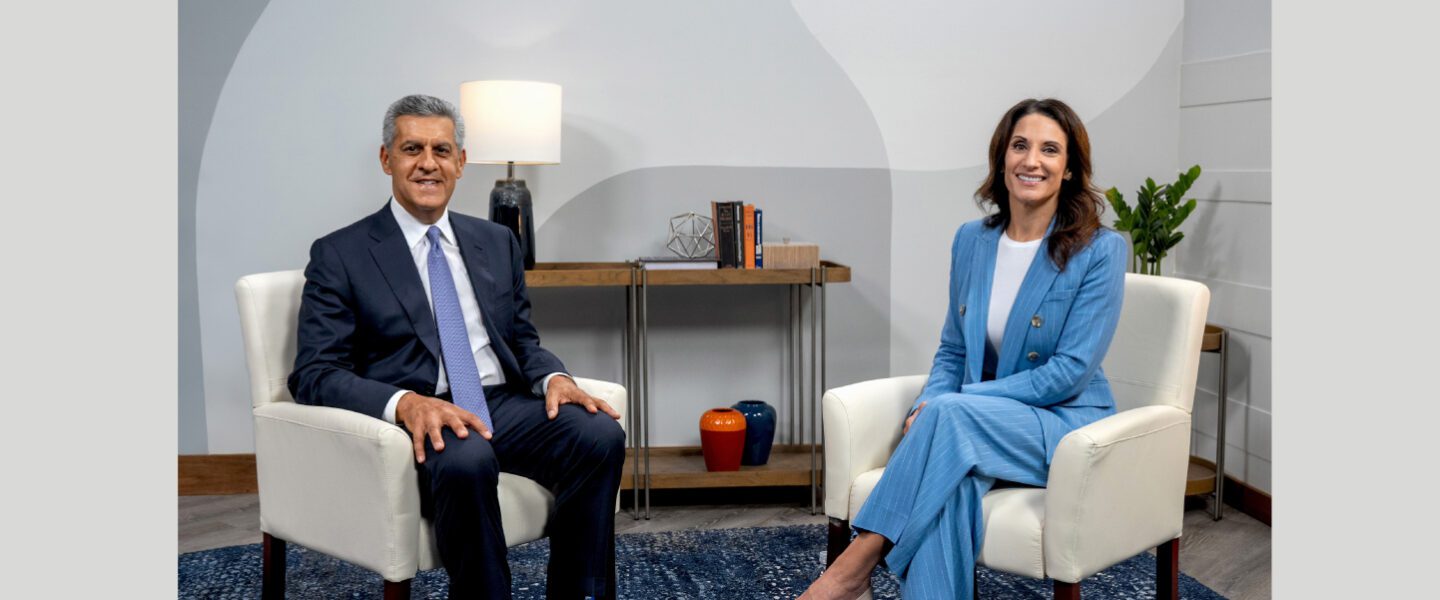
In a June 2026 conversation with fellow executive Erica Rossitto, he placed leadership development alongside the company’s other investments. He included himself among the leaders who would have to adapt. That qualification is revealing: the expectation of improvement reaches the person making the expectation.
Three pieces of advice, no velvet rope
When podcast host Lynn Thoman asked Hazen for his takeaways, his answers came back to work, learning and the way people are treated. “Hard work matters,” he said. He credited his parents with the lesson to “treat people right.” Neither phrase requires an executive retreat to understand.
The simplicity is part of the appeal. Corporate speech has a tendency to arrive dressed for a more expensive occasion than the thought requires. Hazen’s advice can travel without a slide deck. Do the work. Continue learning. Remember that other people have to live with how you behave.
He has also described the practical advantages of a large organisation: combining repetitive administrative functions, bringing resources together and spreading useful ideas across locations. The interesting challenge is movement. A good idea trapped in one office has only a local career. A good idea that colleagues can use elsewhere begins to justify the size of the enterprise.
“Hard work matters.”Sam Hazen, in conversation with Lynn Thoman
That brings us back to the calendar. After decades of training, regional work and corporate responsibility, Hazen still makes room for study. The long climb has produced a chief executive who publicly treats learning as part of the job. The homework remains on the schedule. Somewhere, a career placement office can reasonably take a little satisfaction in that.