David Dill’s father had an awkward piece of scouting to deliver. His son liked basketball. His father coached it. That combination might have encouraged a little diplomatic optimism at home. Instead, Dill remembers being told that his future as a high school player would probably involve considerable acquaintance with the bench. Family connections, apparently, would not be affecting the selection process.
The conversation stayed with him. So did the interest in coaching. Years later, after accounting jobs and operating roles had taken him into executive leadership, he described telling his father that the original ambition had survived. The setting had changed. The work still involved helping other people perform.
“I’m still a coach,” he said.
That is a useful place to begin with the chairman and chief executive officer of Lifepoint Health. His résumé offers the familiar succession of initials: CFO, COO, CEO. His life supplies a less orderly collection of connections: a college golf team, an accounting classroom, a graduation-night date and a university he has repeatedly returned to support. The titles explain his authority. The connections help explain what he has chosen to keep close.
A campus before a corner office
Murray, Kentucky, became the family’s home when his father, Mike, joined Murray State’s basketball coaching staff in 1978. His mother, Marilyn, taught kindergarten at Murray Elementary School for nearly two decades. Between them, the parents worked at rather different ends of the education system. Both jobs required people to learn something they could not yet do.
David eventually competed for Murray State in golf. His brother, Chris, played football there. The family’s connection to the university accumulated through participation, rather than beginning with a later invitation to a fundraising dinner.
Dill graduated in 1990 with an accounting degree. This part of the story matters because it gives his later university involvement a particular shape. He had been a student and an athlete before becoming a trustee and donor. The classrooms and playing facilities belonged to his own experience. His subsequent contributions returned him to an institution where his family already had a history, and where the next generation would have its own work to do.
A date with unusually good timing
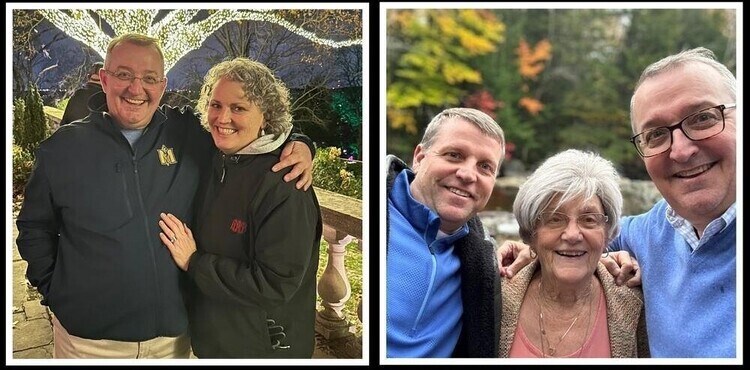
His relationship with Ashley also belongs to the Murray State years. Their first date was in 1989, on her graduation night. When the couple returned as homecoming grand marshals in 2017, Ashley offered a compact review of his courtship timetable: “he about waited too long.” Even a future chief executive can require encouragement to make a decision.
They married in August 1991 and moved to Nashville. David pursued accounting; Ashley pursued interior design. The move began another chapter without erasing the place where they had met.
The homecoming invitation brought those two chapters together. A parade is an agreeably different form of public responsibility from an executive meeting. Its obligations are easier to grasp, and nobody expects a quarterly forecast. For the Dills, the occasion also made a shared campus connection visible. They came back together, with a marriage and established careers behind them, to the university where their first date had nearly missed its moment.
Eleven years between two sets of initials
Dill’s professional route ran through Deloitte and then, in 1996, Renal Care Group. Finance responsibilities grew into senior roles. He later worked at Fresenius Medical Care North America before joining Lifepoint in 2007 as executive vice president and chief financial officer.
The sequence inside Lifepoint is worth reading slowly. Chief operating officer followed in 2009. President was added in 2011. The CEO appointment came in 2018. Eleven years separated his arrival from the top job.
Set out in a biography, promotions can look like consecutive steps on a staircase someone conveniently built in advance. These appointments carried him through different responsibilities over a substantial period. He arrived through finance, then spent years with operating authority before taking on the whole organization.
- 2007CFO
- 2009COO
- 2011President
- 2018CEO
The final transition came as Lifepoint merged with RCCH HealthCare Partners and became privately held. Bill Carpenter retired as chief executive; Dill succeeded him after the transaction closed in November. His appointment therefore arrived with an immediate organizational task. There was a combined business to lead, along with the considerable difference between inheriting a title and getting people to work together.
The colleague in the next office
Long acquaintance appears elsewhere in his working life. Speaking about Mike Coggin, a finance colleague he had known for two decades, Dill praised consistency and the ability to build a team. Those are rather specific things for a former CFO to admire. The numbers may be the visible output, but he was paying attention to the person responsible for the group producing them.
It is a revealing choice of emphasis. Consistency seldom gets the theatrical entrance. Nobody rolls out a red carpet for a dependable Tuesday. Yet an executive who has moved from finance into operations has practical reasons to appreciate colleagues whose judgment remains usable from one day to the next.
Dill’s own longer tenure gives that observation context. He has worked inside the same company since 2007, while his responsibilities have changed. A career can contain considerable movement even when the employer’s name stays on the door. Familiarity with people and institutions becomes part of the experience he takes into the next job.
The small rebellion of an empty calendar square
There is a pleasantly ordinary detail in his account of executive life. In 2019, Dill described ordering a Venti Pike roast at Starbucks through the mobile app and enjoying the recognition of baristas who knew him. The morning routine also included reading news and considering what he wanted to accomplish that day.
He wanted more room in the calendar to consider new ideas. It is a modest-sounding ambition with a formidable opponent: the next meeting invitation.
That admission gives the executive schedule a human scale. The person responsible for an organization can still be working out how to protect an hour. Seniority may expand the number of decisions requiring attention without making attention itself any more plentiful. His stated ambition was to make room for thought within the routine, a small adjustment whose difficulty most people with a crowded calendar will recognize.
“more time to think and explore new ideas”
David Dill, on the space he wanted in his schedule, 2019
Giving the next class somewhere to begin
Murray State’s records put another part of his career into view. An accounting professorship bears his name. The university’s endowment reporting dates its establishment to July 28, 2009, the same year he became Lifepoint’s chief operating officer.
The two entries belong beside each other. One marks an expansion of responsibility at work. The other records a lasting connection to the subject he had studied. An endowed teaching position has a different timetable from an appointment announcement. It is designed to remain useful after the particular year has passed.
University recognition followed: Distinguished Alumnus in 2015. His service also included the foundation and its development work. By the university’s 2024 account, he was national chair of the $100 million Be Bold: Forever Blue and Gold Centennial Campaign.
Chairing a campaign adds work to affection. It asks an alumnus to take responsibility for an institution’s future plans, and to help persuade other people to participate. The familiar campus becomes a place of obligations again. This time, the assignments concern what later students will find when they arrive.
1990 Accounting graduate → 2015 Distinguished Alumnus → 2024 Centennial campaign chair
The campaign’s announced goal was $100 million. That figure is not the amount of the family’s gift.In August 2024, Murray State Athletics announced a family commitment it described as its largest gift. The intended work included facilities and the student-athlete experience. The announcement connected David and Ashley with Chris and Marilyn, placing the contribution inside the family’s longer relationship with the university.
Still taking instruction
In October 2026, Dill returned publicly to the subjects of mentorship, coachability and learning from failure. Nearly two decades after joining Lifepoint, he was still discussing leadership partly in terms of what a person needs to learn. He also described the CEO’s responsibility for culture across a geographically dispersed organization.
One phrase in that conversation concerned doing the right thing “even when no one is watching.” It brings the idea of performance back to conduct that does not have an audience. An executive can make a public statement. The harder question is what happens to that statement when the executive is elsewhere.
His story keeps returning to people who taught, coached or made room for someone else. There is his father’s candid assessment. There are his mother’s years in a classroom. There is the university where he studied and played, and the university he later helped support.
Dill left the basketball court as a career prospect. He carried the coaching question into another line of work: how to help other people become more capable. The route took him through accounting and operations to a chief executive’s office. It also kept giving him reasons to go back to Murray.