Before Ryals McMullian became chief executive of Flowers Foods, he helped decide what the company should buy. Before that, he was a lawyer. His route to the top of a national bakery business passed through contracts, acquisition targets, corporate strategy and operations. It is a useful preparation for an industry where the product may look much the same on Tuesday as it did on Monday, while the economics underneath it keep moving.
There is a temptation to treat bread as a settled subject. The loaf is familiar. The shelf is familiar. Somewhere nearby sits a toaster that has never asked for a strategy presentation. McMullian’s career has unfolded around the less comfortable possibility that familiarity can conceal a business in need of substantial change.
Three degrees, then the contracts
His education began assembling the relevant tools before his Flowers career started. At Florida State University, he earned a bachelor’s degree in finance and real estate in 1993, an MBA in 1997 and a law degree in 1999. Finance, management and law would all have their uses in the years ahead. He worked as a corporate associate at Jones Day before joining Flowers as associate general counsel in 2003.
The university connection reaches further back. He remembers going to Florida State football games with his father in 1978. In his account, watching the institution grow alongside its athletic programs helped make the attachment last. Tallahassee remains his home, where his Bowden Society biography places him with his wife Cecilia and their three sons.
That attachment also has a practical expression: support for student-athlete scholarships through the Bowden Society. His stated reason for joining is straightforward: “I joined to help endow scholarships for our outstanding student-athletes.” Across decades of education, work and giving, Florida State keeps appearing in the story.
At Flowers, the early appointments were legal ones. He became vice president and associate general counsel in 2011, then vice president of mergers and acquisitions and deputy general counsel in 2015. The titles describe a gradual widening of responsibility. Evaluating a contract was becoming part of the larger task of evaluating a company’s next direction.
The tip from the West Coast
One consequential acquisition began with an observation from Flowers’ West Coast sales team. Dave’s Killer Bread was attracting attention. McMullian followed up, contacted its investors and helped move the conversation toward a transaction. The signal had come from people watching bread sell, well away from the corporate negotiating table.
After a meeting in New York, he and then-CEO Allen Shiver discussed the likely cost while walking in Manhattan. McMullian’s remembered response put the decision in terms of the opportunity they might lose. Flowers bought Dave’s Killer Bread for $275 million in 2015. Estimated annual retail sales reached $875 million by the end of 2021, compared with less than $150 million around the acquisition.
McMullian also described a deliberate effort to retain the acquired brand’s identity. His account gives the original team credit for knowing its audience. The lesson is easy to appreciate: a buyer can acquire a company and still have things to learn from the people already inside it.
The ovens behind the brand
The acquisition work became one part of a broader operating education. McMullian directed transformation efforts under Project Centennial before taking the chief operating officer role in 2018. He had become chief strategy officer the previous year. By May 2019, he was president and CEO, succeeding Allen Shiver. He joined the board that August.
Those appointments put him in charge of making decisions work after the agreement had been signed. Standardizing processes, reorganizing responsibilities, managing indirect spending and improving the supply chain became part of his record. None offers the instant appeal of a new brand name. Each can determine whether the new brand makes financial sense.
In a 2020 discussion of the business, he explained how the portfolio strategy shaped factory decisions. Facilities in Lynchburg, Virginia, and Tuscaloosa, Alabama, were examples of existing capacity being redirected toward Dave’s Killer Bread. Decisions about what to sell were reaching all the way back to decisions about what a bakery should produce.
That helps explain why the operator belongs in the story alongside the dealmaker. A brand strategy needs production assets in appropriate places, and enough flexibility to adjust as demand changes. A spreadsheet can recommend a product mix rather elegantly. A factory still has to make it, and somebody has to get it to the shop.
- Choose the portfolioBrands and products people will buy
- Match the capacityBakeries equipped to produce them
- Reach the shelfDistribution and retail execution
Flowers’ operations make that last step tangible. Its products move through bakeries, warehouses and distribution teams across the United States. A substantial portion travels through direct-store delivery, with a network covering more than 5,800 territories. The company also serves supermarkets, convenience stores and restaurants. A purchase in an aisle is the visible end of many connected decisions.
“The portfolio strategy really drives everything underneath it.”
Ryals McMullian, 2020
A wider definition of baked goods
McMullian added the chairman’s role in May 2023, succeeding George Deese. The appointment extended his responsibility for a business whose direction was already moving toward a national portfolio of branded foods. His experience now included the legal department, strategy, operations, executive leadership and the boardroom. The breadth of those jobs is a more useful description than any single title.
Simple Mills gave that portfolio another turn. In January 2025, Flowers announced an agreement with a headline cash price of $795 million. The acquisition closed in February. Crackers, cookies, snack bars and baking mixes broadened the company’s exposure beyond fresh packaged bread. The new business brought products sold in different parts of the store, with different purchase occasions.
The stated ambition was to widen distribution, accelerate innovation and increase awareness of the acquired brand. Those are promises about work still to be done. Adding sales through an acquisition is measurable immediately; building a larger audience that keeps buying takes longer. For McMullian, the transaction extended an approach already visible in his career: find a recognizable brand and consider what Flowers can help it become.
The subsequent leadership choice matters, too. In March 2026, Michelle Lorge became president of Simple Mills, reporting directly to McMullian. An eleven-year veteran of the business, she succeeded founder Katlin Smith, who stayed as an adviser. The arrangement placed day-to-day leadership with someone who knew the acquired company from within.
The shopper declines to stand still
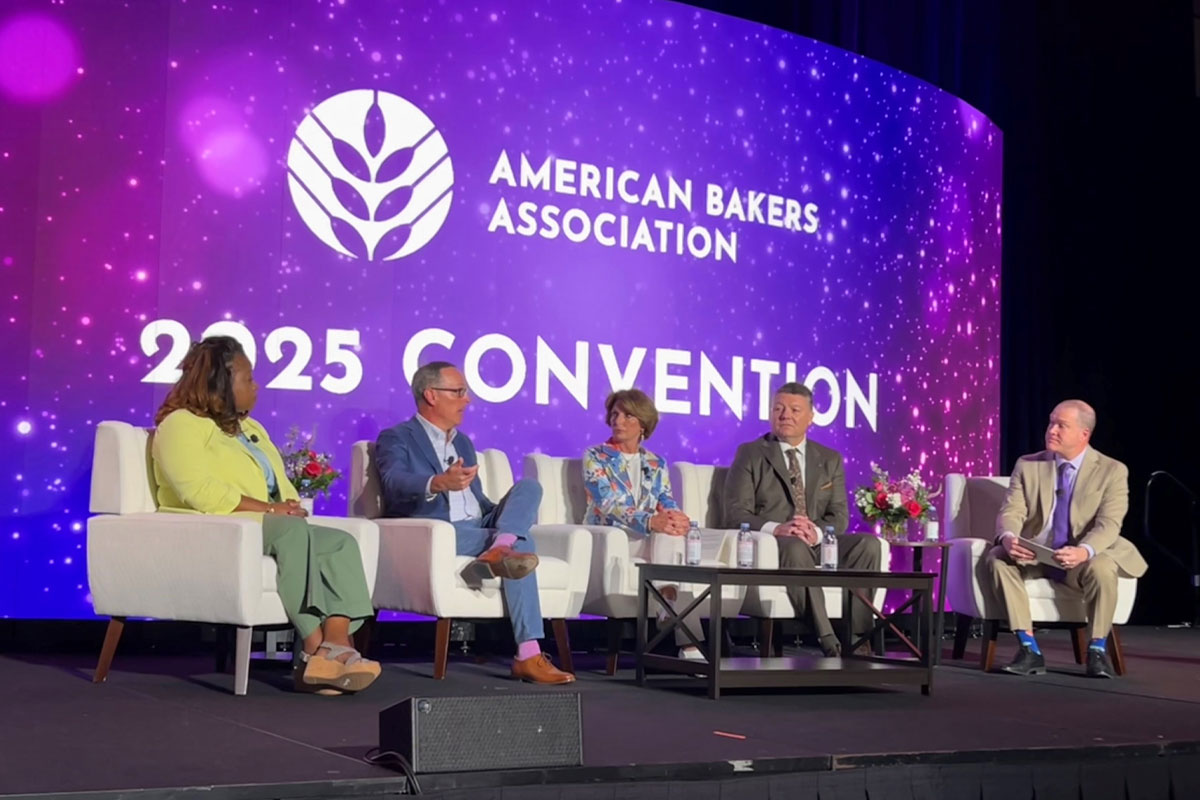
At the American Bakers Association convention in Orlando in March 2025, McMullian discussed consumers whose attention and preferences were moving in many directions. Digital channels give small producers a way to reach buyers directly. Established companies have to answer with products and propositions that still make people choose them.
His impatience with nostalgia was explicit. “Wishful thinking is going to get us nowhere,” he said. It was a particularly useful remark from someone leading a company with familiar names on its packaging. Long recognition can be an advantage. It cannot decide what the customer puts in the basket today.
That argument is now being tested against difficult numbers. In the second quarter of 2026, Flowers reported net sales of $1.193 billion, down 4.0%, and net income of $40.7 million, down 30.3%. The company lowered its full-year outlook. McMullian cited a tougher operating environment than anticipated and emphasized innovation, store execution and investment behind leading brands.
The Nature’s Own relaunch was one response. By August, McMullian said early feedback was encouraging, while acknowledging that the initiative had yet to contribute meaningfully to results. That distinction deserves attention. The case for a change and the evidence that it has worked arrive on different schedules.
Earlier in 2026, Flowers had begun a review of its portfolio, supply chain and financial strategy. In May, it reset the quarterly dividend to $0.125 per share, explaining that debt reduction and investment needed priority. The choices bring his different professional backgrounds together: deciding where money goes, what operations require and which brands deserve support.
The product pipeline gives those ambitions a concrete form. In 2026, Dave’s Killer Bread introduced mini bagels and a seasonal bagel lineup, including Summer Berry and Pumpkin Spice Madness. Variety reaches the shelf in modest units: a different flavor, another format, a product for a different moment of the day. These launches show where the company is directing attention while its established bread business remains under pressure.
He has also changed reporting lines. After Flowers dissolved its chief growth officer role in March 2026, chief brand officer Mark Courtney began reporting directly to McMullian, with retail customer sales, innovation and revenue management added to Courtney’s responsibilities. That move brought several commercial decisions under one leader. Its results, like the product launches, will require time to judge.
Decisions close to the bakery
There is a smaller-scale counterpart to those corporate decisions. At the 2025 convention, McMullian discussed giving individual bakeries a role in choosing local charities and programs to support. The idea recognizes something headquarters cannot supply by decree: detailed knowledge of a community and its needs.
His outside commitments include the Consumer Brands Association, the American Bakers Association, Georgia Research Alliance and Florida TaxWatch. In April 2026, he was elected an at-large member of the bakers association’s executive committee for its next two-year term. These connections place him in discussions about both the industry and the institutions around it.
His own career has required decisions at several distances: a contract in front of him, a factory network across the country, a familiar brand in a shopper’s hand. The current test is whether the pieces produce better results together. The ovens, the balance sheet and the customer will each have something to say about that.