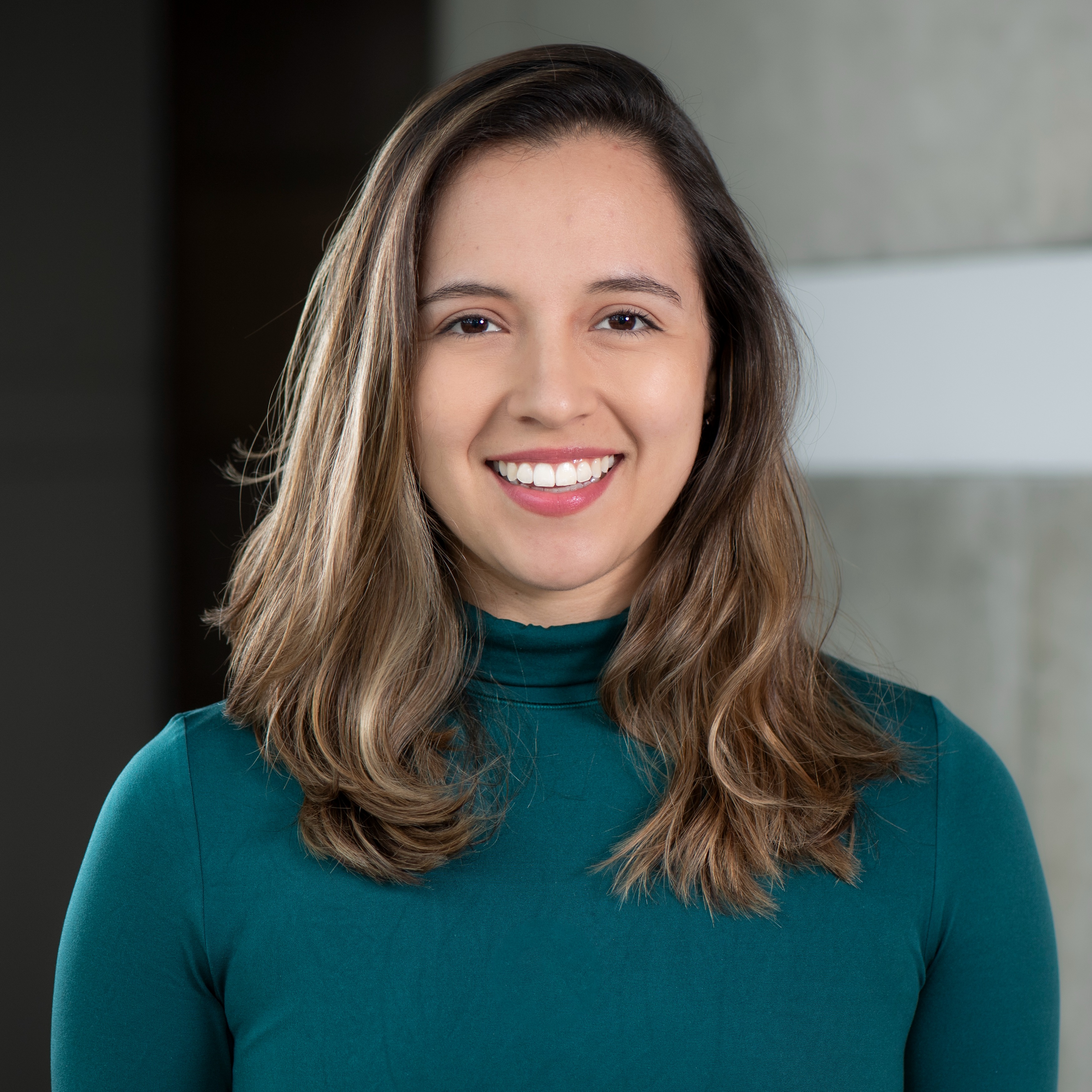
Mid-stride in a sprint most people haven't started
Laura Mediorreal doesn't wait for permission. She walked into her first Harvard Business School case study cold-called - section cheering, nervous, unprepared in the way everyone is on day one - and answered. That moment, she later described as her most memorable at HBS, captures something essential about her: presence under pressure.
She grew up between Bogota, Colombia and Houston, Texas. Two cities. Two cultures. One trajectory: upward and fast. By the time she reached Stanford, she wasn't just accumulating credentials. She was leading Salseros de Stanford, the university's salsa dance organization, running as a Wing on the Women's Rugby team, and building the beginnings of a profile in AI and product management that would take her through three of the most formative companies in tech.
Microsoft came first in the arc. Then Meta. At both, she operated in AI and ML product management - the kind of work that requires you to speak fluently in both engineer and executive, to translate between what's technically possible and what users actually need. She didn't just ship features. She built No-code Agent Builder products. She worked on the messy, interesting intersection of machine learning and product experience before that combination became the thing everyone claims to have been doing all along.
"I have a more holistic view on how businesses function because my section mates share how they think every day."- Laura Mediorreal, on Harvard Business School
True Ventures, one of Silicon Valley's most storied early-stage venture firms, took her on as a VC Fellow - a role that sits at the rare junction of operator experience and investor perspective. She saw deals, saw founders, and sharpened the instinct she'd need when it was her turn to be on the other side of the table.
Harvard Business School's Class of 2025 was the next move. She joined the E-club, the Artificial Intelligence Club, the VCPE Club, and both the LATAM and LASO communities - a portfolio of commitments that signals both where she comes from and where she's going. She plays volleyball now where she used to tackle opponents on the rugby field. Same game, different turf.
Her advice to prospective HBS students reveals the operating system underneath: identify your personal values first, then set three high-level goals before you arrive. Not ten goals. Three. It's a founder's mindset - ruthless prioritization applied to one's own life.
She graduated with Distinction in 2025 - the designation HBS reserves for the top of the class. Then she did what you do after two Stanford degrees, multiple Big Tech product roles, a VC fellowship, and an elite MBA: she went back to zero and started building.
Her current venture is in stealth mode in San Francisco. The details remain confidential, which in the startup world is itself a kind of signal - something worth protecting because it might actually work. Given the pattern of her career so far, betting against it seems like the wrong call.
She describes HBS as "a breath of fresh air mixed in with some overload of inspiration, knowledge, and exhaustion." That's not marketing language. That's someone who was actually there, absorbing it, pushing through the fog and the exhilaration simultaneously. It's also, incidentally, a pretty accurate description of building a startup.
The trilingual detail matters more than it might seem. Spanish natively, Turkish professionally, Japanese elementarily - three separate language families, three distinct cognitive frameworks. That kind of range in language usually signals range in thought. It also signals the kind of global ambition that doesn't come from reading about the world but from actually being in it.
At Microsoft, she worked as a Growth AI Product Manager. At Meta, as an AI Business Developer. At True Ventures, as a Fellow who watched how the best early-stage bets are placed. The thread connecting all three stops is AI - not as a buzzword, but as a domain she was operating in before the world caught up.
She arrived at HBS as someone who already understood the technology. She left understanding the business, the finance, the organizational dynamics, and the global complexity that determines whether a good technology becomes a lasting company. That combination - deep technical product experience plus elite business training plus VC pattern recognition - is not common. It's the kind of background that tends to produce the sort of founder who gets described in glowing terms five years later when the thing they built becomes obvious in retrospect.
Watch this space.