Workera CEO Kian Katanforoosh named WEF Technology Pioneer 2025◆Workera ranks #397 on Inc. 5000 Fastest-Growing Companies 2025◆Sage AI mentorship agent launches: personalized upskilling at enterprise scale◆Workera verifies 100M+ skills across 25 countries◆Kian Katanforoosh wins Stanford's Walter J. Gores Award - highest teaching honor◆Forbes 30 Under 30 Education 2020 & 2021 All Stars◆Workera raises $55.5M total - backed by NEA, AI Fund, Accenture, Jump Capital◆Workera CEO Kian Katanforoosh named WEF Technology Pioneer 2025◆Workera ranks #397 on Inc. 5000 Fastest-Growing Companies 2025◆Sage AI mentorship agent launches: personalized upskilling at enterprise scale◆Workera verifies 100M+ skills across 25 countries◆Kian Katanforoosh wins Stanford's Walter J. Gores Award - highest teaching honor◆Forbes 30 Under 30 Education 2020 & 2021 All Stars◆Workera raises $55.5M total - backed by NEA, AI Fund, Accenture, Jump Capital◆
WEF Technology Pioneer 2025 | CEO & Founder
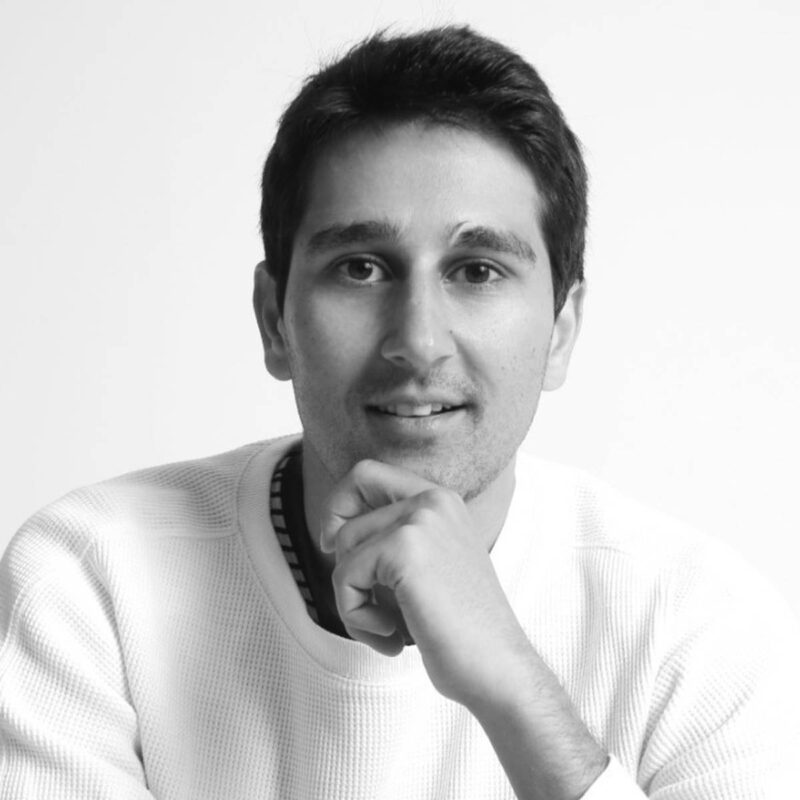
Kian Katanforoosh
The man who learned from one of the world's best AI minds - and decided no one else should have to get that lucky.
Workera CEOStanford LecturerDeepLearning.AI Co-FounderForbes 30 Under 30WEF Tech Pioneer
San Francisco, CA$55.5M Raised4M+ Learners Taught
CEO & FOUNDER, WORKERA
$55.5MTotal Raised
4M+AI Learners Taught
100M+Skills Verified
25Countries Served
#397Inc. 5000 (2025)
Origin Story
Paris Suburbs to Palo Alto - One Very Long Bet on Compounding
His father fled Iran during the 1970s revolution, abandoned a science degree, and spent years selling clothes in France to keep the family afloat. Kian Katanforoosh grew up near Paris watching that story - and quietly decided to finish what his father started.
He came to Silicon Valley through a master's degree at Stanford, which is how he ended up in the orbit of Andrew Ng - the professor who wrote the textbook on modern deep learning. That proximity changed everything. Ng became his advisor, his collaborator, and eventually the chairman of the company Kian would build. The relationship planted a question that Workera is still trying to answer: how do you give that kind of mentorship to someone who doesn't happen to sit across the hall from a world-class AI researcher?
Before any of that, he co-founded Daskit in 2014 - a French ed-tech startup building in-classroom tools for universities. It didn't become a unicorn. It was, by his own framing, a training round. He learned how companies get built, how education resists change, and how much harder the problem is than it looks from the outside.
Long-term thinking, where you go all-in on one area and let it compound, is what worked best for me.
- Kian Katanforoosh, Fortune
In 2017, he and Ng launched DeepLearning.AI - a platform delivering high-quality machine learning education online. The Deep Learning Specialization on Coursera became one of the most completed courses in the history of AI education: over 4 million learners across 23 languages. Kian co-created it. He also co-taught CS230 at Stanford, where his teaching earned him both the Walter J. Gores Award - the university's highest honor for teaching - and the Stanford Centennial Award for Excellence in Teaching. It is a genuinely unusual combination: the person responsible for the world's most popular AI course was also winning awards in a 600-seat lecture hall on campus.
The Company
Workera - The Skills Intelligence Layer Enterprises Were Missing
Founded 2020 • Palo Alto, CA
Workera
An AI-powered skills intelligence platform that measures, verifies, and develops workforce capability at enterprise scale - combining psychometrics, adaptive assessment, and AI mentorship to give companies their first honest look at who can actually do what.
$55.5M
Total Funding Raised
500K+
Assessments Completed
310
Employees, 17 Countries
2.32x
Enterprise ARR Growth (YoY)
Kian launched Workera in 2020 with Ng - who serves as chairman - with a specific thesis: enterprises don't actually know what skills their people have. They have job titles, LinkedIn profiles, and years-of-experience fields in HR systems. None of that tells you whether someone can ship a production ML pipeline or run a data quality audit without supervision. Workera does.
The platform uses computerized adaptive testing and psychometrics - the same rigorous methods behind standardized assessments like the GRE - to produce verified, role-specific skill data. Clients include Samsung, Siemens Energy, the U.S. Air Force, Booz Allen Hamilton, and Accenture. They're not just buying courses. They're buying a measurable picture of organizational capability.
The 2023 Series B - $23.5M led by Jump Capital, alongside NEA, AI Fund, Owl Ventures, and Sozo Ventures - pushed Workera's total funding to $55.5M. By 2025, the company ranked #397 on the Inc. 5000 list of America's fastest-growing private companies and verified over 100 million skill data points.
Workera Funding Rounds
Seed / Series A
$32M
Series B (2023)
$23.5M
Total Raised
$55.5M
The thesis behind Workera taps into something Kian has been blunt about: most leaders are failing at this. When asked on the World Economic Forum's Meet the Leader podcast to grade how well executives are bridging the AI skills gap, he didn't equivocate. "They're bad," he said. "I would give them a two out of 10."
That bluntness isn't posturing. It's backed by the data Workera collects. The half-life of a technical skill has collapsed from over a decade (forty years ago) to roughly 2.5 years in digital domains today. The traditional corporate response - one-size-fits-all training programs and annual learning catalogues - was never adequate. It's now actively damaging.
Companies will inevitably become skills-based, using skills data to create happier, more efficient teams.
- Kian Katanforoosh, Workera About Page
The Product Vision
Sage - An AI Mentor for the Masses
The question Kian keeps returning to: how many people get mentored the way he was mentored by Andrew Ng? The honest answer is: almost none. Workera's Sage is his attempt to change the arithmetic.
Launched in early access in November 2024 (general availability March 2025), Sage is an AI agent that assesses employee skills through adaptive tests and conversations, then recommends targeted learning from Coursera, Workday, and partner platforms - customized to the person's actual gaps, not their job title.
Kian has been careful about what Sage can and can't do. It won't replicate the emotional encouragement of a great mentor, or the networking that comes from being in someone's inner circle. What it can do - possibly better than a human - is assess accurately. "I would trust the Workera system much more than I trust myself," he said in a TechCrunch interview. That's not false modesty. Human mentors are subject to bias, availability constraints, and the limits of their own attention. An AI agent running assessments across thousands of employees simultaneously is not.
Early customers include Booz Allen Hamilton and the U.S. Air Force - organizations where getting skill assessment wrong has actual consequences, not just quarterly report consequences.
🎯
Adaptive Assessment
Tests that adjust in real time based on your responses - the same psychometric rigor as standardized exams, applied to professional skills.
🤖
AI Mentorship (Sage)
An AI agent that converses, assesses, and recommends - personalized learning paths from Coursera, Workday, and 50+ partner platforms.
📊
Skills Intelligence
Verified, role-specific skill data that lets HR and L&D leaders make workforce decisions on evidence rather than instinct.
The half-life of a digital skill is now 2.5 years. That means someone hired for their Python skills in 2022 may already need a reskilling conversation.
Workera's core thesis - from Kian Katanforoosh's Stack Overflow Blog interview, 2024
The Educator
Four Million Students and Stanford's Highest Teaching Award
There's a version of Kian's story where he stays at Stanford, keeps winning teaching awards, keeps running CS230 with Ng, and becomes one of the most beloved computer science professors of his generation. He won both the Walter J. Gores Award (Stanford's top teaching honor, given to faculty who demonstrate extraordinary impact in the classroom) and the Centennial Award for Excellence in Teaching. Not many people get one of those. Fewer still get both.
The Deep Learning Specialization on Coursera - which he co-created and helped teach - became the most widely completed machine learning course in the world. Over 4 million learners. When Kian says he's built Workera to democratize mentorship, that's not a founder narrative. He spent several years actually doing it, at massive scale, for free online.
He still lectures at Stanford as an adjunct. The classroom and the company exist in the same mental space for him - both are about closing the gap between what someone knows and what they need to know to do meaningful work.
WEF Meet The Leader: How to upskill for an AI Age
Career Timeline
The Arc
2014 - 2016
Co-founded Daskit - a French ed-tech startup building in-classroom solutions for universities. First experience at the collision of education and technology.
2017
Co-founded DeepLearning.AI with Andrew Ng. Began co-teaching CS230 Deep Learning at Stanford. The combination would reach millions.
2017 - 2019
Co-created the Deep Learning Specialization on Coursera. Over 4 million learners completed it across 23 languages. Won Stanford's Walter J. Gores Award and Centennial Award for Teaching.
2020
Launched Workera. Forbes 30 Under 30, Education list. The company's first enterprise clients begin using AI-powered skill assessment.
2021
Forbes 30 Under 30 All Stars, Education. Workera gains enterprise traction with clients including Samsung and Siemens Energy.
2023
Closed $23.5M Series B led by Jump Capital. Total funding reaches $55.5M. The U.S. Air Force joins as a client.
2024
Workera named to Fast Company Most Innovative Companies alongside Microsoft and Canva. Launched Sage AI mentorship agent in early access.
2025
Named World Economic Forum Technology Pioneer. Workera ranked #397 on Inc. 5000. Sage reaches general availability. Sage customers include Booz Allen Hamilton.
Recognition
Accolades
Walter J. Gores Award - Stanford University's highest honor for teaching excellence
Stanford Centennial Award for Excellence in Teaching
Forbes 30 Under 30, Education list - 2020
Forbes 30 Under 30 All Stars, Education - 2021
World Economic Forum Technology Pioneer - 2025
Fast Company Most Innovative Companies - 2024 (Workera)
Inc. 5000 #397 - Fastest-Growing Private Companies in America - 2025
Co-created the most widely completed AI course in the world (4M+ learners)
LinkedIn Top 1% influence in France in AI Education (Favikon, 41K+ followers)
Off the Clock
The Person Behind the Platform
Here's a detail that tends to land with a thud: Kian runs a $55.5M software company and still has roommates. Not out of necessity - by choice. He lives in a downtown San Francisco high-rise with colleagues, values the community, and frames it as a deliberate countermove against the isolating math of remote work. His commute consists of moving from bed to desk.
He's an Arsenal supporter (the football club, not the armory), plays Warzone and PS5 games with some seriousness, and listens to French rap - specifically PNL and Orelsan - which tracks for someone who grew up next to Paris before landing in Silicon Valley. His espresso setup involves a Breville machine and what he'd probably describe as an appropriate level of attention to extraction variables. His Oura ring sleep score went from 69 to 75+ over five years of careful optimization. That same data-driven patience applies to everything he builds.
⚽
Arsenal FC supporter and passionate soccer player - brought French football culture to Silicon Valley
🎵
Listens to French rap - PNL and Orelsan. One of the few Bay Area CEOs with a playlist that works in Paris too.
🎮
Plays Warzone and PS5 titles. Uses gaming the way most executives use golf - badly, but enthusiastically.
💤
Early Oura ring adopter. Improved his sleep score from 69 to 75+ over five years of deliberate optimization.
☕
Serious espresso enthusiast with a Breville setup. The same precision applied to coffee as to psychometric assessment design.
🏠
Still has roommates despite running a $55.5M company. Calls it a community choice. His commute is bed-to-desk.
I actually feel very confident that AI is already much less biased, but will be even less biased than humans in the coming years.
- Kian Katanforoosh, TechCrunch 2024
Network & Context
The Andrew Ng Connection - and Why It Matters
Andrew Ng is one of the most influential figures in modern AI. Co-founder of Google Brain, former Chief Scientist at Baidu, creator of Coursera's machine learning specialization - he shapes how a generation of engineers thinks about the field. Kian didn't just take one of his classes. He co-built DeepLearning.AI with him. Ng now chairs Workera's board.
That relationship isn't just biographical texture. It's the moral engine of Workera's pitch. Kian's best articulation of why the company exists: "I trust Andrew because I understand his background and expertise, but how many Andrews are there in the world? Not that many." The answer to that question - millions of people who need the kind of structured, rigorous, personalized development that elite access provides - is the total addressable market Workera is after.
Workera's investor base reinforces the credibility of the mission. AI Fund (Ng's own fund), NEA, Owl Ventures, Jump Capital, Sozo Ventures, and Accenture all have skin in the game. Fast Company put Workera in its Most Innovative Companies list alongside Microsoft and Canva in 2024. The U.S. Air Force - not historically an early adopter of SaaS ed-tech - is running assessments on it.
Kian hosts a podcast called Skills Baseline, speaks at the World Economic Forum in Davos, and has 41,000+ LinkedIn followers with a Favikon authenticity score of 100/100 - which means his audience engages because the content is good, not because the algorithm is being gamed. For a CEO whose product is about measuring what people can actually do, that consistency is not accidental.