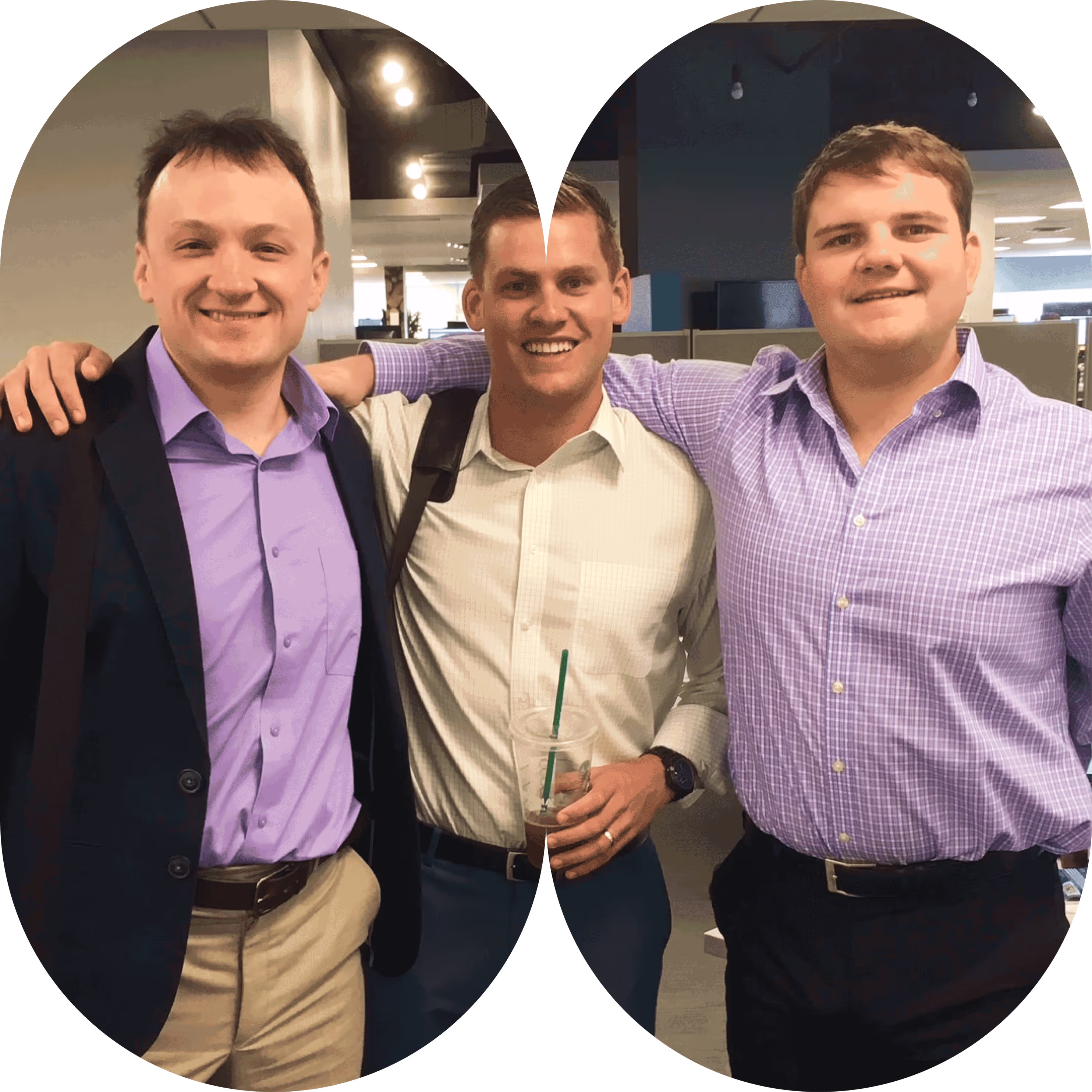
In Kevin Frechette’s account of Fairmarkit’s beginnings, the setting is the Boston Public Library. He, Tarek Alaruri, and Victor Kushch were working out how companies might buy things differently. A library is a fitting headquarters for people who suspect that somebody, somewhere, already knows the answer. The difficulty is getting the information to the person who needs it.
When Frechette recalled those conversations in 2020, Fairmarkit was announcing a $30 million Series B. Three years had passed since the company’s founding. The ambition had acquired customers, employees, and investors. It had also become more specific: help enterprises put competitive attention on purchases that rarely received enough of it.
There is a pleasing complication in this story. Frechette had learned enterprise purchasing from the other side of the table. He sold technology. He knew how a deal could depend on the negotiation, the salesperson, and the buyer’s knowledge. The inconsistency bothered him enough to become a business question.
A salesman learns to listen
Frechette studied at the University of Massachusetts Amherst’s Isenberg School of Management. His early work at EMC included a finance internship involving asset tagging and depreciation. He later moved into sales, working on large data-center deals. The work demanded an ability to connect technology to business value and make a case to senior executives.
His education also included club soccer and club lacrosse; his public university record lists him as a soccer coach and captain. Team roles were part of his life before he had a company to lead.
His route included Austin, where he has recalled enjoying golf and time in the pool, before returning to Boston. At a venture-backed virtualization-management company, he met Alaruri. They would eventually join forces with Kushch, the technical co-founder. The combination brought sales experience and engineering into the same founding team.
The original concern was price transparency in enterprise IT. Two companies could buy the same technology and pay different amounts without knowing what the other had negotiated. A buyer could research a house or compare a salary, yet a major business purchase could remain surprisingly opaque.
Frechette and his colleagues took the idea into conversations with executives. Those calls revealed a wrinkle. Large technology purchases already attracted consultants, negotiating teams, and established procedures. Elsewhere in the organization, smaller purchases were consuming attention without receiving comparable scrutiny. The founders followed that opening.
The small order with a large entourage
Procurement calls this territory “tail spend.” The term is tidy; the work can be anything but. It covers purchases outside the main strategic sourcing effort, spread across suppliers, categories, and requests. Individually, they can be easy to overlook. Together, they create a substantial queue of decisions.
The awkward part is the relationship between a purchase’s value and the effort it takes to process. A smaller order still needs a clear description. Someone must identify suppliers, collect replies, and compare what is actually being offered. A lower price tag does not automatically shorten the correspondence.
Fairmarkit began in 2017 with that neglected workload. Its initial focus was making requests for quotations manageable at scale. Over time, the company added machine learning, supplier recommendations, generative AI, and agents working across sourcing tasks. The vocabulary grew more elaborate; the underlying question remained practical. Where is the buyer’s time going?
- 01Describe
the need - 02Find
suppliers - 03Collect
offers - 04Compare
and decide
Illustrative workflow. The order may be small. The list of jobs still has four lines.
An early conversation about machine learning and negotiation, with both Frechette and Alaruri, already included a concern that would recur: what should skilled people do with better information? Automation could help reveal patterns and suggest options. A negotiator would still have to interpret the situation and work with another human being.
That history matters because Fairmarkit’s interest in AI predates the recent enthusiasm for agents. Frechette was discussing the use of data to improve sourcing years before generative AI became the industry’s favorite conversation starter. The company had a purchasing problem in view before it had the newer terminology.
“The most exciting part is that procurement is not exciting.”
Kevin Frechette
The founder has to change jobs, too
Frechette’s early leadership education included learning that responsiveness can become a trap. He has described Fairmarkit coming close to becoming a services business as it responded to customer demands. Building software that can be used repeatedly requires choices about which requests belong in the product. A founder cannot approve everything and expect coherence to emerge by itself.
Money arrived through relationships that developed over time. Insight Partners first spoke with him in 2018, when the business was early for its investment approach. The firm stayed close, met Frechette and Alaruri in person the following summer, and invested in the 2019 Series A. The Series B followed in 2020.
- 2019
- $11MSeries A
- 2020
- $30MSeries B
- 2022
- $35.6MSeries C
Company financing rounds. These figures describe Fairmarkit’s funding.
In September 2022, Frechette announced a $35.6 million Series C led by OMERS Growth Equity. His account tied the funding to platform development, partnerships, and hiring. It also gave a concrete example of customer adoption: bp had put $1.2 billion of spend through Fairmarkit, including $125 million competitively bid through automated sourcing. Those were figures reported at the time.
The announcement’s closing enthusiasm was less restrained than its financial details. Frechette writes with the energy of someone who still expects the team to join in. His public voice can move from procurement mechanics to an exuberant rallying cry without much warning.
Growing a company also asks a founder to surrender parts of the job. Frechette has acknowledged needing to improve at delegation and give other leaders space to run. His later conversation about a culture built from employee contributions continued that theme. A company that depends on the founder’s involvement in every decision has an obvious scheduling problem.
A place for judgment in an automated purchase
Frechette’s account of Fairmarkit’s SAP integrations makes the work sound appropriately collaborative. He has thanked early customers at bp, Materion, and Boston University for helping establish those connections. The software had to fit into systems organizations already used. That meant learning with customers while the integrations were being built.
In a 2025 interview, he described a Sonoco deployment in Latin America, where purchasing relied on phone calls and emails. Connecting Fairmarkit with Coupa helped standardize requests for quotations and make sourcing activity visible. He presented it as an example of reducing administrative friction while keeping procurement teams involved in the decisions.
His explanation of AI also makes room for different tools doing different jobs. In another discussion, he described using generative AI to extract dates from contracts. The usefulness lay in removing repeated reading and transcription. The task had a recognizable beginning and end, a quality that can be scarce in conversations about the future.
By October 2026, his advice on agents was explicitly about matching authority to the task. Checking adherence to a policy and reasoning through a sourcing scenario call for different degrees of autonomy. He argued for choosing a frequent, narrow workflow, proving its value, and then deciding what to expand.
That is a revealing preference for a founder selling automation. The unit of progress is a job performed well enough to earn trust. Procurement teams still need to decide where the system can act independently and where experience should enter the conversation.
His ambitions also extend to the suppliers responding to those requests. Frechette has described recognizing that suppliers deserve the same consideration as buyers. A marketplace depends on both groups finding it worth their time to participate. Improving the purchasing desk while leaving the supplier with another cumbersome process would leave half the work unfinished.
Who teaches the next buyer?
Outside the formal interviews, Frechette permits a few less corporate details to escape. A November 2024 business recap was written on a Boston-to-Chicago flight while he listened to Taylor Swift. His company biography describes three daughters and a son. The executive interested in reducing repetitive work evidently has other claims on his attention.
His September 2026 writing raised a more difficult consequence of the technology he sells. Operational procurement work once served as an apprenticeship. Chasing quotations and reviewing suppliers could be tedious, but repetition taught buyers to recognize trouble. As agents absorb those tasks, employers have to consider how new people will acquire that judgment.
“You can’t skip the reps and expect the instinct.”
Kevin Frechette
His proposed responses include using escalated decisions as teaching opportunities, showing people the reasoning behind agent recommendations, and giving them room to experiment. The learning has to be designed into the work. Otherwise, an organization can gain speed while making the next generation’s education harder to arrange.
There is a connection here to his own career. Frechette learned by moving between roles, asking customers questions, and discovering that the original application of an idea could change. The work supplied the lesson. Now he is asking how a business preserves that education when software takes over more of the practice.
For a salesperson turned founder, that is familiar territory. Experience comes from handling a situation, seeing the result, and changing the next attempt. Frechette has talked about rejection as feedback rather than a personal verdict. His procurement argument carries a similar expectation: people need opportunities to test a decision and understand what happened. Faster execution creates room for that learning, provided someone makes it part of the job.
The library question was about helping companies make better purchases. Nearly a decade later, another question sits beside it: how do people become better buyers? Frechette’s company keeps extending what software can do. His recent argument asks managers to give equal thought to what their people will learn along the way.