John Davie began with a sales problem that would test anyone’s fondness for capitalism. He wanted independent restaurants to join forces so they could negotiate better prices. To negotiate those prices, he needed restaurants. To recruit the restaurants, it would have been helpful to have better prices. There was plenty to explain at the door.
In 1998, he and his father, Clifford, started the business that became Dining Alliance in Rochester, New York. John was 21 and newly out of college. He remembers spending five years knocking on doors while his father supplied small amounts from his retirement savings to keep the venture going. The immediate product was a promise that enough small buyers, assembled patiently, could become a customer worth bargaining with.
The father supplied something else: an example. He had worked on purchasing businesses in other industries, and John grew up watching him help smaller firms compete. Restaurants became their chosen market after they considered other kinds of independent retailers. The family resemblance was in the business model before it was in the company directory.
John had graduated from New York University, where he studied finance and marketing. Both disciplines would prove useful. One concerns the numbers; the other concerns getting someone to listen while you explain why those numbers might eventually improve.
A local alliance learns to travel
By June 2004, the venture had enough substance to attract attention in Rochester’s business press. The Buying Alliance, as the operation was then described, had 320 members in Rochester and Syracuse and was preparing to enter Buffalo. Members paid no fee; the business received a share of the savings it arranged.
That detail explains the difficulty of the early pitch. The founders were asking restaurant owners to participate in a collective arrangement whose usefulness depended on other owners doing the same. Each signature helped make the next signature more valuable. Geography mattered because the network had to be built somewhere before it could be built everywhere.
A decade after the founding, the problem was becoming less hypothetical. In May 2013, Dining Alliance announced a national Pepsi agreement covering its 15,000 member restaurants. Previous arrangements had served particular regions, including upstate New York, Pittsburgh and Boston. The new agreement reached the whole membership.
The company said the deal would triple savings compared with its earlier regional contract. More than two million gallons of beverages were expected to move through the agreement over five years. For a business founded on persuading separate dining rooms to act together, a national soda contract made an unusually straightforward exhibit. The arithmetic could finally do some of the selling.
and Syracuse
national Pepsi contract
the platform at launch
The family business gets a larger table
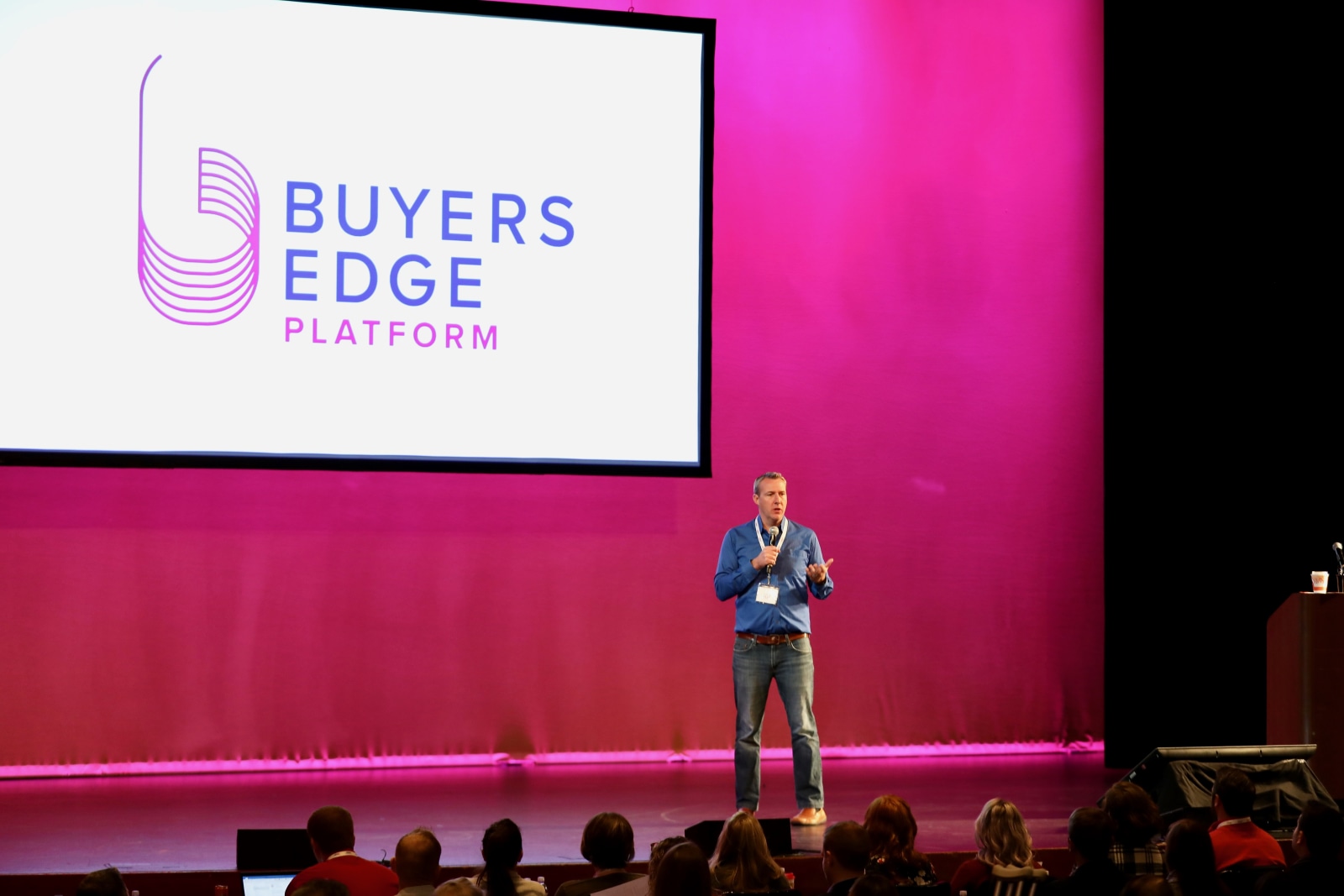
In August 2018, Davie unveiled Buyers Edge Platform, bringing a network of purchasing groups, service businesses, technology providers and supply-chain consultants under a broader platform. At launch, the network represented more than 45,000 foodservice locations and $7 billion in purchasing power.
The announcement also introduced a partnership with entegra Procurement Services, a Sodexo affiliate. Davie’s customers would gain access to supplier agreements alongside contracts negotiated by the platform. His commercial world now included manufacturers, consultants and purchasing groups as well as the restaurant operator who had answered the original knock.
This expansion explains the word “platform,” which can otherwise do a suspicious amount of work in a corporate name. The business was assembling services that connected different participants in the same purchasing process. More buying volume could improve negotiations; more useful services could give operators more reasons to stay.
Bregal Sagemount invested in 2019. Davie used the occasion to describe a customer base that had extended into hotels, casinos, entertainment venues, education and restaurant chains. The early focus on independents had opened into a wider foodservice business, with outside capital available to finance acquisitions and further development.
In October 2018, he described the direction he wanted the new platform to take: openness, flexibility and purchasing transparency. Those priorities address the operator’s side of the arrangement. Joining a group has to leave room for the choices a restaurant needs to make, and the savings have to be understandable to the person paying the bill.
His wider interests also include the Davie Family Foundation, which supports youth education and gives particular attention to technology for regenerative agriculture and food security. The subject reaches beyond negotiating an order to the conditions under which food is produced and people gain access to opportunity. It adds another food-related concern to a career already crowded with them.
The family connection survived the expansion. Davie has described working alongside siblings, in-laws, cousins and his father. He also makes room for disagreement. “I want ideas. I want dissenting opinions,” he says. The pairing is useful: a family company can prize continuity without requiring everyone at the table to finish the founder’s sentences.
Keeping a majority, raising the stakes
April 2024 brought a $425 million preferred-equity investment led by General Atlantic Credit’s Atlantic Park fund, alongside Blackstone Tactical Opportunities and Morgan Stanley Tactical Value. Bregal Sagemount would exit its minority investment. Davie would increase his majority stake.
That last point makes the transaction distinctive in his personal story. Institutional investors were arriving while the founder and his immediate family were increasing their ownership. The announcement explicitly connected that ownership with continuing to run a company shaped by its entrepreneurial origins.
The business reported more than 200,000 operator locations and over $60 billion in aggregated purchasing volume at the time. Those figures describe the network’s activity. They help explain why a procurement business could attract this kind of financing: its reach extended through the transactions of many separate operators.
In May, Buyers Edge completed a recapitalization described as $1.1 billion. The financing included a $560 million term loan and a $130 million revolving credit facility, building on the preferred-equity investment. The stated purpose was another phase of growth. After years of collecting restaurant members, Davie had assembled a rather different group around the table: large capital providers funding the next stretch.
Preferred equity and credit facilities supporting the next phase of Buyers Edge’s growth.
A building he could not leave alone
Davie’s decisions occasionally have a more tangible punchline than a financing announcement. In 2019, Buyers Edge expanded into Lake Worth Beach, Florida. Its new base was the EcoCentre, a four-story office building with systems intended to conserve water and energy.
Source1 Purchasing moved 45 employees there from Boynton Beach. Davie’s explanation of the choice came with a property purchase attached. Admiration had become ownership.
The purchase had been completed on March 1. The building collected rooftop rainwater and reused water on site, making the environmental features part of the workplace itself. For a founder whose usual inventory consists of contracts, software and purchasing information, this was an acquisition with stairs. It also gave the Florida expansion a fixed address and room for more employees.
“In fact, I liked the building so much, I bought it.”
JOHN DAVIE / 2019
Mini golf, serious money
Another branch of Davie’s work takes place closer to the dining room. He is a general partner at EMERGING Fund, working with Mathew Focht and other partners on restaurant technology and dining concepts. In 2023, the fund reported $54 million raised toward a $100 million ambition.
Its portfolio included Puttshack, Flight Club and F1 Arcade, businesses that pair food and drink with activities such as technology-assisted mini golf, darts and racing simulators. The connection to his procurement work is practical: these are restaurant businesses with operational needs, even when a guest has arrived chiefly to beat a friend at something.
Davie has visited Puttshack in Chicago himself. He has spoken about the appeal of places that can accommodate groups and about the fund’s interest in proprietary technology. Automated scoring can change how an outing feels; it also spares the table the familiar negotiation over who was keeping score.
He remains attentive to the food. Repeat visits, in his account, depend on good meals and drinks as well as the activity. The game may secure the first booking. A restaurant still has to earn the next one.
Now the buying-group founder is grouping AI
Davie’s current work includes a second chief executive role, at CollectivIQ. Publicly launched in March 2026, the company grew out of attempts to use generative AI inside Buyers Edge. It brings responses from several language models into one interface, comparing their outputs and producing a combined, annotated answer.
The company presents this as a way to improve reliability, preserve shared knowledge and reduce dependence on a single model provider. The structure has a familiar appeal for someone who has spent decades assembling groups: let several participants contribute, then make the combined result useful to the person doing the work.
In August, CollectivIQ announced Digital Direct Reports: AI teammates configured for particular roles, including project management, executive assistance, recruiting and software engineering. The company says they can retain context and work through systems such as Microsoft 365, Jira and GitHub, with people remaining involved. This moves Davie’s ambitions from comparing answers toward delegating work.
His own writing that month described the management problem behind the enthusiasm. Employees were already using different AI tools, choosing what suited their tasks. From the chief executive’s desk, the questions concerned spending, accuracy and whether useful knowledge remained trapped in separate chats. Adoption had arrived before the tidy corporate rollout he had expected.
In a May interview, he described an ambition for CollectivIQ to become a shared intelligence system for organizations, retaining context and employee knowledge over time. It is an aspiration with a recognizable history. The first business asked independent buyers to contribute to something they could all use. The newer one asks what a company might gain when its thinking stops being scattered across separate conversations.
Davie’s career keeps returning to the difficulty of making participation worthwhile. A purchasing group needs members. A network needs useful connections. A shared knowledge system needs people willing to contribute. The tools have changed considerably since Rochester. The founder still has to explain why everyone should pull up a chair.
Keep the conversation going
Explore Davie’s work, interviews and business milestones.
- John Davie on LinkedIn
- Buyers Edge Platform
- CollectivIQ
- Watch: Restaurant AI conversation with Matt Wampler
- Listen: Hospitality Hangout
- The 2018 platform announcement
- The 2024 investment announcement
- John Davie on CollectivIQ’s origins and ambitions
- Davie’s writing on employee AI adoption
- Restaurant entertainment and EMERGING Fund
- Dining Alliance’s national Pepsi agreement
- The Rochester purchasing group in 2004
- The EcoCentre purchase