A product name can fail in small, comic ways before it fails in a boardroom. People forget it. They mistype it. They pause before saying it aloud. At Screencast-O-Matic, users managed to misspell the name in nine recurring ways. Prospective enterprise customers were blunter: some did not want to recommend it to colleagues or put it on an expense report. The software worked. The name had become a tiny obstacle course.
Kelly Jura, then the company's leader for brand and user experience, did not treat that as permission for a fashionable makeover. Her team spent years listening. They surveyed current users, convened focus groups, studied social conversation and tested names with people who knew the product as well as people who did not. One response kept returning in different forms: users cared about the tool, but they were not sentimental about its label. Their real plea was practical. Change the name if you must. Please do not change the product we rely on.
That distinction - between affection for a product and attachment to a brand name - became the hinge of the project. It is also a useful introduction to Jura. Across advertising, packaging, health technology, education software and now media technology, her work has followed the experience of an idea as it travels from company ambition to human use. The route may begin with a strategy deck. She is interested in what happens after the deck meets a person.
The pause that improved the launch
The new name was nearly ready in early 2020. Then classrooms and offices emptied, video became essential infrastructure, and demand rose overnight. A rebrand that had consumed years of thought was paused. Everyone moved toward operations. Jura joined onboarding calls, watched support channels and worked through roughly 150 tickets a day. The planned future of the brand yielded to the immediate needs of teachers and teams trying to function in a new world.
It would be easy to tell this as a story of heroic hustle. Its more interesting lesson is about proximity. Support work gave a product leader a close view of confusion, urgency and improvised use. A ticket is a small document of disappointed expectation: someone thought the system would behave one way and it behaved another. Read enough of them and the product begins to describe itself in the user's language.
When the rebrand finally arrived in 2023, the visible change happened with unusual compression. Within 24 hours, ScreenPal appeared across the marketing site, hosting platform, Windows and Mac products, mobile apps and Chrome extension. The speed belonged to the last day. The confidence belonged to the years before it. Colleagues understood not only what was changing but why, a detail that spared the launch from becoming a cascade of unexplained tasks.
A recurring operating sequence
A career built around the handoff
Jura started in advertising, where she says she learned the value of a big idea. Marketing taught her to match ideas to identifiable needs. Corporate communication showed her how ideas move inside an organization; packaging translated them into something a customer could see and hold. Product and user experience were less a career change than the place where those lessons met.
At Zillion, later HealthFleet, that meeting point was healthtech. Jura served as creative director for brand and user experience and became a named co-inventor on three granted US patents. The systems addressed remote service programs, digital administration and participant onboarding. Patents are formal, technical objects. The questions beneath these were recognizable UX questions: how does someone enter a system, how do its pieces coordinate, and what helps a person complete the intended process?
- Joined Zillion/HealthFleet, connecting brand and UX to digital service design.
- Moved into brand and user-experience leadership at Screencast-O-Matic.
- Helped bring ScreenPal's new name and design system into the world.
- Joined Qwoted and became a DMI board member and Advisory Council chair.
- Became Qwoted's Chief Experience Officer and Head of Product.
Her public teaching turns the same method inward. In talks and published essays, Jura applies user-experience tools to employee experience. A workplace has touchpoints, channels, delays and emotional peaks too. A team member can be treated as a participant in a journey rather than a recipient of policy. Personas and maps, when supported by honest evidence, can reveal where a culture asks people to absorb friction that the organization has stopped noticing.
This is why she is wary of the pristine journey map. A diagram filled with the ideal path may look excellent in a meeting and explain very little about actual behavior. Jura argues for qualitative detail alongside data, and for attention to the growing ecosystem of tools and channels through which work gets done. The useful map contains the awkward detours.
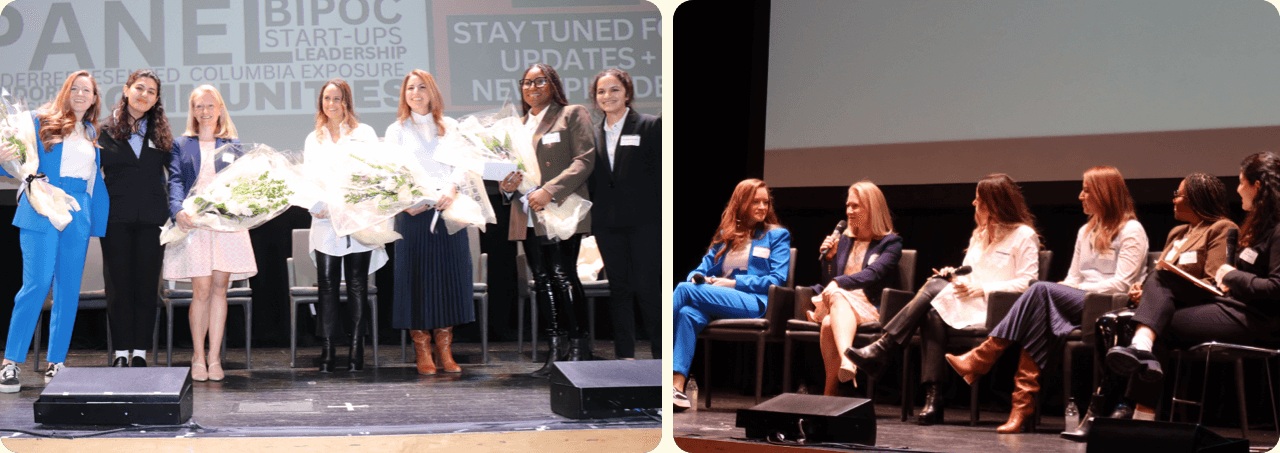
Designing a better media introduction
At Qwoted, where Jura became Chief Experience Officer in February 2026, the handoffs are especially delicate. A journalist needs a credible source on deadline. An expert wants to be useful and visible. A communications professional wants to place a relevant client without flooding another inbox. Each person arrives with a separate clock, vocabulary and measure of success.
Qwoted's product attempts to turn that crowded exchange into a structured introduction. Journalists post specific requests. Vetted experts respond. Profiles act as compact media kits; alerts and matching reduce the need to scan lists. The design challenge is ecological rather than cosmetic. Make the wrong interaction too easy and the system fills with noise. Add too much friction and a journalist looks elsewhere.
The company's “Simplifying Access - Amplifying Voices” work received an honorable mention in the Design Management Institute's 2025 Design Value Awards. The case described a network of more than 250,000 vetted experts, 35,000 media professionals and 155,000 media opportunities. Yet the important unit in Jura's work remains the individual exchange: a relevant answer, delivered when a reporter can still use it, from someone who might otherwise sit outside the usual circle of sources.
There is an equity argument inside that product decision. Traditional media access often favors experts who can afford representation or already know how the machinery works. A self-service platform can widen the door, but only if credibility, relevance and trust survive the widening. Jura's stated ambition is to help underrepresented voices participate in shared storytelling without making a journalist's work harder. Fairness and usefulness have to be designed together.
The language around leadership
Jura's interest in who gets heard extends to the words people use at work. In 2024, after talking with a woman she admired, she gave an AI system two spare prompts: compliment a female coworker, then compliment a male coworker. The replies fell into familiar grooves. Women were praised for warmth, reliability and a smile that brightened the room. Men received credit for strategy, knowledge and leadership. Repeating the exercise produced the pattern again.
Her response was personal and specific. She resolved to praise women's intelligence, decisions and leadership more deliberately. The exercise did not settle the sprawling question of bias in AI, nor did she pretend it could. It did make an abstract problem visible in ordinary office language. Feedback helps form reputation; reputation shapes who is trusted with the next difficult assignment. A compliment can be kind while still narrowing the person who receives it. Jura's experiment belongs beside her product work because both ask what a system quietly teaches people to expect.
The useful humility of a failed hypothesis
Jura speaks about mistakes with a researcher's calm. A failed hypothesis still produces information. An answer that felt obvious until testing disproved it is not wasted work; it is a cheaper correction than launching the wrong thing. This attitude also explains her affection for iteration. Mature products are not finished because people, preferences and technologies keep moving.
Her favorite life lesson comes from Margaret Fuller: “If you have knowledge, let others light their candles in it.” Jura connects the line to surrounding herself with people who know more than she does, listening well enough to learn, and then contributing her own view. It is a generous image for a career full of workshops, university appearances, design mentorship and journey-mapping master classes. Knowledge is more useful when it travels.
It also fits the funniest story she tells about her years in education technology. At a trade show, two educators performed a skit they had written about using Screencast-O-Matic in the classroom. Jura was astonished and delighted. It was, she said, the closest she had felt to being a rock star. Her lingering regret was that she never asked their names. Given the fantasy of product leadership as grand vision, it is a charmingly grounded wish: find the users, listen properly, remember to thank them.
In Jura's version of design, confidence does not come from being the loudest person in the room. It comes from earning the decision. Listen until the distinction becomes clear. Test the attractive idea against the useful one. Bring the whole team into the reason for change. Then move quickly, because patience has already done its work.