Before Kaspar Korjus had a name, he had a number. Born in Tartu in 1987, he entered an Estonian system in which a personal identification code would eventually connect him to much of the machinery of ordinary life. Taxes, signatures, company paperwork: the number could introduce him when he was nowhere near the counter. Years later, he would help offer people outside Estonia a version of that convenience. Later still, he would build a company around letting software conduct a conversation on somebody else’s behalf.
There is a peculiar consistency to this career. Korjus keeps turning up where a transaction has become more troublesome than it needs to be. A border makes opening a business difficult. An inbox makes negotiating a modest contract uneconomic. His response is to examine the mechanism. Who needs to recognise whom? What can be delegated? Why must this particular piece of work wait for a person?
The questions sound administrative. The consequences can be rather less so. Korjus was the founding managing director of Estonia’s e-Residency programme from 2014 to 2019. He co-founded Pactum in 2019, initially serving as chief product officer, and became CEO in July 2024. His customers now include companies whose supplier lists are longer than many towns’ electoral rolls. Somewhere inside those lists, he sees conversations worth having.
A country you could use from elsewhere
Korjus’s route into government began with study in Britain and a return to Estonia through the Talents Return Home programme. He studied e-business and innovation at Lancaster University. Back home, he worked on internet businesses at Eesti Telekom. Then he heard Taavi Kotka presenting an idea about millions of e-Estonians at an ideas competition. Korjus approached Kotka and Siim Sikkut about building a startup around it. A private business was the initial intention; a government programme became the job.
The origin matters because e-Residency was a collective undertaking. Kotka, Ruth Annus and Sikkut had put forward the proposal in 2014. Korjus joined through a development scholarship and helped turn the proposition into something people could actually use. There was existing digital infrastructure to build on, but the team still had to discover who wanted access and what they wanted to do with it.
The distinction between residence and e-Residency took some explaining. The programme gave access to digital business services. It conferred neither citizenship nor a right to travel or vote. An entrepreneur could establish and administer an Estonian company while living elsewhere. The ambition was international; the useful part was quite specific. Someone could sign a document without undertaking a journey for the privilege.
By January 2018, the programme had roughly 30,000 applicants, with 41 percent seeking to start a location-independent international business. More than 2,000 companies had been established. Between January and November 2017, applications had even outnumbered births in Estonia. It was an arresting comparison, although a new digital business relationship and a new baby are unlikely to generate identical paperwork.
e-Residency
Pactum
Pactum CEO
The first deal was worth €80
A career can acquire a certain grandeur in retrospect. Pactum’s early experiment offers a useful corrective. The founders made a prototype in three months and tried it on a negotiation involving a 70-year-old limousine driver. The result was an agreement improved by €80. As proof of a vast new market, this was modest. As proof that the thing could work, it was something you could count.
The experiment contained the business in miniature. Two parties had room to reach a better agreement. The agent could search for it without requiring the founders to conduct the exchange themselves. Eighty euros would not fund a research department. It did suggest that an unattended conversation might produce an attended-to result.
Korjus had started exploring startup ideas after leaving e-Residency, putting a message in a Facebook group from a coworking space in Tallinn. His collaborators brought different experience. His brother Kristjan had worked on autonomous delivery robots at Starship Technologies and held a doctorate in computer science. Martin Rand had worked at Skype and in agricultural technology. A government operator, a robotics researcher and a commercial executive made an unusually practical committee for teaching software to bargain.
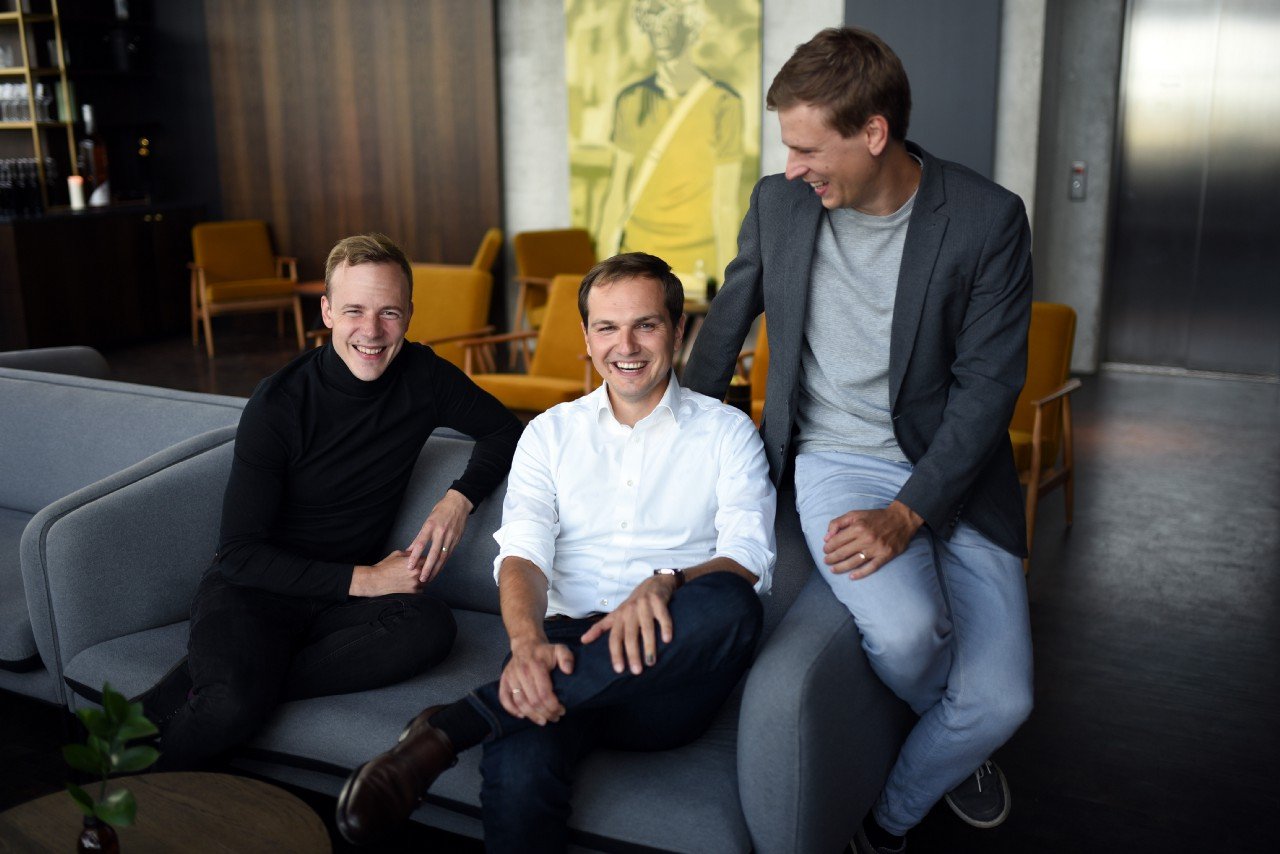
In June 2020, Pactum announced a $3 million seed round led by Project A, with DocuSign participating. The company had a California headquarters and engineering and operations in Estonia. Its product was already aimed at the awkward economics of small supplier contracts inside large organisations. A deal could contain recoverable value while still being too small to justify an employee’s afternoon.
The shopping cart problem
Walmart became the early customer that changed the scale of the undertaking. Pactum’s opportunity to pitch came through a visiting delegation at Cleveron, the parcel-locker company in Viljandi. The founders wanted access to the American market early. They found a route to it in an Estonian town. Geography, in Korjus’s working life, has a habit of becoming negotiable.
The appeal was the neglected supplier. Large procurement teams have priorities, and those priorities are reasonable: spend time on the relationships with the greatest immediate stakes. The smaller agreements accumulate elsewhere. They renew. Prices change. Someone means to revisit the terms. A supplier waits for a response. There is always another meeting.
For Walmart, even everyday store equipment such as shopping carts offered a place to apply automated negotiation. Individually, these arrangements lack the drama of a corporate acquisition. Collectively, they represent money, working capital and relationships. Korjus has a succinct phrase for the opportunity: “cut the cost of doing nothing”. The phrase gives inactivity its own invoice.
The proposition also changes what counts as a sensible use of attention. A buyer may be perfectly capable of improving a contract and still be right to leave it alone, because another task matters more. Software that can carry out many exchanges simultaneously alters that calculation. The overlooked agreement can finally receive some attention without demanding that a procurement professional manufacture another hour.
“cut the cost of doing nothing”Kaspar Korjus
A bargain has more than one moving part
Korjus describes negotiation as a search across preferences. The customer defines objectives, acceptable compromises and limits. The system asks questions of the supplier, then looks for an arrangement within those boundaries. Price matters, but so do other terms. A conversation that asks only for a discount may miss the detail that makes agreement possible.
Consider his example of a plumbing business working at one site for a larger corporation. The supplier might accept a different fee if the relationship also opened work in other cities. The example is illustrative, rather than a disclosed customer deal. Its point is that expansion may have value to the smaller firm that a buyer focused only on today’s invoice has failed to notice.
This is where the business becomes more interesting than a discount machine. The work is to find a combination both sides can accept. It also makes the identity of the founders relevant: the technical problem sits beside a commercial one, and both sit beside a problem of trust. A fluent answer is of limited use if the system has promised something it had no authority to promise.
The CEO still has to do the rounds
By December 2024, Korjus was running Pactum after Rand’s move to the president role. The Tallinn office observed a shoes-off rule. Its ambitions were rather more formal than its footwear. “We wanted to be in the US,” Korjus said. There is something pleasing about an enterprise-software company making its case to international buyers while leaving the outdoor shoes at the door.
The next substantial financing required familiar human exertion. In June 2025, Pactum raised $54 million in a Series C led by Insight Partners. Korjus described a fundraising process involving more than 100 investor meetings across San Francisco, New York, London and Tallinn. Even at a company that sells automated agreement, the CEO still had a considerable number of conversations to conduct personally.
The round brought total funding above $100 million. More than 50 global enterprises were using the technology by that announcement, including Walmart and Maersk. Funding and adoption put the original experiment in perspective. They also made the next task larger: building a company that could support those relationships, rather than simply demonstrating that an agent could finish a deal.
Public recognition had arrived earlier. Korjus received the Netherlands’ Order of Orange-Nassau in 2018 and was selected for JCI’s Ten Outstanding Young Persons of the World programme in 2019. These honours reflected his work on digital innovation. They also mark how far the career had travelled from a scholarship attached to an untested idea.
Who gets to say yes?
In June 2026, Korjus was talking about agents as colleagues and procurement as a capacity problem. His concern was the distance between a team’s strategy and the volume of work required to execute it. Pactum’s scope had widened into requisitions, supplier engagement and other procurement tasks. The agent needed a defined mandate, and the organisation needed to know what had happened.
That same month, he described another possibility in Estonia: an AI agent with a separate, limited digital identity. It could prepare a tax declaration on his behalf while leaving control over payments with him. He was unwilling to hand over his full personal identity. Narrower authority, tied to a particular task, was a different proposition.
By September, Estonia was exploring agent codes, with a pilot planned for December 2026. The proposal would keep responsibility with the authorising person or organisation and make permissions visible and revocable. It remained a project in development. The connection to Korjus’s earlier work is striking: digital identity had helped people do business at a distance; delegated identity might help them authorise software to do some of it.
His stated aspiration for AI is ordinary usefulness: technology as natural to daily life as a smartphone, helping people make decisions and reducing waste. His public manner can be equally practical. When agreeing to a webinar with Elouise Epstein, he insisted on no pre-approved questions and no slide deck. He wanted a conversation. After years spent finding ways to delegate them, Korjus still appears to appreciate a good one.