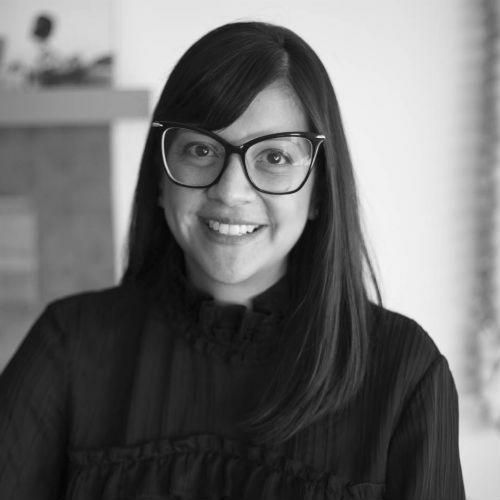
A word from the Andes, and a philosophy that followed
Cuyana. The word comes from Quechua, the indigenous language of the Andean highlands, and it means "to love" - or "to care." Karla Gallardo chose it deliberately. Everything at Cuyana is deliberate.
She grew up in Ecuador in the 1980s and 90s, in an environment where most people lived below the poverty line. Her parents drew a clear line between the things that were worth having and the things that weren't. Quality over quantity wasn't a marketing strategy in the Gallardo household - it was a practical fact of life. You bought fewer things. You chose better ones. You made them last.
At 18, she immigrated to the United States to attend Brown University as an applied mathematics major. That choice - precision, logic, rigor - tells you something about how her mind works. Fashion would come later. The analytical lens never left.
After Brown, she went to Goldman Sachs. Then Apple. Then Stanford for her MBA - which is where a chance conversation with a woman named Shilpa Shah changed the course of both their careers. Shah was visiting campus and introduced herself as a UI designer. Gallardo was working on a project that needed exactly that skill set. They kept in touch. When Shah decided to pursue her MBA, Gallardo had an offer ready: co-found a company.
In 2011, Cuyana launched.
"Truly that's been my personal mantra forever and it's the mantra for the business. It's about less clutter and surrounding myself with pieces, and people, that have meaning. Fewer, better things is a huge part of my life."
- Karla GallardoWhat "fewer, better" looks like in practice
Most fashion brands measure success in volume. Units shipped. SKU count. Seasonal collections. Cuyana measures something different: how much of its inventory sells at full price.
The answer is 90%. In an industry where 40-50% markdowns are standard - where the business model is often built on the assumption that most product won't sell - Cuyana's sell-through rate is an anomaly. It's also proof that the "fewer, better" philosophy isn't just a tagline. It's a business architecture.
The model works like this: small batches, timeless design, high-quality materials, transparent sourcing. No fast fashion treadmill. No seasonal trend-chasing that leaves warehouses full of unsold inventory. When you make fewer things, and make them better, the math changes.
Gallardo has been explicit about this from the start. "Our philosophy of 'fewer, better' that we sell to the customer is actually very much reflected in how the business is run." The brand's supply chains read like a world tour in quality: leather from family-run factories in Argentina and Italy, cashmere from Scotland and Italy, alpaca from Peru, straw hats from Ecuador. Every material has a provenance. Every factory has a face.
Cuyana by the Numbers
Selling less to earn more
Gallardo built Cuyana with a conscious rejection of the growth-at-all-costs playbook that dominated Silicon Valley-adjacent consumer companies in the 2010s. The Warby Parker playbook. The Glossier playbook. Scale fast, worry about margins later.
The brand was designed with a commitment to profitability from day one - rejecting the prevailing trend of hypergrowth in exchange for a model that could sustain itself without constant capital infusion. Cuyana raised $44.8M total. That's not nothing. But the discipline around how those dollars were deployed is what separates it from the wave of DTC brands that burned through hundreds of millions and still collapsed.
"Our North Star is to build a true, profitable brand," she told Glossy. At a time when venture-backed fashion brands were measuring success by press coverage and Instagram followers, that statement was almost contrarian. Today, with most of the VC-fueled DTC class either shuttered or struggling, it looks prophetic.
Cuyana's profitability-first approach also shaped how it grew physically. Six U.S. retail stores - San Francisco, New York, Los Angeles, Boston, Chicago, Malibu (opened December 2024) - each chosen deliberately. No land-grab expansion. No malls before the brand was ready. The Malibu store, a fourth California location, opened as the brand was already charting international expansion toward London and Paris.
They came back for more.
From Goldman Sachs to a campaign to rename the Panama hat
One of the most telling windows into who Karla Gallardo is: she has been publicly campaigning to rename "Panama hats" as "Ecuador hats." The iconic straw hats are made in Ecuador. They've been called Panama hats for over a century because of a historical shipping route. Gallardo wants that corrected. She got NBC Bay Area coverage for it.
This is someone who left investment banking at Goldman Sachs - a career track that leads somewhere very predictable, very lucrative - to build a fashion brand anchored in the supply chains of her home country. Who names her company after a Quechua word. Who, when she wins a fight with history, picks a fight with language.
It's the same instinct that drives Cuyana's business model: an insistence on telling the true story of where things come from and what they actually are. Transparency not as a sustainability checkbox but as a brand identity.
Meghan Markle has worn Cuyana's trench coats, totes, and hats. Jessica Alba is a regular. Reese Witherspoon, Zoe Saldana, Selena Gomez, Emma Roberts, Eva Mendes. None of it was paid placement. The products found their way into those wardrobes the old-fashioned way: someone bought them, liked them, kept wearing them.
"Think big, think huge, think so big that you're so scared and paralyzed because your idea is so big and exciting. But start executing the simplest form of the idea so you can get started and learn along the way."
- Karla GallardoA journey, not a destination - and she means it
"Sustainability is a journey, not a destination." That's Gallardo's framing, and it's deliberately humble. She's not claiming Cuyana has solved sustainable fashion. She's claiming it's actively working toward it - and that the work is visible, measurable, and ongoing.
The facts support the claim: 96-100% of goods made from sustainable materials. 100% of suppliers committed to ethical conduct and environmental responsibility. Small-batch production to prevent overproduction. A Lean Closet program (in partnership with ThredUp) for resale and donation. A Revive resale program that gives pre-loved Cuyana pieces a second life. A target of 100% carbon-neutral packaging.
The brand's approach to sustainability is also deeply structural. Cuyana doesn't just buy from sustainable suppliers - it rebuilds traditional craft industries in key origin countries. The Argentine leather factories it works with have operated for generations. The Peruvian alpaca supply chain involves artisan partnerships that predate Cuyana. This isn't ethical sourcing as a marketing strategy. It's ethical sourcing as a design constraint.
"Intentional, timeless, and functional design is at the core of our fewer, better philosophy so people cherish what they own and our products stay out of landfills," Gallardo has said. Longevity - in materials, in design, in use - is how Cuyana keeps its products out of the circular waste loop that defines most of fashion's environmental impact.
The path from Quito to San Francisco
- Ecuador Grows up in Ecuador; parents instill values of quality, intentionality, and durability that will later define an entire brand philosophy
- c. 2001 Immigrates to the United States at age 18; enrolls at Brown University as an applied mathematics major
- c. 2005 Joins Goldman Sachs Investment Banking Group; develops financial rigor that later shapes Cuyana's profitability-first model
- c. 2007 Moves to Apple; exposure to design-forward consumer culture informs her thinking about brand-building
- c. 2009 Enters Stanford Graduate School of Business; meets Shilpa Shah in a chance encounter that becomes Cuyana's founding partnership
- 2011 Co-founds Cuyana with Shilpa Shah; launches as a DTC women's fashion brand on the "fewer, better things" philosophy
- 2019 Closes $30M Series C round with H.I.G. Growth Partners; begins scaling retail presence and preparing for international expansion
- 2024 Opens Cuyana's Malibu store (December) - the 6th U.S. location; accelerates international expansion planning for London and Paris
- 2025 Featured at World Retail Congress 2025; Cuyana's Daydream fashion search tool named a Time Best Invention of 2025; Latin American market entry begins
International, but still intentional
Cuyana's next chapter is international - but Gallardo is doing it the Cuyana way. London and Paris are both targeted by end-2026. Latin American markets are in the pipeline. The goal is for international revenue to reach 20-25% of total sales by end of 2025.
The approach to international expansion mirrors the approach to everything else: localized supply chains, artisan partnerships, meaningful market entry rather than flag-planting. For a brand built on "fewer, better," the logic of doing less internationally - but doing it right - is entirely consistent.
Meanwhile, innovation continues. The Daydream fashion search tool - built to make shopping for Cuyana products more intuitive - landed on Time's Best Inventions of 2025 list. It's a tech-forward product from a brand that's usually identified by its anti-trend positioning. Which is, in a way, exactly what Karla Gallardo does: find the unexpected angle, then make it look inevitable.