Before Karim Bouri built software for people who manage fortunes, he learned commerce at its most compact. In Morocco, he traded books and resold motorcycles. There was no committee, no strategic off-site, no tasteful deck describing a total addressable market. There was an object, a buyer and the brisk verdict of whether the deal made sense. Bouri later said those small hustles taught him to spot opportunities, move quickly and solve problems people would pay to remove. It is difficult to imagine a cleaner first course in entrepreneurship.
There was another education happening across a table. Bouri became Morocco’s number-one table-tennis player, won three national championships, placed 13th in Africa as a junior and ninth in the Arab world as a cadet. He represented Morocco in international competitions from Cairo to Manama, Mauritius and Agadir. Table tennis punishes late information. A flick of the wrist changes the ball’s spin; by the time the answer is obvious, the point may be over. You learn to watch closely, prepare early and adjust in motion.
Those two beginnings - the little market and the very fast court - make a useful preface to Wealor, the San Francisco company Bouri now leads. Its subject is less photogenic than a trophy and more consequential than it first appears: the stubborn machinery behind wealth management.
The first patternThe product that lost to paperwork
Bouri’s route into finance came through engineering. He left Morocco for France, studied data science at ENSAE Paris and applied machine-learning models at CANAL+. He launched a business unit at Institut Fibonacci, worked on intrapreneurship at Batitherm and moved into startup growth at Wally Invest. Through HEC Paris and École Polytechnique, he added finance, management and the X-HEC Entrepreneurs program. An exchange at the University of California, Berkeley brought the route west.
The credentials are neat on a profile. The actual education was messier and therefore more useful. While structuring private investments and working alongside wealth managers, Bouri saw advisors pass on products that might suit a client. The investment itself was not always the problem. Implementing it required too much back-office labor. A promising option could be defeated by the number of systems, forms and follow-ups needed to make it real.
Crowded markets are not closed markets.Karim Bouri, reflecting on early-stage company building
This is the sort of detail a market summary smooths away. Wealth management is described in assets, firms and growth rates. Bouri noticed its tabs. Client details might be scattered across email, meeting notes, financial documents, tax records, legal files, custodial portals and a CRM. One system knows the family. Another knows the account. Somebody on the operations team knows why an exception was made three years ago. When that person leaves, part of the firm’s memory walks out too.
The company’s framing of a wealth advisor’s current working day. The product goal is to reverse the balance.
Administration, in other words, was not merely supporting the advice. It could shape the advice. The easiest product to process had a structural advantage over the one that created operational drag. Bouri had found a painful inversion: the systems designed to help a professional serve clients were taking that professional away from clients.
The buildOne memory, many old machines
In 2026, Bouri started Wealor with Pierre Depuydt, a longtime friend whose own background combines mathematics, consulting and financial-data systems. Depuydt had worked at Boston Consulting Group and built high-volume financial data systems at Tiffany & Co. The match is unusually literal. Bouri knew where the operating friction lived; Depuydt knew the discipline required to reconcile data that did not naturally agree.
Wealor’s plan begins with a centralized, queryable record for each client. It draws context from conversations, documents and existing financial systems. Specialized AI agents then carry out operational tasks through APIs and browser automation, including work in software that was never designed to cooperate. The company lists account opening, CRM updates, follow-up emails, onboarding, reporting, document drafting and other routines among its targets.
Documents
Portals
The practical choice is to work across the tools firms already have. Replacing an institution’s complete software stack makes for a satisfying diagram and a miserable procurement process. Wealor instead proposes to sit across the old world, collect its scattered context and operate within it. The bet depends on trust. A unified record is useful only when it is accurate, and automation in financial workflows must be controlled rather than theatrical. The boring parts are the product.
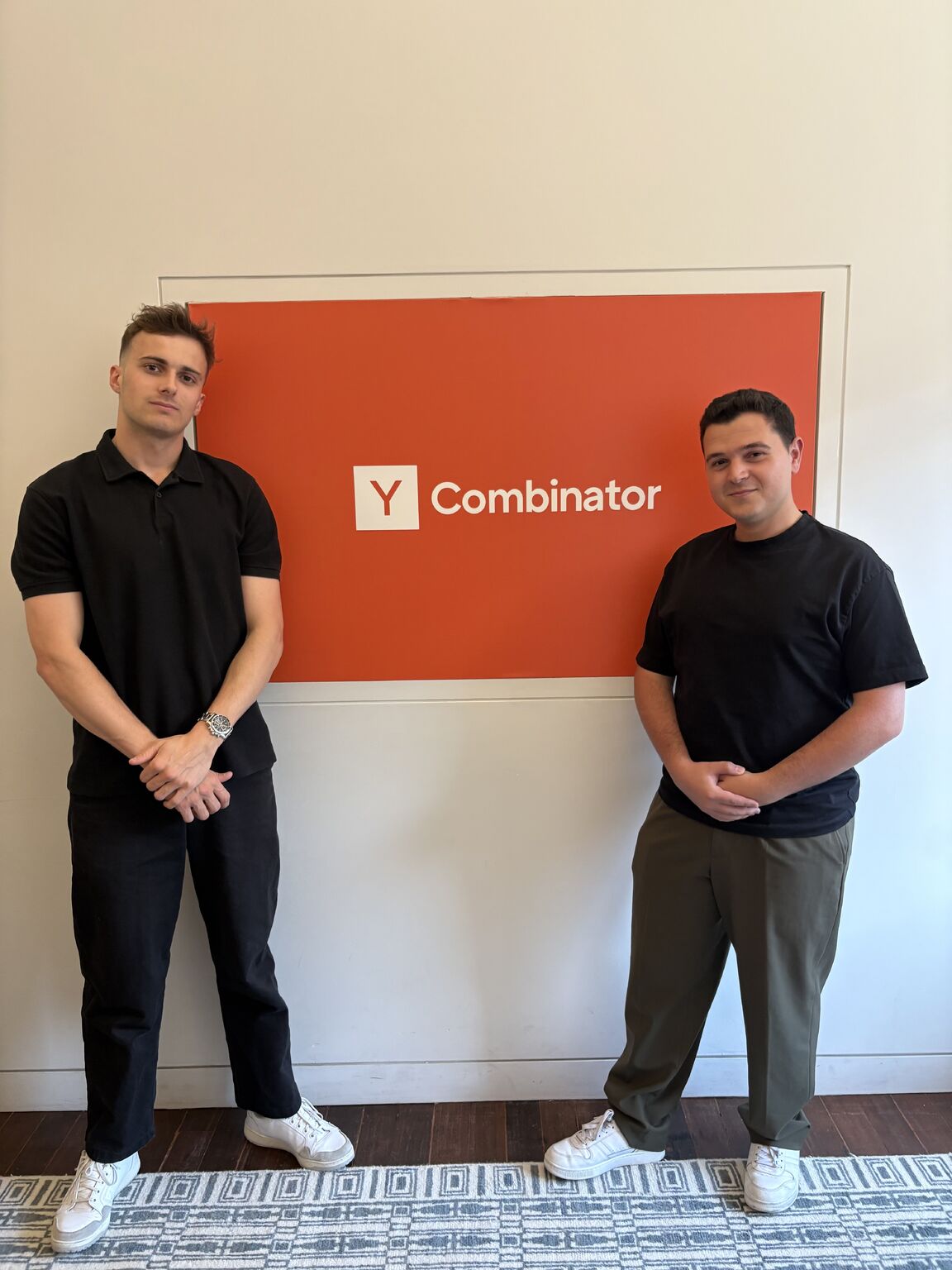
Y Combinator selected Wealor for its Spring 2026 batch. On the company’s launch page, the founders describe an industry overseeing more than $90 trillion through infrastructure built decades ago. The large number gets attention. The smaller observation carries the story: years of client knowledge can still live inside individual heads. Software has filled the office without quite becoming institutional memory.
The founderRange before specialization
Bouri has written that early founders need versatility more than specialization. His own path reads like an argument for the claim. He has moved between statistics, machine learning, sales, finance, operations and community work. At ENSAE, he helped organize pitch competitions and hackathons as vice president of the student entrepreneurship group. At HEC Maroc, he worked on corporate relationships. Earlier, he tutored students through an equal-opportunity association.
The service work reaches further back. From 2015 to 2018, he served as treasurer and chief of protocol within Lions Clubs International, co-created a Moroccan initiative called Un don un sourire, and helped arrange more than 15 events, including winter blanket distributions and Ramadan dinners. It is a revealing counterweight to the founder résumé. The instinct to organize does not only appear when there is equity attached.
Small trades, national table-tennis titles and international competition teach quick feedback.
Data science, machine learning, business building and private investments expose the cost of fragmented work.
Berkeley, San Francisco and YC give Wealor the setting for its first company chapter.
There is a temptation to turn the athlete chapter into destiny. It is tidier to say every championship was preparing Bouri for startup life. Real lives are less obedient. What can be said is that the same public themes recur: learning through feedback, moving across roles and treating discomfort as information. At a dinner with lemlist founder Guillaume Moubeche, Bouri came away with three notes: recurring revenue compounds, crowded markets remain open to fast learners, and early founders cannot afford to stay inside one specialty.
He appears to have taken the third point personally. His public technical projects wander from PageRank and forest-fire models to C++ option pricing, time-series analysis and Monte Carlo sampling. The list has the cheerful untidiness of someone testing the edges of a toolkit. Wealor gives that range a single customer problem.
Even his certificates sketch the same appetite. He completed Yale’s Financial Markets course and reported a 99 percent grade in Harvard’s online probability course, Fat Chance: Probability from the Ground Up. Neither line proves a company can be built; certificates are wonderfully patient with uncertainty, while customers are not. But together with the projects, they show Bouri repeatedly crossing the border between mathematical abstraction and money in motion. One asks how probability behaves. The other asks what happens when a client, an advisor and an operational deadline all arrive at once. Wealor lives on that border, where an elegant model must eventually survive a badly named document and a portal that refuses to cooperate.
I’m here to finally build!Karim Bouri, entering the X-HEC Entrepreneurs program
The next returnGiving the advisor back to the client
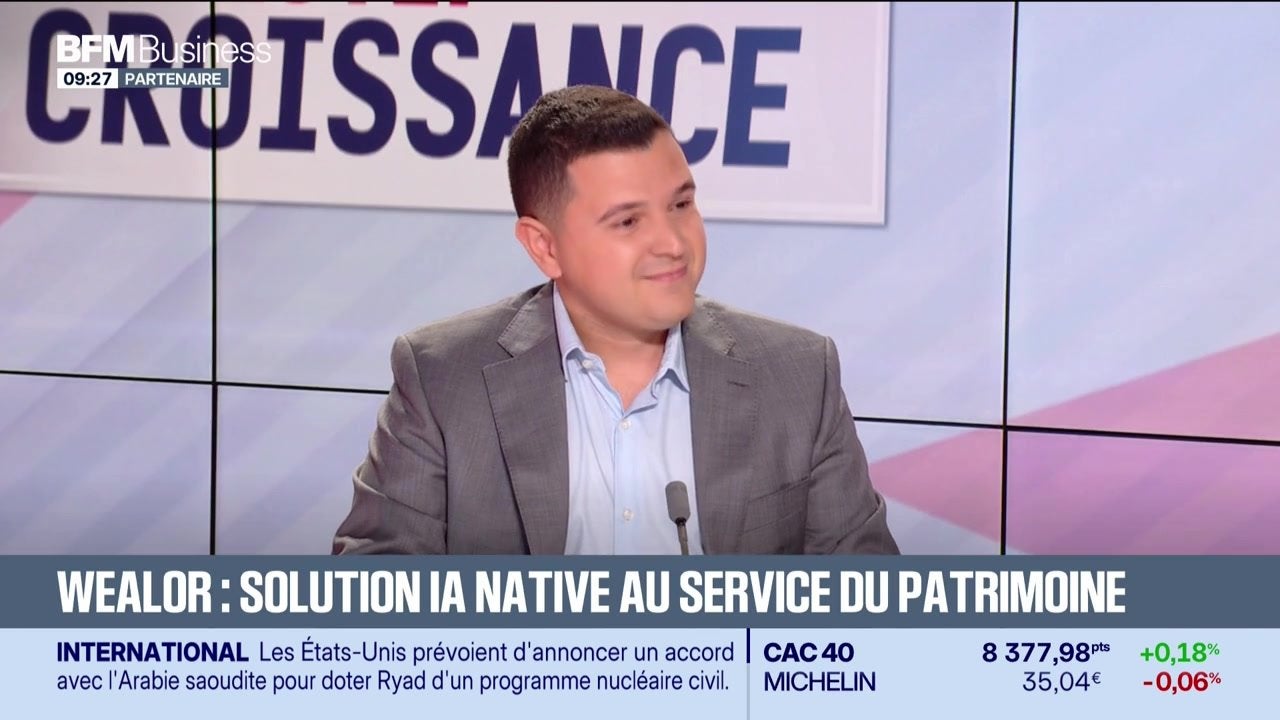
By July 2026, Bouri was explaining Wealor on BFM Business. The television segment lasted only a few minutes, a polished contrast to the stubborn work underneath. The company’s ambition is easy to state: give wealth professionals a reliable understanding of the client, then automate the repetitive work around that understanding. Success would mean advisors spend more of the day making judgments and speaking with people, and less of it copying facts between machines.
There are many hard questions inside that sentence. Financial data is sensitive. Client situations contain exceptions. Browser automation must survive interfaces it does not control. A source of truth must earn the name every day. Bouri and Depuydt have chosen a field where accuracy is not a decorative feature. Their credibility will be built in the gap between a smart demonstration and a dependable operation.
Still, the founding observation is sturdier than fashion. Organizations lose time when knowledge is scattered. People make narrower choices when every additional option carries manual work. Better context changes what a professional can do. Whether the mechanism is an AI agent or tomorrow’s less fashionable phrase, the wasted motion remains available to remove.
Bouri’s story so far is not a straight line from table-tennis table to cap table. It is a sequence of returns. A motorcycle finds a buyer. A model meets the data. A product meets the back office. A founder notices where the system sends the ball and moves before it arrives. For Wealor, the next shot is now in play.