Breaking
Muon Space closes $146M Series B to scale satellite production FireSat protoflight launches aboard SpaceX Transporter rideshare - March 2025 Space Force awards Muon $44.6M SBIR contract for 3-satellite dual-use constellation NRO awards Muon Space second-stage contract for EO/IR systems validation Jonny Dyer advocates for orbital data centers at TBPN - May 2025 Muon Space operating capacity: 500 satellites per year facility in development FireSat: 50-satellite wildfire monitoring constellation in partnership with Earth Fire Alliance Muon Space closes $146M Series B to scale satellite production FireSat protoflight launches aboard SpaceX Transporter rideshare - March 2025 Space Force awards Muon $44.6M SBIR contract for 3-satellite dual-use constellation NRO awards Muon Space second-stage contract for EO/IR systems validation Jonny Dyer advocates for orbital data centers at TBPN - May 2025 Muon Space operating capacity: 500 satellites per year facility in development FireSat: 50-satellite wildfire monitoring constellation in partnership with Earth Fire Alliance
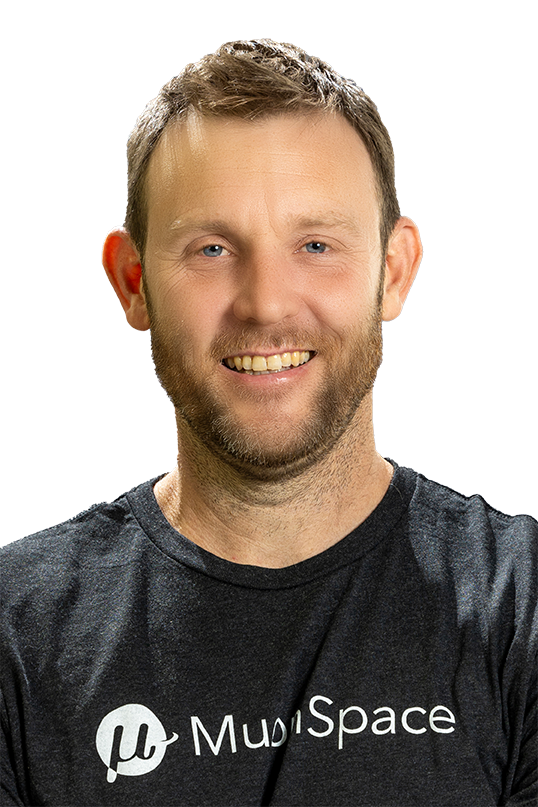
Jonny Dyer, Co-Founder and CEO of Muon Space
Earth Intelligence · Aerospace · CEO Profile

Jonny
Dyer

Co-Founder & CEO — Muon Space

Stanford pitcher turned satellite architect. He made Skybox worth $500M to Google. Then ran Street View cars. Then autonomous vehicles. Now he puts constellations in orbit and watches Earth burn - so firefighters can stop it.

$146M Series B Raised
210+ Employees
50 Planned FireSat Sats
65+ Orbit-Years, Zero Failures
Founder Aerospace Engineer Stanford ME Skybox → Google Earth Intelligence FireSat

Fire From Above, Rain Before Battle

FireSat is Muon's most visible civilian mission - a planned 50-satellite constellation developed with the nonprofit Earth Fire Alliance, backed by Google Research, designed to detect and track wildfires in real time from low Earth orbit. The third Muon satellite, which launched in March 2025 on a SpaceX Transporter rideshare, served as FireSat's protoflight.

But Dyer is unsentimental about the commercial versus government breakdown: "We're very much a dual-use company, very intentionally, and a lot of our business is commercial today. Over the next three to five years, we expect that at least half, or maybe slightly more, will be government."

The government side is already materializing. Space Force awarded Muon a $44.6M SBIR contract for a three-satellite dual-use environmental monitoring constellation. The NRO handed Muon a second-stage contract to validate multispectral electro-optical and infrared system performance and rapid target revisit capabilities. NASA is supporting antenna development for ocean surface wind measurement. The Defense Innovation Unit has engaged Muon on prototype weather monitoring sensors.

This is the core thesis of Muon Space: that the same satellite doing wildfire monitoring can serve weather forecasting for the military, can watch cloud cover over a battlefield, can measure soil moisture for agriculture. Not by accident - by design. Dyer calls it "mission-optimized." The hardware is common and modular; the mission-specific configuration is fast.

"We're building a large number of very common spacecraft building blocks, and then we can very rapidly tailor those and optimize them to a mission."
Jonny Dyer, Breaking Defense, May 2025

The scale ambition is real: Muon is developing production facilities capable of manufacturing 500 satellites per year in the 100 to 500+ kilogram class. That's not a pivot to volume; it's a bet that the highest-value Earth intelligence comes from constellations, not individual satellites.

From Pitcher's Mound to Orbit

Stanford
MS/BS Mech. Eng.
2001-2007
🚀
Space Prop. Group
Rocket Research
2007-2009
🛰️
Skybox Imaging
Chief Engineer
2009-2014
🗺️
Google
Maps Data Platform
2014-2018
🚗
Lyft Level 5
Sr. Director, AV Systems
2018-2020
🌍
Muon Space
Co-Founder & CEO
2021-Now
"In terms of dollars, it is probably more defense today than it is civil. Defense is a big market."
Jonny Dyer - Breaking Defense, May 2025

Skybox: How a $500M Exit Shaped an Engineer


$500M
Skybox Imaging acquired by Google
$146M
Series B total raised by Muon Space
50
Planned FireSat wildfire monitoring satellites

Why Lyft? And Why It Mattered.

In 2018, after four years at Google, Dyer made a move that puzzled some observers: he went to Lyft. Not to ride-share - to autonomous vehicles. As Senior Director at Lyft's Level 5 division, he led vehicle platform design and deployment, growing the team over 18 months.

When Level 5 was wound down in late 2020 (Lyft sold the division to Toyota subsidiary Woven Planet), Dyer didn't return to space directly. He reflected. He thought about what the next decade needed from orbital infrastructure. By 2021, he had his answer: not just better satellites, but an end-to-end company that could deploy mission-specific constellation systems at speed - hardware and software together, from concept to orbit.

The Lyft chapter looks like a detour. It probably wasn't. Running vehicle platform design - complex systems, tight regulatory constraints, real-world operational requirements - prepared Dyer for the operational discipline that Muon's constellation business demands. You don't run 50 satellites without operational precision.

On Risk, Range, and Building Things

Dyer speaks plainly about professional risk-taking. He chose Skybox over safer corporate paths when the company had nothing but a thesis. He chose Muon over stability when the autonomous vehicle chapter closed. He recommends startup experience for professional growth - not because startups are glamorous, but because they force people to connect dots that specialized careers keep separate.

His environmental convictions are real, not decorative. He cites his children and the legacy of the planet as genuine motivators - not to brand himself, but because the intersection of climate monitoring and satellite technology happens to be where his technical skills and his values converge. The MethaneSat advisory role isn't a title for a LinkedIn bio. The Environmental Defense Fund doesn't recruit advisors who can't contribute technically.

He's also one of the few space CEOs publicly advocating for orbital data centers - not just data from space, but computation in space. In a May 2025 interview on TBPN, he laid out the case that certain workloads - particularly for real-time Earth intelligence - are better processed at altitude than on the ground.

Details That Don't Fit in a Resume

01 / Baseball
Pitched for Stanford's Varsity baseball team. Appeared twice in the 2003 College World Series - while simultaneously conducting rocket research in the AeroAstro department.
02 / Pypropep
Built pypropep - a Python interface to the cpropep chemical equilibrium solver for rocket propellant performance calculations - during university. Aerospace engineers still use it.
03 / Flow Model
Co-developed the Dyer/NHNE flow model for two-phase rocket injector flows. It became a widely-cited reference in propulsion engineering literature.
04 / Arts & Imagery
His mother paints. His father photographs. Jonny himself produced SkySat imagery that appeared in major publications worldwide.
05 / Careful COTS
Pioneered the "Careful COTS" methodology - a systematic approach to selecting and radiation-testing commercial off-the-shelf parts for use in space environments.
06 / Generalist Thesis
Rocket propulsion - satellite imaging - Street View cars - autonomous vehicles - Earth Intelligence. Possibly the most varied hardware resume in Silicon Valley.
07 / Dad First
His personal website describes him as "a dad, engineer, and occasional baseball player." In that order.
08 / Muon
Muons are subatomic particles that can penetrate matter - apt naming for a company whose satellites are designed to sense through atmospheric layers and deliver deep Earth intelligence.

Year by Year

2001-2007
Stanford University - BS and MS in Mechanical Engineering. Rocket research in AeroAstro, taught machining and welding, pitched Varsity baseball including two 2003 College World Series appearances.
2007-2009
Space Propulsion Group - Silicon Valley rocket research company. Continued propulsion work, co-developed the Dyer/NHNE flow model for two-phase injector flows.
2009-2014
Skybox Imaging - Joined as one of the first 2-3 employees as Chief Engineer. Led development of the largest commercial high-resolution imaging satellite constellation ever deployed.
2014-2018
Google - Skybox acquired for $500M. Continued at Google, running Maps data collection platform: Street View cars, aircraft platforms, geospatial data systems at scale.
2018-2020
Lyft Level 5 - Senior Director, Autonomous Vehicle Systems. Led vehicle platform design and deployment, grew the team over 18 months before division wound down.
2021
Founded Muon Space in Mountain View, CA, as Co-Founder and CEO. Mission: end-to-end satellite constellation systems for Earth intelligence and real-time space-based compute.
2024-2025
Secured $146M Series B. Launched FireSat protoflight satellite. Won contracts from NRO, Space Force ($44.6M SBIR), NASA, and Pentagon. Grew Muon to 210+ employees.

What's Happening Now

June 2025

$146M Series B Closed

Muon Space closes oversubscribed B1 round led by Congruent Ventures, bringing total Series B to $146M. New investors include ArcTern Ventures.

May 2025

Orbital Data Centers

Dyer appears on TBPN advocating for computing infrastructure in orbit - not just data from space. NRO multispectral contract also awarded this month.

March 2025

FireSat Protoflight Launches

Third Muon satellite - FireSat protoflight - launches aboard SpaceX Transporter rideshare. Wildfire monitoring constellation takes shape.

December 2025

Space Force Contract

Space Force awards Muon $44.6M SBIR agreement for 3-satellite dual-use environmental monitoring and theater weather satellite constellation.


Jonny Dyer In Conversation

Podcast episodes and interviews featuring Jonny Dyer on Earth intelligence, space systems, and the future of orbital infrastructure.

Defense Tech Underground #013 - Delivering Earth Intelligence With Muon Space

TBPN - May 2025: Jonny Dyer on the case for data centers in orbit

Stanford Baseball to Satellite CEO - Jonny Dyer in discussion


Beyond Muon Space

💼

Space Capital

Operating Partner at Space Capital - a venture fund investing at the intersection of space technology and terrestrial applications.

🔬

EDF MethaneSat TAG

Founding member of the Environmental Defense Fund's MethaneSat Technical Advisory Group - applying satellite and systems expertise to atmospheric methane monitoring.

🏛️

National Academies

Member of the National Academy of Sciences, Engineering and Medicine's APOSS study committee on commercial SmallSat opportunities for national security.

Share This Profile