Johnny Bridges once had a problem that successful businesses are supposed to enjoy: another customer, another project, another chance to prove what his team could do. The difficulty was the word another. Each commission reset the clock. The team could finish the work, collect the experience and start again. What it could rarely do was stay with one thing long enough to make it as good as they wanted.
That frustration helps explain how a founder interested in typography and web design ended up building insurance infrastructure. Artificial Labs began in 2013 as a software consultancy. Today Bridges shares the chief executive role with co-founder David King, serving brokers and underwriters whose transactions can involve complicated risks, several insurers and a great deal of information. The distance between those two businesses is considerable. The impatience with wasted effort is familiar.
The computer came in colour
There is a pleasing detail in Bridges’s account of his childhood: the computer had a colour. Around the age of ten, his parents gave him one of the original colourful iMacs. His father worked in magazine publishing and had adopted Apple computers for magazine design. Before Bridges was considering insurance software, he was seeing what a computer could do for a page.
He admired industrial design, architecture, photography and typography. The early web presented an invitation, along with considerable provocation. Here was a medium with extraordinary possibilities and pages that often looked as though the furniture had been delivered before anyone measured the room. Bridges wanted the visual discipline of print to survive the journey onto a screen.
His interest in software grew alongside that concern for appearance and usefulness. The distinction matters to his story. A beautifully arranged interface still has to help someone do something. Equally, a technically capable application can make its user work unnecessarily hard. Bridges’s career has repeatedly brought him to the meeting point of those two requirements.
“design is my real passion.”
Johnny Bridges
A student with an office to get back to
Before university, Bridges took a gap year and found work as a reinsurance analyst. The job was sufficiently attractive that he considered passing on university altogether. Instead, he attempted both. He attended UCL while continuing to work full time, with a manager who let him leave for lectures and return afterwards.
He sustained that arrangement for his first two years. It supplied an unusually direct comparison between studying technology and watching an established industry use it. By his third year, he wanted to work with newer web technologies and have more control over what he built. He started a company with another UCL student.
His older internet footprint catches that period in miniature. On Coderwall, he described himself as a UCL student, DJ, web developer and entrepreneur. There is also a small published tip about reaching the Mac’s sound preferences quickly. It is a modest contribution, but an apt one: a little less friction between a person and the thing they meant to do.
In March 2013, he worked on the initial stages of Reverrb, a platform for music producers and artists to show their work. His LinkedIn record also includes Eltham College’s Senior Computer Science Prize from June 2009. Music, code, presentation and enterprise were already sharing the same desk. A later executive title would tidy that assortment into fewer words.
BMW paid the bills. Insurance offered a problem to keep.
Artificial’s early work included a predictive sales tool used by BMW dealerships across the UK. The consultancy moved from marketing projects towards data and enterprise applications. These were substantial clients and useful assignments. They also exposed the limitation of a business whose next sale could send its team straight back to a blank page.
King has described the same difficulty from his side of the partnership: the company kept solving different problems instead of developing deep expertise in one field. Both founders had worked in insurance. They knew how difficult launching products could be and began to concentrate their attention there.
The change took shape over several years. Bridges dates the move into an insurance product to 2015; King describes the business as entirely focused on insurtech from 2016. The useful point is the sequence. Consultancy revenue supported early product development. The founders sought external investment after testing demand, allowing the team to reduce services work and concentrate on a product that could keep improving.
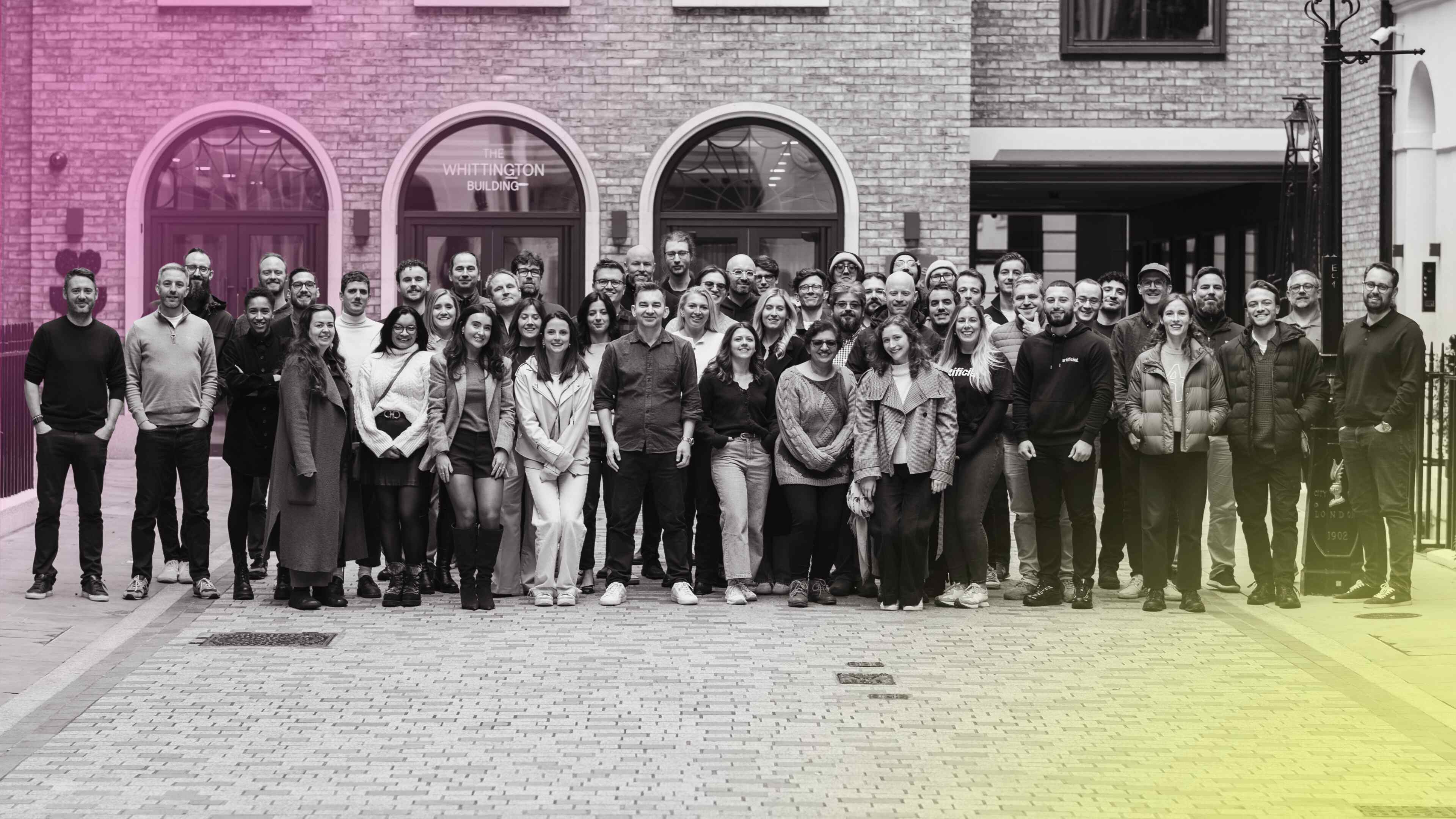
For Bridges, a product offered continuity. A customer’s difficult question could become an improvement for the next customer. Work could accumulate. There would still be deadlines, mistakes and commercial pressure; software ownership does not abolish the calendar. It does give a team somewhere to put what it learns.
What a ship asks of a software designer
Specialty insurance supplies plenty to learn. Bridges’s examples include cargo ships, satellites, power stations and large-company cyber risks. Coverage can be divided among insurers because the potential loss is too substantial for one participant to carry alone. A transaction therefore involves both judging the risk and coordinating the people willing to take a share.
In that setting, information has a practical job. It must help a broker present a risk, help an underwriter decide whether it fits, and remain useful as the transaction proceeds. Artificial’s products address those handoffs through digital placement, contract creation, underwriting rules and portfolio tools. The prospect is fewer repeated preparations before the actual commercial decision.
- 01 Capture the information
- 02 Structure the details
- 03 Apply the agreed rules
- 04 Refer exceptions to people
By 2021, Bridges was describing algorithmic trading in terms of carriers configuring their underwriting appetite. In ordinary language, that means expressing the conditions under which an insurer wants to accept business. Turning those conditions into software can make a repeatable decision faster. It also makes the exceptions rather important: someone must still deal with what does not fit.
Apollo’s Smart Follow collaboration illustrates the direction. Its announced model combined algorithmic underwriting with people verifying decisions and steering the portfolio. The presence of human review belongs inside the design. Specialty insurance has accumulated expertise for a reason; a quicker exchange of information is useful when it lets that expertise reach a decision sooner.
The expensive ingredient was time
Artificial raised £9.5 million in its 2022 Series A. At that point, Bridges described a domain-specific programming language the team had spent four years developing. It could represent complex contracts digitally and connect the systems and information involved in assessing risks. His explanation of what investment would buy was unusually plain: time for the team to work.
His advice on fundraising was equally practical. Allow for the process to take longer than expected. Leave room for unforeseen costs. Avoid spending years in a permanent state of raising money. Seek introductions through people who know you. The advice carries the marks of repeated negotiations, rather than a theory assembled for a graduation speech.
In February 2026, Artificial announced a $45 million Series B led by CommerzVentures, with Move Capital Fund I and existing investors participating. The company said it expected to double in size over the following twelve months. That was a plan, with all the work a plan entails. Bridges put the intended spending towards a larger team, further development and helping brokers and carriers trade digitally.
“We have built a platform that solves real problems for insurance”
Johnny Bridges, February 2026
A bigger map, and a familiar concern
The expansion acquired named responsibilities during the spring. Eric Joost became president to lead the US business, bringing experience at Willis Towers Watson, Aon, Allianz and CAC Group. He had already been a non-executive director at Artificial since 2019. Christopher Lohmann joined to lead continental Europe, initially concentrating on Germany and Switzerland.
These appointments place market knowledge alongside software development. A workflow has to make sense to the people using it in a particular market. For a founder whose earlier concern was how people experienced a web page, the scale has changed considerably. The need to understand the user survives intact.
Artificial’s more recent agentic work extends the same question into AI. AgLabs develops agents for specific insurance workflows and explores communication between agents representing different market participants. In September 2026, the company described live work gathering information, processing documents and preparing material for human review. It also stressed rules, traceability and oversight.
Bridges’s response to the company’s new identity, The Power Between, brings the story back to design. He wrote that the earlier branding had ceased to reflect the business and its ambition. His explanation centred on insurance relationships and expertise, with technology helping people work faster. A new visual identity had to express an operating purpose.
The boy trying to make the web look more like a well-designed magazine has ended up concerned with what happens between a broker and an underwriter. Along the way came client commissions, a product business, investment and international expansion. The recurring ambition is recognisable: arrange the work so that people can get somewhere with it, then stay long enough to improve the arrangement.