The basement is a useful place to begin Theo Duchen’s story. Acturis was developed in the basement of his house, a modest setting for an attempt to change how insurance brokers worked. The business would eventually cross borders and attract institutional investors. First, there was the less glamorous business of persuading people that their working day could be arranged differently.
Insurance offered plenty to rearrange. Duchen had seen a market full of manual transactions and cumbersome processes. He and his co-founder, David McDonald, thought software could make the connections between participants more efficient. There was an opportunity in the distance between what an industry knew and how laboriously it moved that knowledge around.
The founders established Acturis in 2000. Duchen had already secured a respectable alternative career. Leaving consulting meant exchanging the authority of an established firm for the uncertain reception given to a young software business. A basement has many virtues; instant commercial credibility is seldom among them.
The basement before the balance sheet
Duchen joined McKinsey in 1991 and became a partner in 1997. He led its UK general insurance practice and belonged to its European insurance leadership group. His professional grounding also included qualifying as an actuary. He understood the trade he wanted to change from the inside, with its calculations, conventions and accumulated habits.
McDonald brought another useful perspective. His McKinsey career included work in London and New York and leadership of its e-commerce practice. The partnership combined knowledge of insurance with knowledge of doing business electronically. Their proposed software would have to make those two kinds of expertise useful to someone trying to finish an ordinary day’s work.
That transition gives the early story its tension. Advising an organisation lets you explain what it ought to do. Building its software requires a succession of smaller, testable promises. Can information reach the right place? Can a transaction be completed? Will the system still feel useful when the novelty has worn off?
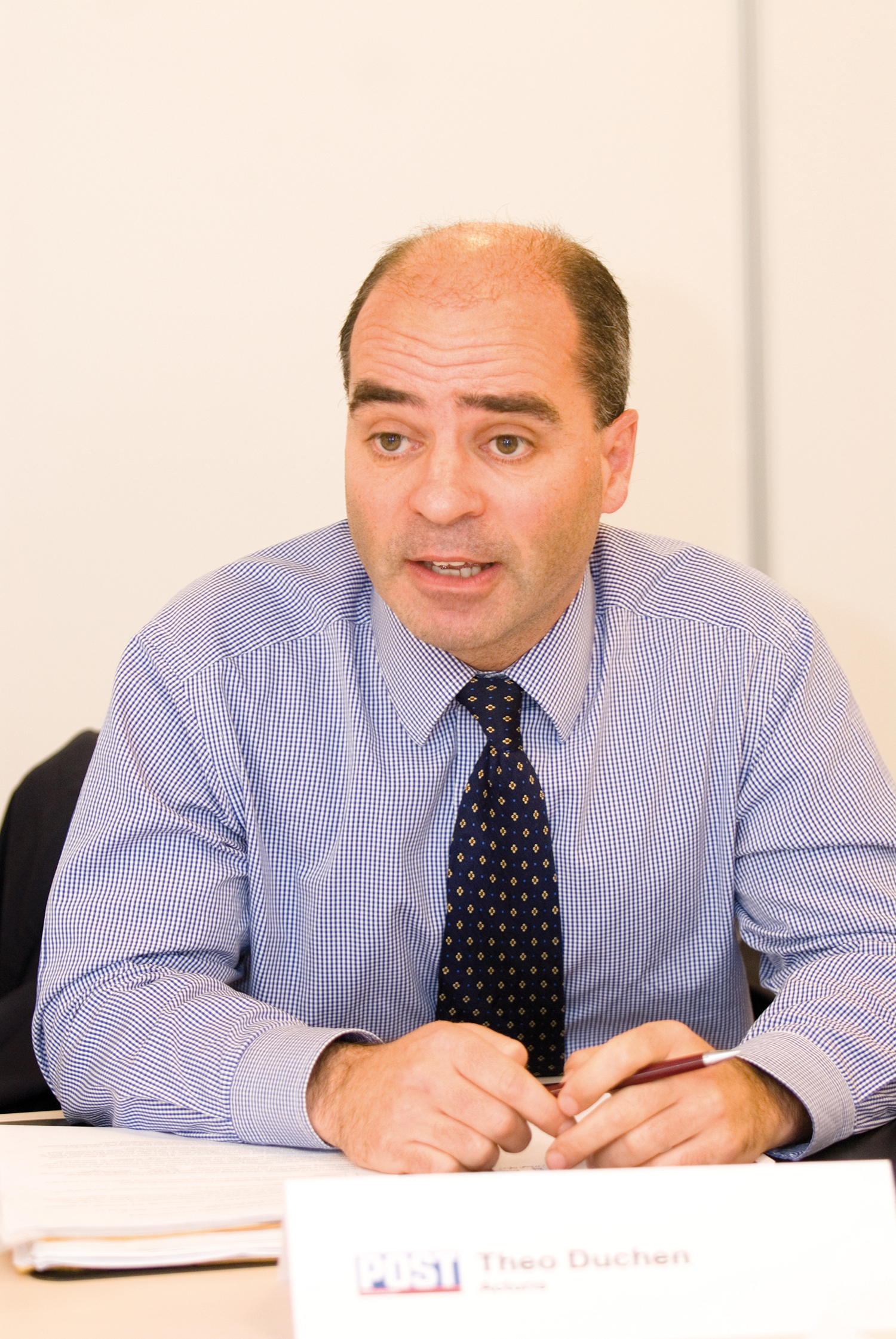
Duchen later recalled the difficulty of getting brokers to listen to a startup. Cloud computing itself required explanation. Familiarity with the insurance market did not automatically confer trust in a new way of serving it. The founders had identified inefficiency; their prospective customers still had to decide whether change was worth the trouble.
A product has to survive a working Tuesday
The Acturis platform went live in July 2002. The date matters because founding and delivering are separate events, even when a company history makes them look comfortably adjacent. The founding and the operational milestone were separate stages of the project. The idea had acquired something customers could actually use.
The subsequent milestones describe a business growing through connections. Premium finance integration followed in October 2002. Commercial e-trade integration arrived in September 2004, followed by an insurer connection to the iMarket industry portal in May 2005. Each step addressed another part of the transaction, another place where people and systems needed to exchange information.
Seen together, those dates suggest a practical reading of Duchen’s career. The work accumulated. A new integration extended the usefulness of earlier ones. Software serving a broker could become more valuable when it also connected to the organisations on the other side of the transaction. Progress could be measured in the tasks people no longer had to repeat.
These are quiet achievements compared with the theatre that often surrounds technology. They concern premiums, portals and the route a piece of information takes. Yet that is where Duchen chose to spend his entrepreneurial effort. A product serving an established trade earns its place through the trade’s own working routines.
Taking a familiar problem abroad
Summit Partners invested in Acturis in 2010. Its account of the partnership describes support for international strategy and four acquisitions outside the UK. It also records a user base that expanded to 20,000 during its investment. The company was learning how to carry its experience into markets where the local arrangements would demand attention.
Acquisition adds a second kind of connection to the founder’s job. Alongside connecting software, there are businesses to bring together. Their customers, employees and ways of working arrive with the transaction. A signature can settle ownership considerably faster than it settles how the combined organisation will operate.
Duchen’s public advice on expansion has emphasised care in choosing partners. His views on managing an enlarged business are similarly practical: consistent processes, including how people are reviewed and rewarded, should apply across it. There is little romance in that subject. There is considerable room for resentment if it is handled badly.
The US entry came in August 2023 through the acquisition of Broker Buddha, a New York-based digital client engagement platform. Its focus was familiar territory: helping insurance agencies interact with customers while reducing the administrative effort involved. The geography changed. The attraction of removing unnecessary work travelled with it.
In discussing the acquisition, Duchen pointed to user feedback and the platform’s effect on agents’ tasks, quotes and renewals. Those are revealing measures of interest. Expansion had a human scale beneath its map of countries: what happened to the person collecting information, and to the customer being asked to provide it?
Have a really clear aim and try not to deviate.
Theo Duchen, 2020
The arithmetic of staying involved
Astorg acquired a minority shareholding in 2019 as Summit exited. In July 2024, Acturis and Astorg announced an agreement for the investor to increase its ownership to approximately 52%. Duchen, McDonald, management and colleagues would retain a substantial minority interest. The founders remained involved in the company’s next phase.
That arrangement belongs to the story because it distinguishes the expansion of a business from the departure of its creators. Capital partners changed; Duchen’s operating involvement continued. The announcement set out an agenda of supporting existing clients, developing the business organically and pursuing acquisitions internationally.
The group’s financial results offer a dated view of what that involvement had helped produce. Revenue for the year ended September 2023 was £144.1 million. Reinvestment in platforms and technologies reached £19.3 million. Those two numbers belong together: a software company’s growth brings continuing demands on the product behind it.
The following financial year brought revenue of £165.5 million and platform and technology reinvestment of £22.3 million. In the June 2025 announcement, Duchen described a group with 13 offices in eight countries. The numbers show the distance travelled from the early workspace, while the spending makes clear that building the software remained unfinished business.
There is an organisational distinction worth keeping straight. Duchen is Group Co-CEO alongside McDonald. Tony Goddard, who joined Acturis in 2001 and spent two decades leading platform development, became CEO of the UK business in early 2023. The company’s leadership has developed alongside its reach.
Some judgement refuses to fit in a box
For an executive whose career centres on automation, Duchen has been specific about its difficulties. Complex insurance products require interpretation. Different underwriters can take different views of a risk; terms and conditions resist easy comparison. A digital transaction does not make those differences evaporate.
His proposed approach is incremental. Improve the journey. Use structured questions to help brokers and underwriters collect and exchange the information they need. That sounds less dramatic than promising a single machine-generated answer to every difficult case. It also gives the people involved something concrete to work with.
This is where his early insurance experience remains relevant. The quality of a system depends partly on how well it represents the task. Faster movement of information helps, but a question must still capture the details that matter. Making a process electronic leaves plenty of room for the demands of the underlying business.
Automation is going to do more of the heavy lifting.
Theo Duchen, 2023
Duchen expects artificial intelligence to take on more work, with brokers increasingly combining human expertise and automated tools. His career supplies a useful perspective on that expectation. He has already experienced a technology that needed explanation becoming part of the industry’s routine. The next change still has to prove useful at a desk.
One small illustration appeared in his public response to an Aviva claims integration announcement. His enthusiasm concerned making claims management more efficient for the market. The vocabulary had moved on to APIs, but the interest was recognisable: connect the participants and make the work easier to complete.
An award, then back to the paperwork
In October 2023, Duchen received the Achievement Award at the UK Broker Awards in Birmingham. His own public response credited Acturis colleagues, clients and the wider industry. For a founder whose work depends on organisations agreeing to connect, that distribution of credit was fitting.
The questions around him have continued to develop. A July 2026 interview addressed US and Canadian expansion and insurance applications built around ChatGPT. More countries, newer tools, another chapter of decisions. The central concern is still close to the one that gave the basement project its purpose.
Duchen’s story leaves us with a particular kind of entrepreneurial ambition: choose a difficult, familiar problem and stay with it long enough for the work to accumulate. The paperwork is an unpromising muse. It has, however, given him a remarkably durable subject.