Bill Song began with chemical plants. By July 2026, he was on a train through the Italian countryside, dictating an argument about whether artificial intelligence could make insurance core systems disappear. Annual leave had supplied the scenery and a little thinking time. The question travelling with him was thoroughly occupational: what should happen to the machinery of an insurance company when the people operating it start handing work to AI?
There is a neat continuity between those two settings. A production process has inputs, constraints and consequences. So does an insurance transaction. Song’s career has moved through different businesses while retaining an interest in how work gets done, how it is checked and how much it costs to alter. At Peak3, the Singapore-based software company he co-founded, those questions have become the product.
Four plants, then an insurance company
His entry into insurance was accidental. Trained as a chemical engineer, Song started at GE Plastics and became a Six Sigma Black Belt, overseeing process improvement across four chemical plants. Allianz approached him in 2007 as it developed its operational excellence programme. He eventually became COO of Allianz China P&C, with technology among his responsibilities.
That job exposed an irritation with commercial potential. A highly customised core system consumed time and money in maintenance and change requests. Song wanted software that could keep receiving upgrades. Later, at ZhongAn, where he led product and motor insurance, the pressure came from digital distribution and frequent product launches. The experiences helped shape the business he co-founded in 2018.
They also complicate the familiar founder story. The starting point here is an operator’s accumulated frustration. Software decisions reach into budgets, workflows and the ability to offer something new. A system can continue functioning while making every alteration a negotiation. For an executive responsible for efficiency, that is a particularly elaborate way of standing still.
“You need to be in for the long game.”
Bill Song
A billion policies, a different name
In June 2024, ZA Tech announced its new name, Peak3, alongside a US$35 million Series A led by EQT, with Alpha JWC Ventures. The company said more than a billion insurance policies had been issued on its systems. It described a business that had expanded from embedded insurance in Asia into a broader technology partner for insurers.
That distinction matters to Song’s work. Embedded insurance reaches customers through another service or platform. An insurer’s core system handles the underlying business. Peak3’s 2024 announcement named insurance clients including AIA, Generali, Prudential and Zurich, and digital partners including Grab, Klook and PayPay. Song’s company was working across both sides of that relationship.
The funding announcement set out investment in analytics and AI and further expansion in Europe, the Middle East and Africa. It is a useful marker in the story, rather than its conclusion. Raising money gives a software company more room to execute. Customers still need the execution to work. Song’s longstanding problem, the expense of changing insurance technology, survives a new name quite comfortably.
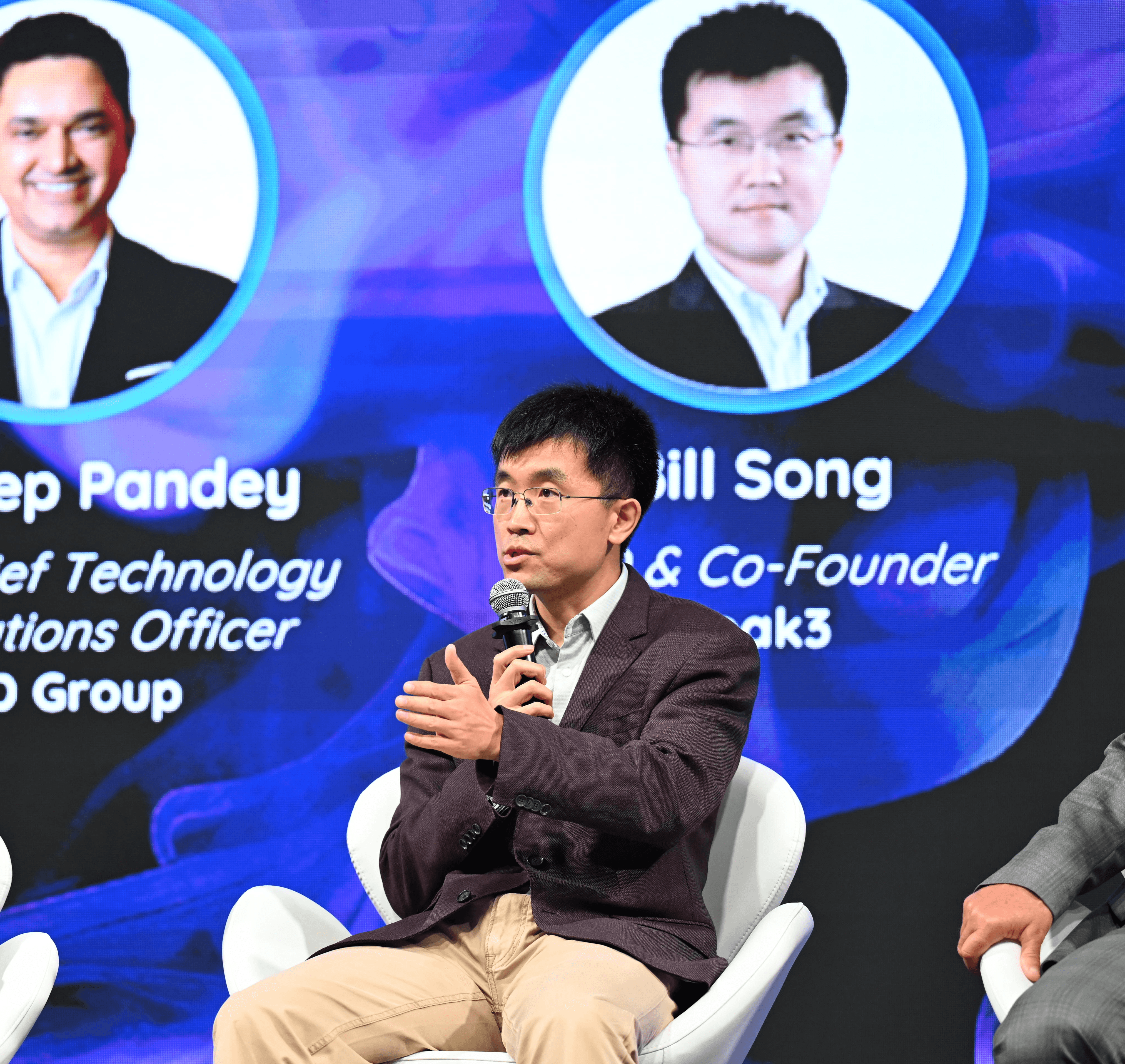
The train did not stop the argument
On that Italian train, Song set out a case for the continuing importance of the core. In his view, AI agents take over work people previously performed, while the underlying system retains responsibility for business rules, calculations and records. Removing the core would leave those obligations needing another home.
The argument has a practical centre. Insurance promises can last a long time. A system must preserve what was agreed and apply defined rules consistently. A fluent conversation with an agent does not, by itself, provide that consistency. Song wants AI to interact with a foundation that can enforce permissions and validate changes.
“AI agents don’t take work from the core system. They take work from the human.”
Bill Song, July 2026
He has an obvious commercial interest in that position: Peak3 sells core systems. He also supplies a testable proposition. Ask where the rules live, who can change them and what prevents an agent from exceeding its authority. Those questions bring the discussion down from speculation about disappearing software to the behaviour of a working system. Even a holiday argument can benefit from a good inspection.
A house with movable furniture
Later that summer, Song used a house to explain the same subject. The building determines what its residents can do and how easily they can alter their surroundings. Using a room, rearranging its contents and undertaking structural work carry different requirements. A sofa that can move creates different possibilities from furniture fixed permanently in place.
The analogy gives a non-specialist a way into his engineering argument. A small change becomes expensive when the original design makes it structural. The apparent size of the request tells you little about the effort required. The house has already decided a great deal before anyone asks for a different kitchen.
Song’s July framework separates AI-native insurance software into three levels: agents running workflows, agents changing configuration and agents extending the software itself. The deeper the change, the more the engineering foundation and review process matter. A system that can evolve through those levels is his stated ambition, rather than a claim that every step has already become autonomous.
- 01Run the businessWork through existing rules and tools.
- 02Change the businessConfigure products, calculations and workflows.
- 03Extend the coreDevelop, test and review new software.
The advantage hiding in the filing cabinet
Song’s June writing puts connected data and organisational knowledge near the centre of AI strategy. He argues that model capabilities are becoming more widely available. An insurer’s particular records, manuals, precedents and procedures may therefore account for much of the difference between its results and a competitor’s.
He also puts adoption in the picture. A capable model needs to be embedded in the way an organisation works. The practical investments include a unified customer view, retrievable institutional knowledge and records of how an AI-generated decision was produced. Much of this is less photogenic than a new interface. It is also easier to miss in a demonstration.
His separate argument for multi-country harmonisation extends the idea. Where each country has different data models and workflows, reusing an agent can turn into rebuilding it. A shared core can allow common integrations and governance, with local variations handled through configuration. Song presents this as an operational route to scaling AI.
Read together, the essays suggest an executive who places considerable weight on preparation. The exciting tool gets the attention; the organisation supplies its context. A filing cabinet is an unpromising mascot for technological progress, but the knowledge inside it can make the difference between a plausible answer and a useful one.
Keeping the next choice open
In May 2026, Song argued for avoiding dependence on a single AI model provider. His reasoning includes resilience, changing performance and costs, and negotiating power. The system should allow a model to be replaced as circumstances change. He describes Peak3’s approach as cloud-agnostic and model-agnostic, while acknowledging that switching model families can still require prompt optimisation.
That qualification makes the claim more concrete. Interchangeability involves work. The ambition is to keep that work manageable instead of allowing one purchasing decision to dictate every future option. It fits a career spent dealing with the consequences of systems that became costly to alter.
His July essay on building an insurance core in-house asks another uncomfortable purchasing question. AI has accelerated his teams’ development work, he says, but a core also demands domain knowledge, security, testing, delivery infrastructure and continuing maintenance. He argues that insurers should buy a validated foundation while gaining more control over their own configuration and changes.
Again, his position serves his business. It also puts a useful distinction on the table: being able to generate software and being able to maintain a dependable operating system over time involve different commitments. A buying decision deserves to consider both.
Back to the production line
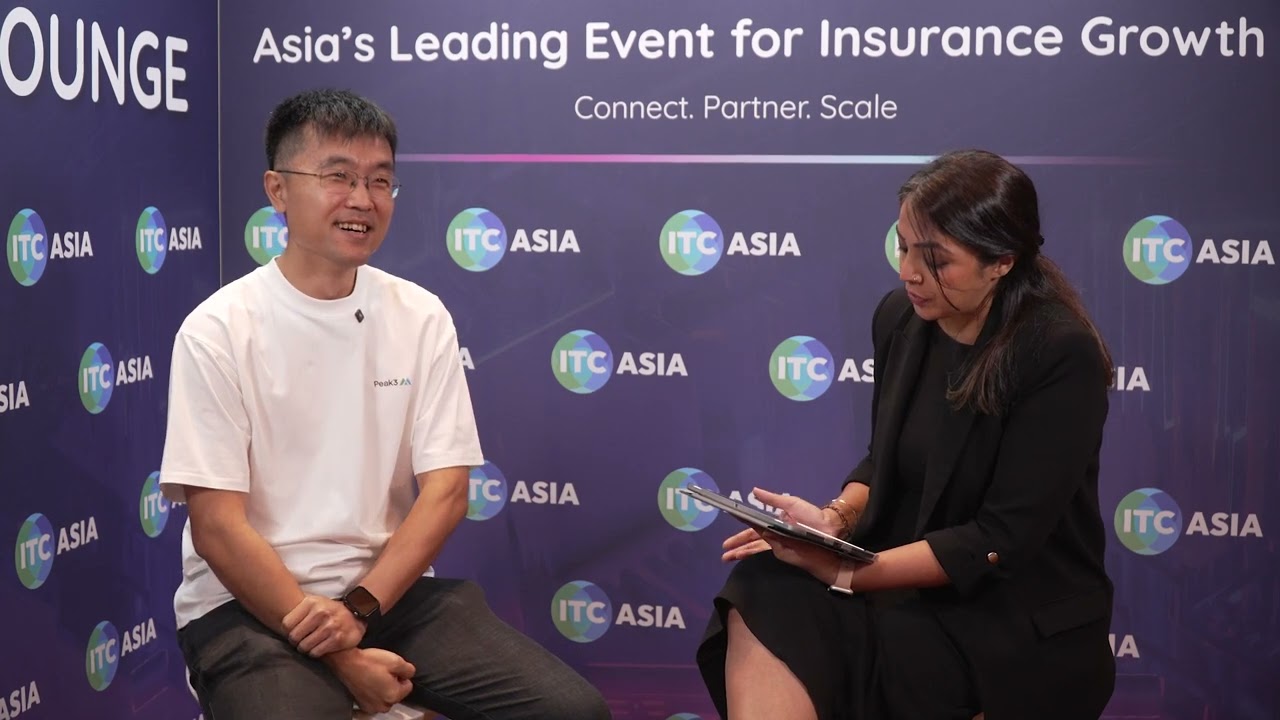
At ITC Asia 2026, Song discussed AI in high-volume, document-heavy and rule-heavy insurance work, with human expertise retained for complex cases. The emphasis was measurable value at scale. A separate June essay considers how operations roles may shift toward supervising agents and handling exceptions. He treats the staffing implications as consequential, rather than assuming that everyone’s job will stay the same with a new tool attached.
September brought a further step: Graphene v4 and Graphene Harness. Peak3 describes Harness as an AI-driven delivery lifecycle spanning analysis, architecture, engineering, testing, migration and maintenance. The company reported a 50% reduction in end-to-end new-feature development and core implementation costs where Harness was applied. Its target of an 80% reduction within 18 to 36 months remains an ambition.
The production-line language brings Song’s career back toward its starting point. The work being organised is now software delivery, but the question is recognisable: how can a complicated process improve repeatedly, with checks built into the work? His public record offers no reason to treat the latest launch as the final answer. It offers a reason to watch the next alteration, and what it costs.
Continue the conversation
- Peak3 ↗
- Bill Song on LinkedIn ↗
- Career interview ↗
- His public essays ↗
- The July core-system argument ↗
- Three levels of AI-native capability ↗
- The house analogy ↗
- Data and AI ↗
- Multi-country harmonisation ↗
- Model optionality ↗
- Build versus buy ↗
- The 2024 funding announcement ↗
- September 2026 launch coverage ↗
- Operations roles and AI ↗