John Stitz spent twenty years helping build enVista before he became its chief executive. By then, the company he had started with Jim Barnes in 2002 had grown to 850 associates. His promotion arrived with an unusual complication: roughly 400 of those colleagues were about to leave for another company. The business had become large enough to divide, and the two founders were heading into different jobs.
In 2022, Körber agreed to acquire enVista’s Enspire Commerce software and global freight audit and payment services. Barnes would join the buyer. Stitz would lead the continuing enVista business. After two decades spent adding capabilities, offices and customers, the next assignment was to make a more focused company work.
It is an instructive place to begin his story. The chief executive title occupies a relatively short stretch of Stitz’s career. The longer stretch concerns the commercial work behind a consulting business: finding customers, developing services and giving people a reason to return. A warehouse may have thousands of moving parts. Someone still has to persuade its owner that the proposed arrangement is worth paying for.
The apprenticeship was in alliances
Before enVista, Stitz held senior positions at The Summit Group, Intrepa and Manhattan Associates. His responsibilities crossed sales, marketing and strategic alliances. At Manhattan, he was senior director of strategic alliances; at Intrepa, vice president of marketing and strategic alliances. His education included a bachelor’s degree from St. Joseph’s College in Indiana.
Those titles place him on the commercial side of supply chain technology. An alliance role sits between organizations, where a promising product must meet someone else’s implementation team, customer base or operating requirements. It is useful preparation for a firm that would earn its living by connecting business problems with several kinds of expertise.
Stitz and Barnes began enVista as a two-person operation. First-year revenue reached $1.4 million. The company’s founding proposition was practical: help businesses reduce cost and waste in their supply chains. Its later size can obscure that modest starting configuration. Two founders and some subcontractors are an enterprise in which the distance between selling the work and making sure it gets done is necessarily short.

A growing firm, one invoice at a time
A 2010 snapshot of enVista’s operation placed Stitz in charge of transportation consulting, including carrier sourcing and audit. The wider business was moving beyond recommendations into implementation and managed transportation. That sequence mattered: the firm could help redesign an operation, install the systems and offer to run parts of the resulting arrangement.
Transportation auditing is an unshowy specialty. It deals with the bills and contracts attached to moving goods, the paperwork behind a delivery promise. In Stitz’s case, it also became a substantial part of the company he helped build. He led enVista’s transportation solutions team as well as sales and business development, later serving as chief revenue officer.
The company reported a flat 2009 followed by 35.9 percent growth in 2010. Stitz described customers returning to supply chain investment because of its effect on profitability and customer service. In 2011, reported growth reached 49 percent. The business then employed 175 associates. These were company figures, but they give the expansion a dated shape rather than the blur of an undifferentiated success story.
“Our vision has always been to build a high growth, sustainable company.”
John Stitz, 2012
That ambition is unusually explicit. A consulting firm can remain a comfortable practice for its owners. Stitz was describing something intended to grow beyond that arrangement. The challenge is built into his choice of words: growth adds people and services; sustainability requires enough continuing demand to support them.
The customer needed room for the next decade
One example from the middle years makes the proposition concrete. For sporting goods retailer Hibbett Sports, enVista worked on distribution network capacity and location, transportation and warehouse management systems, and the layout of a new distribution center. Stitz described the multimillion-dollar project as supporting growth for “seven to 10 years.”
That is a rather longer horizon than the next delivery. It ties the consulting assignment to decisions about where a business can expand and what its existing infrastructure can bear. A new building alone would have answered only part of the question. The network, the systems and the physical layout had to be considered together.
By 2014, enVista had $56 million in revenue. Its expansion included IT services, a material handling design-build practice and Enspire Commerce software. It opened an EMEA headquarters in Ellesmere Port, England, in September that year. The Indiana company was collecting capabilities and a wider geography at the same time.
co-found enVista
Pro to Know
becomes CEO
The 2015 Pro to Know recognition put Stitz among supply chain practitioners acknowledged by Supply & Demand Chain Executive. The award’s description connected his leadership with services spanning transportation, warehousing and enterprise systems. It was a useful description of how far the company’s remit had spread.
Then the conveyors came with the company
The expansion was not confined to software. In July 2021, enVista completed its acquisition of longtime partner HCM Systems, a Chicago-based integrator whose work included conveyors, controls, robotics and installation. HCM had begun in 1962, and its third-generation owner, Charlie Hillebold, was bringing that service history into a larger organization.
For a consulting firm, acquiring those capabilities makes an operating proposition more tangible. Advice about a distribution center can lead to equipment, integration and installation. The work reaches the floor. HCM’s addition also helps explain the company Stitz would inherit as CEO: automation was already part of the business before the 2022 transaction sharpened its focus.
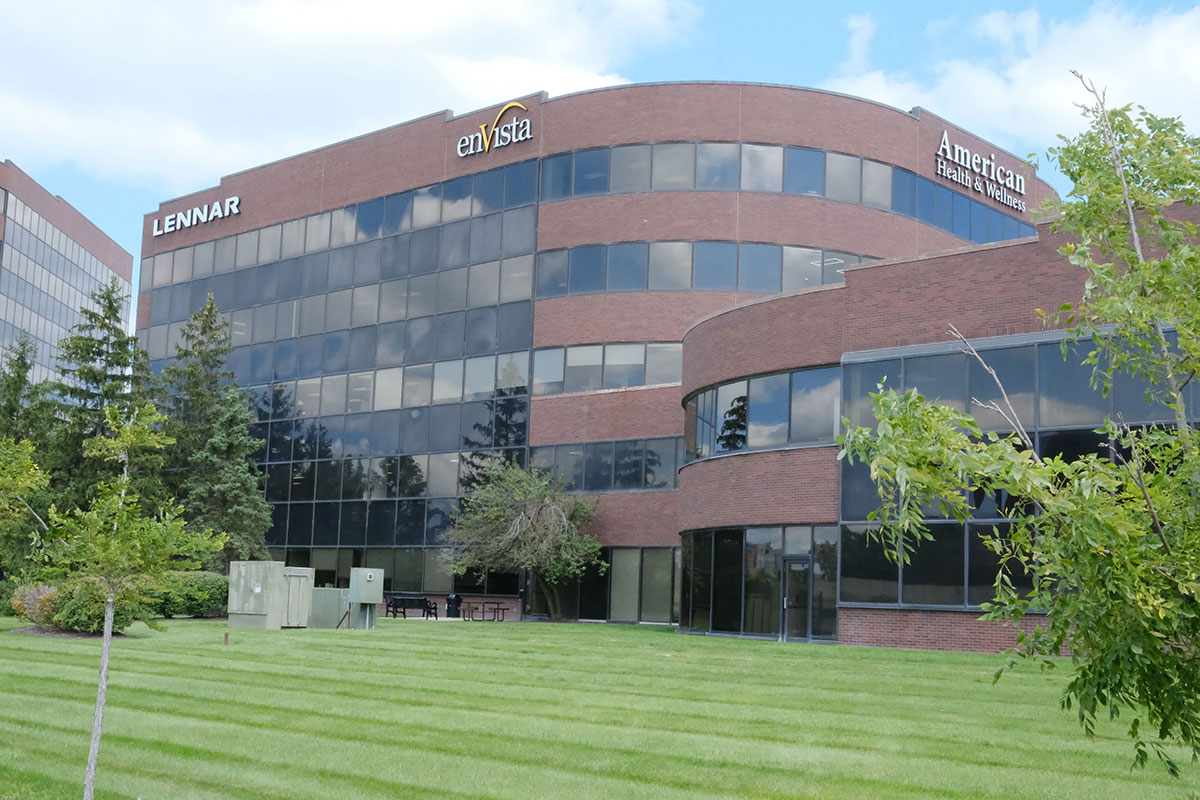
The company’s earlier headquarters expansion had made the local investment visible, too. In 2012, enVista announced plans to spend $1.2 million adding and renovating 10,000 square feet in Carmel. It planned up to 96 new jobs by 2016. Those were commitments and targets at the time, rather than a tally of jobs eventually delivered, but they show the scale of the founders’ intentions.
A smaller company, a larger responsibility
The Körber transaction changed the shape of that enterprise. The announced deal covered Enspire Commerce and freight audit and payment, with international offices also transferring. The continuing enVista retained supply chain consulting, Microsoft solutions, IT managed services, robotics and automation. Selling parts of the business required a fresh description of what remained.
Stitz became CEO in September 2022. His appointment brought a revenue leader into responsibility for the whole continuing operation. He had already spent twenty years inside the company, including leadership of a service line that was now moving to the buyer. Familiarity with the business came alongside a substantial change in its boundaries.
Freight audit & paymentJim Barnes joins Körber
Robotics & automationJohn Stitz becomes CEO
In January 2023, Stitz was listed as a speaker at ACG Indiana’s company-story event in Indianapolis, focused on the Körber sale. The occasion placed him in another familiar commercial setting: explaining a company’s evolution to people who spend their own working lives thinking about growth and transactions.
That year, he also co-authored a retail outlook with enVista senior retail director Julie Cheney. Their advice began with a capabilities roadmap covering people, processes and technology. It asked retailers to examine dependencies, resources, costs and the order of implementation. Master data management, another focus, meant giving the business reliable access to consistent information.
The argument was methodical: work out what an organization can do, what it needs to do and which changes must precede others. A new system cannot settle every question about responsibility or process. Even a very impressive software demonstration eventually has to meet the working week.
The farewell, and what followed it
In March 2024, enVista announced Stitz’s retirement after 22 years, with Barnes returning as CEO. Stitz’s stated plan was personal: “I look forward to spending more time with my wonderful family.” His departure marked the end of his executive tenure at the firm he had helped create.
The separation subsequently became contentious. Barnes sued Stitz in July 2024 over the buyout of Stitz’s interest and a promissory note, alleging misrepresentations about the company’s financial position. Stitz denied misleading him. Through his attorney, he argued that the agreement expressly allocated the transaction’s risks and disclaimed reliance on information outside its terms.
On March 27, 2026, the federal district court dismissed all claims in the amended complaint with prejudice. Its reasoning included the agreement’s no-reliance provisions and releases. The decision resolved the amended claims through a motion to dismiss, rather than a trial determining the truth of the disputed allegations. The distinction matters in recounting the end of a long business partnership.
Another place at the table
Stitz’s public life also has a local civic thread. Firefly Children & Family Alliance lists him as secretary among its board officers. His LinkedIn activity has included sharing the Indiana organization’s Family Table fundraising event. These are specific commitments alongside a career whose customers and colleagues extended well beyond the state.
There is a temptation to let the final job title stand in for an entire working life. With Stitz, that would leave out most of the construction: the transportation practice, the customer relationships and the years in which a two-founder business became a much broader operation. The CEO chapter lasted roughly eighteen months. The work that put him there occupied two decades.
Follow the work
Explore Stitz’s professional profile, his retail writing and the organizations connected with his career.