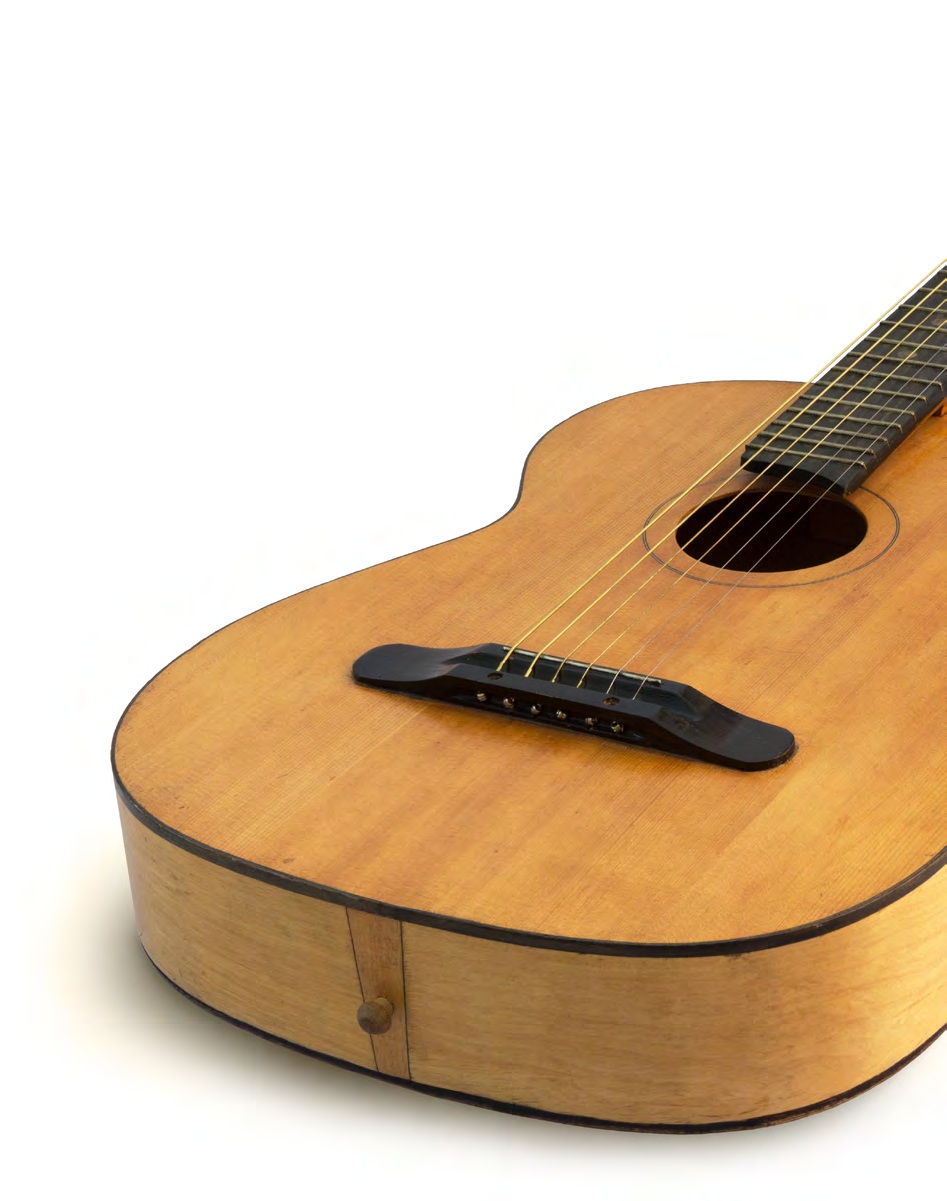
Gibson had a familiar growth problem: guitars, accessories and more online orders competing for space in its Nashville distribution center. The company asked enVista to help plan its future operation and explore automation. A new building has a certain executive charm. It photographs well. A better arrangement of racks rarely receives the same applause.
- The work: supply chain advice, software implementation, warehouse engineering and ongoing IT support.
- The buyers: manufacturers, distributors, retailers and logistics providers.
- The useful habit: examine the flow of work before buying more capacity.
enVista recommended keeping Gibson in its existing facility and expanding into adjacent space. The design specified $300,000 in racking and $1 million in mobile equipment. Its productivity target was a 25-35% improvement. Those are proposed equipment investments and a design expectation, rather than a full project bill and an audited result. The attractive part of the story is the decision itself: grow without undertaking an entirely new distribution center.
That gives us a useful way into enVista. Supply chain consulting can sound like a profession devoted to arrows on slides. Here, the arrow ends at an aisle, a receiving dock or the software instruction that tells somebody where to put a box. The interesting question is whether the person drawing it understands what happens there.
One order, several professions
enVista’s work crosses the boundaries that companies often draw between operations and technology. Its warehouse consultants assess material flow, storage, processes and labor. Its implementation teams select and configure business systems. Its engineers integrate handling equipment and robotics. Its managed services teams support the technology after deployment. A customer can buy work across those disciplines, depending on the problem.
Consider the possible journey of an order. Planning determines what stock should exist. Enterprise software records the business transaction. Warehouse software directs fulfillment. Equipment moves the goods. People handle exceptions. A failure at any handoff can spoil a perfectly competent performance elsewhere. Adding a faster machine does little for an order whose inventory record is wrong.
The firm fits between an operational adviser, a systems integrator and an automation contractor. The comparison a buyer should make depends on the assignment. A specialist may suit a narrow layout study. An internal IT team may handle an application change. enVista’s appeal grows when the assignment crosses those boundaries and somebody must take responsibility for the connections. That is a purchasing judgment, not proof that breadth wins every contest.
The launch that kept on launching
An anonymous original-equipment manufacturer supplies a less polished scene. After consolidating five regional distribution centers, it was six months into a warehouse management system go-live that was falling short. Temporary workers made up 90% of its labor. The original design accommodated the three biggest customers’ 80% share of volume, leaving the remaining business inadequately addressed.
enVista took over the troubled rollout. Its operations team improved receiving and returned 1,700 off-site pallets to the facility. Its HighJump specialists replaced paper-and-label picking with radio-frequency picking and organized issue resolution. The published case reports more than 150 WMS issues resolved and zero backorders over five months after the project. This was a combined repair of software and work on the floor.
A launch date is a milestone. A stable operation is the job.
The lesson worth borrowing is how to define completion. A system can be switched on before receiving, picking and exception handling become dependable. Buyers should describe success in orders shipped, inventory accuracy and manageable workloads. Those measures force the conversation out of the project calendar and into the customer’s day.
Rehearse the rush
Another case concerns a North American mall retailer replacing an in-house system with Infios Warehouse Advantage. enVista and Cycle Labs automated workflows covering 14 critical warehouse processes, with an initial scope of up to 25 performance test executions. As the retailer saw the value, it requested more tests, including cycle counting and warehouse controls. Testing ran overnight to avoid disturbing daily operations.
The case reports load testing reaching 1,000% on selected processes before peak season. That figure describes particular tests, not a tenfold increase in the entire warehouse’s capacity. The practical point is that leadership expanded the rehearsal after seeing what it revealed. A repeatable script can expose weaknesses before real customers become the test subjects.
For an operations leader, this suggests a copyable sequence: identify the workflows that could stop shipping; test representative orders and exceptions; increase the load; train the users who will inherit the system. enVista supplies both implementation knowledge and a library of testing scripts, while Cycle Labs supplies the automation platform. The partnership turns familiarity with warehouse work into something that can be run again.
A consultant with a conveyor inheritance
Jim Barnes and John Stitz founded enVista in 2002. In July 2021, the firm acquired longtime partner HCM Systems, bringing in conveyor, controls, robotics and material handling integration capabilities. HCM’s origins date to 1962. Its third-generation owner, Charlie Hillebold, described the acquisition as a way to serve customers and preserve the company’s service heritage. For enVista, it added engineering substance to the consulting proposition.

The corporate map changed again in 2022. Körber agreed to buy enVista’s Enspire Commerce omnichannel solutions and its freight audit and payment services. Those older product stories therefore need a date attached. The continuing enVista business retained its consulting and integration identity; Barnes returned to lead it in 2024.
Today its Microsoft practice covers Dynamics 365, Business Central, Azure, Microsoft 365 and Power Platform, from strategy through implementation and support. Stauffer’s offers a concrete example: an upgrade from aging Dynamics AX software to Dynamics 365 ahead of its busy season. enVista’s case credits leadership engagement, planned outages and hardware readiness, and reports completion on time and under budget. Preparations, mercifully, can be more useful than drama.
“Hope is not a strategy.”
One of enVista’s published core values
The business combines paid projects, systems integration, software offerings and continuing managed services. Its own shorthand is consult, implement, operate. That last verb matters commercially: support can continue after a redesign or launch. It also gives the customer a reason to ask who answers when the application, the device or the infrastructure fails after the project team has left.
Even the robots need a running order
In February 2026, enVista launched enMotion WES+, a cloud-based warehouse execution and orchestration platform. It is intended to coordinate people and automation while integrating with warehouse management and control systems. The proposition is straightforward: separate machines need a shared plan for the next piece of work.
The launch announcement described a modeled improvement of nearly 60% in sorter utilization for an early adopting footwear distributor. The word “modeled” earns its place beside the number. Simulation can help choose a design; performance under everyday conditions is a further test. In a May 2026 interview, enVista executives discussed using customer order profiles to simulate equipment behavior and introducing automation gradually.
The same caution applies to copying any customer case. Gibson had adjacent space available. Another company may face a different building, item mix or growth rate. Automated tests depend on representative workflows. Orchestration depends on workable integrations and usable operational data. A promising design needs those conditions examined before the purchase order.
Ask enVista to show the assumptions: which orders, which constraints, which equipment, which definition of success? Then ask how the team will prove them. It is a sensible way to buy consulting, and an even better way to avoid buying the wrong warehouse. The guitars can have the spotlight. Someone still has to get them there.
Follow the work
Explore enVista’s website, its case studies and insights, blog and company news.