A fish-and-chip shop supplier makes an unexpectedly good test of enterprise software. Henry Colbeck distributes more than 1,500 products, supplies bulk cooking oil and collects used oil for recycling. Sales, storage and transport all have to agree about what is going where. A handsome dashboard is little consolation if the delivery is wrong.
In a customer account published by Tecman, Henry Colbeck reports 50% revenue growth without adding employees. Microsoft Dynamics 365 Business Central connects its sales, purchasing, finance, warehouse and transport operations, with specialist applications and voice-directed picking alongside it. The result is a customer-reported outcome, not a controlled experiment proving that software alone caused the growth. Still, it gives a concrete shape to a usually foggy phrase: business transformation.
Tecman, the trading name of Technology Management Ltd, works in that gap between buying software and getting a business to run through it. Its territory is manufacturing and distribution, where a missed stock movement can travel all the way from the loading bay to the accounts. The company sells Microsoft systems, implements them, extends them and stays around to support them.
Reported revenue growth, without additional employees.
Customer account published by Tecman; no claim of software-only causation.The spreadsheet was doing too many jobs
At precision component manufacturer Brandauer, the trouble started with fragmentation. Its published customer story describes separate manufacturing and accounting systems, with manual spreadsheets bridging the gaps. The business chose Dynamics NAV and Dynamics 365 CRM to connect finance, production and customer information. The first thing to fail was the arrangement between systems: too much depended on people carrying information from one place to another.
That distinction matters when judging Tecman. A company can own perfectly serviceable software and still spend its mornings reconciling conflicting answers. An order becomes a purchasing decision, a production requirement, a warehouse task and an invoice. When those stages live apart, each handover invites another delay or another round of typing.
Brandauer chief executive Rowan Crozier called the work a “business simplification project.” The phrase is less glamorous than digital transformation and more useful. It directs attention to what employees actually do. A buyer can copy that approach before signing anything: follow one real order, record every duplicate entry and identify who resolves the discrepancies.
“It is a business simplification project.”Rowan Crozier, chief executive, Brandauer
Microsoft supplies the core. Tecman handles the fit.
Business Central is the central product in Tecman’s offer. It brings together financial management, purchasing, sales, inventory and other operating functions. Tecman’s pricing guide distinguishes Essentials from Premium: the latter adds full manufacturing and service-order management. That is a practical purchasing decision for a factory, rather than a cosmetic upgrade to a fancier subscription.
The surrounding applications address work that does not stop at the accounts department. Dynamics 365 CRM covers sales, customer service, marketing and field service. Power BI provides reporting; Power Apps and Power Automate support applications and workflows. The appeal is the ability to connect these activities within the Microsoft environment, with an implementation partner responsible for making the pieces useful.
Then come the details a general software demonstration can skate past. Tecman’s application catalogue includes electronic data interchange, landed costs, shipping management, quality management and cloud printing. Electronic data interchange, or EDI, moves business documents between trading partners. Landed-cost tools help account for the expenses involved in getting imported products to their destination. These are everyday commercial chores with direct consequences for margin.
order
production
dispatch
reporting
Plastipack, which makes cover materials for swimming pools and water storage, shows what those additions can do. Its account describes Business Central providing current information about orders, production and available stock. Clever MES and Clever WMS Devices add shop-floor and warehouse capabilities. Tecman reports that manual entry and paperwork were almost eliminated, freeing employees for other work.
Food businesses get a more specific proposition in Dynamics Food, built on Business Central. The offer brings traceability, quality, inventory and production information into the same operating picture. For a food manufacturer, tracing a batch and understanding production costs are buying criteria, not optional flourishes. Tecman’s market position rests on knowing these requirements before the customer has to explain every one.
The £45,000 offer has boundaries
Enterprise software pricing often begins with a conversation. Tecman also puts numbers on the page. Delivered!, its packaged Business Central implementation for distributors and businesses that assemble or kit products, lists a £45,000 implementation fee and a four-month schedule. The published package includes configuration, data import, remote training, user-testing support, go-live assistance and help with the first month-end.
Recurring charges sit beside that fee. The package page lists £89.58 per user per month for Essentials licensing and break-fix support, based on ten users, plus £149 monthly for cloud monitoring. On those published figures, ten users and monitoring total £1,044.80 a month. That arithmetic is a baseline illustration, not a complete project quotation; optional packs and other requirements add to the bill.
10 users + monitoring
Calculation: (10 × £89.58) + £149. Extra packs, Microsoft 365 and applicable taxes are not added here. Prices checked September 2026.
The bargain requires discipline. Tecman’s FAQ recommends Delivered! for seven to 25 users, requires Microsoft 365 subscriptions and reliable broadband, and rules out development changes during the initial implementation. Customers must supply information, validate data, make decisions and keep to the agreed project plan. Additional warehouse-scanning and other packs can also extend the schedule.
This makes the boundary unusually clear. A distributor prepared to adopt standard processes can buy a defined project. A manufacturer needing full production functionality, or a business requiring extensive bespoke changes immediately, needs another approach. The lesson readers can copy is to agree which operating habits will change before promising a launch date. A fixed price cannot make an undecided customer decisive.
Sometimes the replacement is the partner
McGeoch Technology had already bought into Microsoft. Its problem, according to its customer account, was weak support and insufficient direction from its existing Dynamics partner. The manufacturer of specialist lighting and control systems switched to Tecman, then upgraded from NAV 2015 to Business Central. Finance director Stuart Smith reported that the upgrade finished on time and under budget.
That is a different sale from persuading a company to abandon spreadsheets. Tecman offers a support-transfer route that includes discovery and a system health check. For existing Business Central users, it says changing partner need not require a licence change or data migration. The ongoing relationship becomes a product in its own right.
Dupli, a supplier of print and photography equipment, chose Business Central, CRM and Power BI. Its account links operational work, including shipping and warranty management, with sales and marketing information. Sales manager Chris Allsopp acknowledges that Tecman cost somewhat more, while describing the business benefit positively. The decision was about the usefulness of the implementation, rather than the smallest initial bill.
These stories place Tecman among specialist Microsoft implementation and support firms. Customers can choose another Dynamics partner, or reconsider the underlying ERP platform altogether. Tecman’s case is strongest where manufacturing knowledge, distribution workflows and continuing support carry weight. Its branded apps and packaged implementation methods give buyers something more specific to assess than a partner badge.
A church full of business software people
There is an architectural joke in Tecman’s address: a company selling cloud systems works from St Mark’s Church in Wolverhampton. It moved there in 2016. Its own history starts with founder and managing director James Crowter in 1992; the current limited company was incorporated in September 1995. Those dates describe different milestones, not a contradiction.
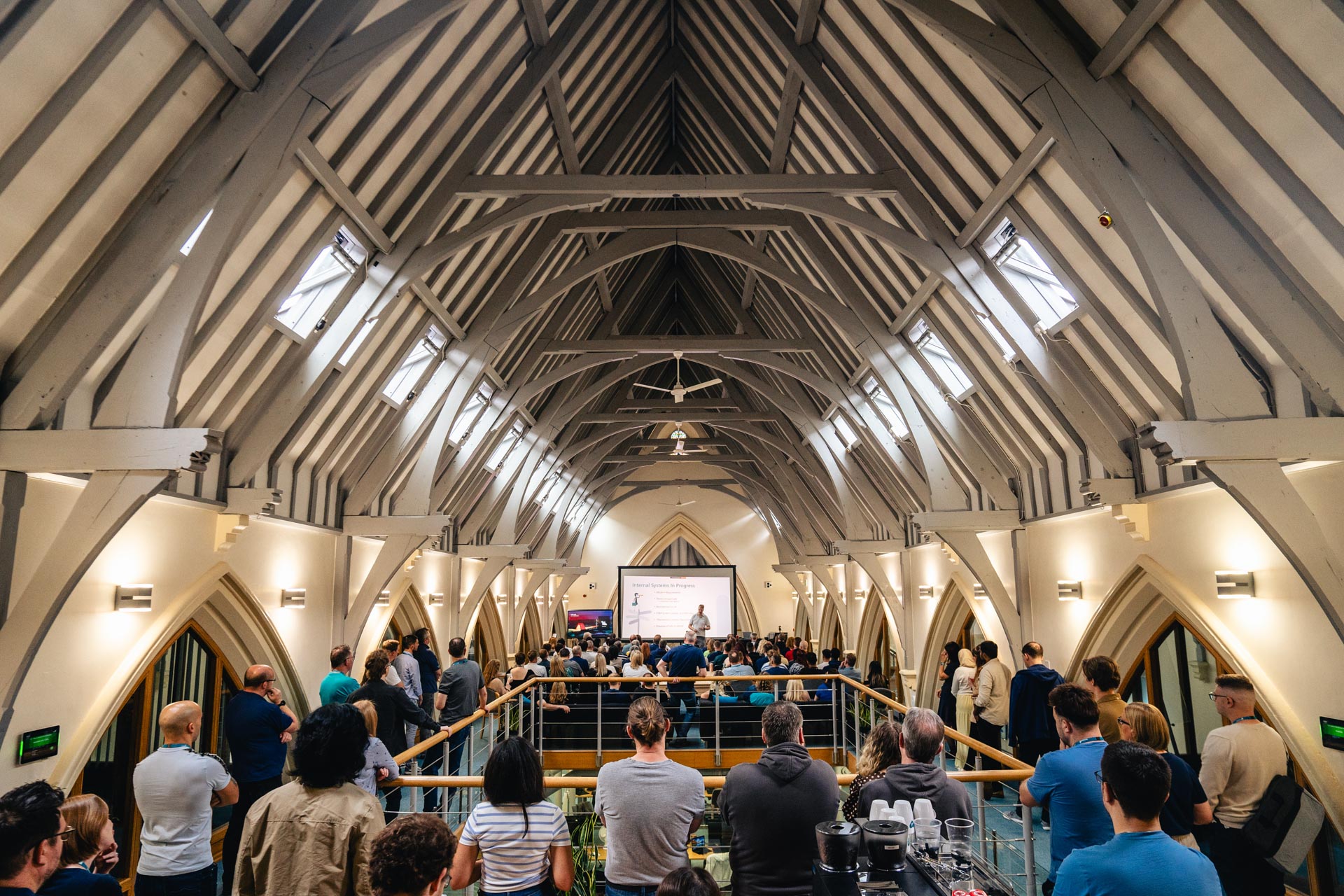

The present-day company reports more than 170 people and 450 customers. Its offer pairs consulting and development with a UK support team of more than 40. Implementation provides project income; licences, support, applications and cloud services provide continuing business. Maintaining a useful relationship after launch is therefore commercially important as well as reassuring to customers.
Tecman’s recruitment material emphasises ownership of work, learning and teamwork. Its Academy accepts routes beyond the conventional graduate intake, including people with business experience and practitioners familiar with other ERP products. That is relevant to the service being sold: somebody who has lived with stock records or manufacturing schedules brings context that software training alone cannot supply.
There is also a less photogenic part of the proposition. Tecman reports ISO 27001:2022 certification and a successful 2026 audit. Its security page describes a £30,000 investment and tools including Vanta for continuous compliance monitoring. Access to business systems is a substantial responsibility; the company makes its security arrangements part of the buying conversation.
Growing the territory, keeping the subject narrow
Tecman’s timeline records a German launch in 2024 and expansion into Ireland in 2025. A June 2026 event for Irish food businesses promoted Dynamics Food and practical ERP questions. Its August publishing included articles about CRM selection, excise-tax functionality and posting-date controls. The subject remains recognisably the same: the mechanics of running a business.
For prospective customers, the useful test is equally concrete. Bring a difficult order, an awkward stock adjustment or a disputed production cost to the demonstration. Ask the consultant to follow it through the system. Tecman’s published work suggests that its value becomes visible at those handovers, where software stops being a purchase and starts becoming the way the company works.