Consider an order. A salesperson closes it. Finance needs to recognize it. A warehouse needs to ship it. To the customer, this is one event. Inside a company, it can become three separate administrative adventures. Lirik’s business lives in the distance between those adventures: implementing enterprise applications, connecting them, and making their information usable.
- The job: connect Salesforce, NetSuite and cloud data platforms to business workflows.
- The specialty: implementation, integration and reusable tools for recurring problems.
- The lesson: define what must survive a migration before moving anything.
The company sells expertise across customer relationship management, enterprise resource planning, and data and AI. Its chosen platforms include Salesforce, Oracle NetSuite, Snowflake, Databricks and AWS. That combination makes sense if you follow the order: customer information, operational records, then the data needed to understand what happened.
01 / THE LAST MILEThe order is only the beginning
A software license buys capabilities. Somebody still has to translate a company’s habits into fields, permissions, interfaces and rules. Lirik offers that translation through advisory work, configuration, custom development, integration, training and continuing support. The intended buyers include sales and service leaders, finance and operations teams, and the people responsible for enterprise data.
Look at its NetSuite extensions. There is bulk serial-number importing. There is inventory allocation based on expiry dates. There are tools for material job costing and batch production. These sound like subjects you might flee at a party. In a warehouse or factory, they are ordinary questions with financial consequences: which stock gets used, what a job costs, and how an item gets traced.
Its public testimonials range from Cisco and Verizon to Aria Systems and the Regional Recreation Corporation of Wood Buffalo. Lirik publishes these endorsements itself. The variety helps explain its market position: an implementation specialist serving different organizations around a selected set of platforms.
A buyer can also assemble this expertise internally, hire a specialist for each platform, or choose a larger integrator. Lirik’s case rests on combining the application work with data engineering and packaged starting points. The sensible comparison is the proposed team, its relevant experience and the work it will own. A broad platform list alone cannot answer those questions.
02 / THE PACKAGEStart small. Price the boundary.
An older AppExchange brochure offers an unusually concrete glimpse of the economics. Lirik packaged a Salesforce partner-community starting point with configuration for a one-time $10,000 fee and a two-week configuration period. Optional extended services added $10,000 for three to four weeks of customization, integration and more complex workflows.
Package + configuration, as listed in a legacy partner-community brochure. Optional extended services: another $10,000. Historical offer; current availability and pricing require a quote.
The revealing detail is the boundary. The brochure excludes complex systems integration from the base offer. Repeatable components provide the starting point; additional complexity becomes additional work. That is a useful way to understand Lirik’s wider services business, which combines projects, accelerators and ongoing managed support.
For another service company, the idea is copyable: give a recurring problem a defined starting package. Specify the deliverables, the time allowance and what triggers a larger engagement. A narrowly bounded offer becomes less useful when the customer’s workflows require extensive exceptions. The scope must expand with the problem.
03 / THE PAPER TRAILA slide with a paper trail
Now consider something smaller than a shipment: a pharmaceutical presentation slide. In life sciences, content carries approval status, versions and a record of review. Moving the file without that context can leave a commercial team with material it cannot confidently use.
Lirik’s 5C Content Hub addresses that problem when moving material from Veeva PromoMats to Salesforce’s Agentforce Life Sciences. Its described capabilities include metadata mapping, scheduled synchronization, audit logging, and content review and publishing. The five Cs are Creation, Collation, Curation, Conversion and Compliance. Even the alphabet has paperwork.
A companion tool, LOMA, handles the CRM environment: data, metadata, business logic and security. Its sequence begins with comparing the source and destination. Suggested mappings go to administrators for review. Migration follows dependency order, and validation includes record-count comparisons and exportable results.
- AssessCompare environments.
Find alignment gaps. - MapReview suggested matches.
Approve or override. - MigrateRespect dependencies.
Carry rules and roles. - ValidateCompare record counts.
Export the evidence.
Lirik advertises a 30-40% shorter development cycle for LOMA. Treat that as a supplier claim whose relevance depends on the starting environment. The more consequential detail is the administrator’s ability to inspect mappings. Automation still needs someone who understands what a relationship or permission means.
The niche has external recognition. Salesforce named Lirik among its life-sciences content partners on April 30, 2026, alongside firms including Accenture, PULSE and Viseven. Tecnos Japan followed in July with an announcement promoting 5C for pharmaceutical and medical-device companies in Japan and Asia-Pacific.
04 / THE FOUNDATIONThe machinery behind the handoff
Lirik’s data practice addresses pipelines, warehouse and lake migration, analytics modernization, governance and managed operations. The logic is practical: a useful model needs usable inputs. Its data-engineering page emphasizes a unified foundation of trustworthy records. A sophisticated answer built from inconsistent records can still be the wrong answer.
“A clean, trusted, single source of data”
Lirik’s data-engineering brief
The company was established in 2015. Simpplr’s official biography identifies Dhiraj Sharma as a founder; Lirik lists Anand Ghalsasi as its current CEO. Tecnos acquired 95% in 2018, citing North American expansion and India delivery among its reasons. A 2024 filing set out the purchase of the remaining stake. The group’s 2026 announcement describes Lirik as wholly owned.
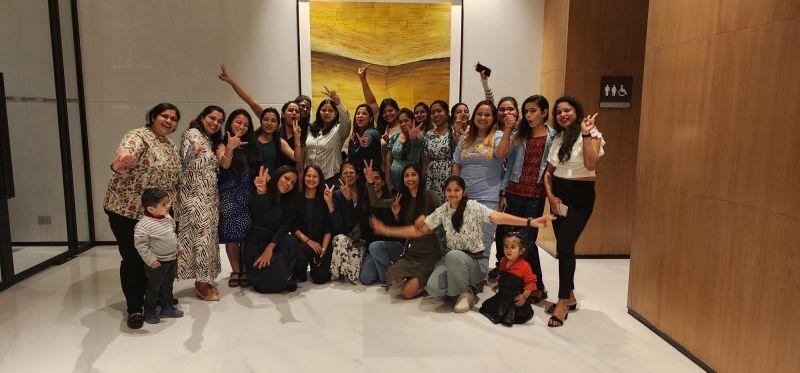
That structure supports a services operation spanning customer relationships and distributed delivery. Its careers page emphasizes training, certifications and collaboration, with benefits varying by location. The execution question is straightforward: can the people defining the business process stay aligned with the people building it?
Go-live also starts a maintenance obligation. Lirik’s NetSuite managed services cover monitoring, maintenance and enhancements. For a buyer, that means deciding who owns fixes, updates and new requirements after the implementation team hands over.
05 / TAKE THIS WITH YOUCopy the sequence
A useful lesson from Lirik’s published approach is to list the things a migration must preserve: records, relationships, rules, permissions and evidence for sign-off. Assign owners before moving them. The technology cannot settle disagreements about who may approve a document or which system owns a customer record. Those decisions belong to the organization. Make them explicit, and the handoff has a chance.