In Aurora, Colorado, a housing authority wanted a better website. Buried inside that familiar request was a more interesting ambition: let landlords maintain their own property listings. An employee’s spreadsheet was doing a job that software might distribute among the people who actually knew when an apartment became available. Infinite Computing Systems built the new site. The useful change was who could do the updating.
- Build: custom applications and Microsoft business systems.
- Keep running: testing, maintenance, licensing, and support.
- Find people: contract staff, permanent hires, and executives.
That small redistribution of responsibility is a good place to understand Infinite. The Cedar Rapids company works in the space between purchasing technology and making it useful. A license gets you software. Someone still has to fit it to the business, connect the data, test the result, and answer the next question.
The spreadsheet is the clue
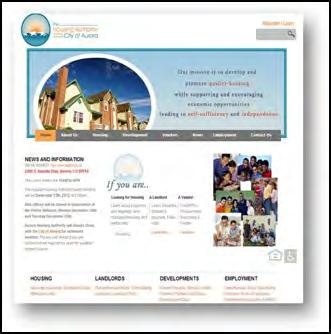
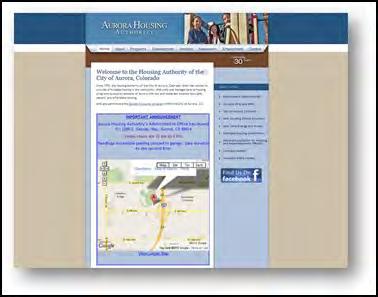
Aurora Housing’s 2012 annual report credits Infinite with development after a selection involving more than a dozen bidders. Housing employees supplied content and worked with the contractor. The resulting content management system needed little coding knowledge. Landlords could maintain listings, see views, and remove or relist properties. The authority expected the online listings eventually to replace its staff-managed spreadsheet.
Read as a design lesson, the project suggests a useful distinction. A prettier screen changes appearances. Giving the right person permission to change the information alters the work. Here, the authority’s own account puts staff participation and self-service alongside the new look. The customer had a role in building the result it would later operate.
Two businesses, one practical problem
Founded in 1997, Infinite has long combined engineering and recruiting. An archived 2006 employer email names co-founders Nita Inani and Raj Inani and advertises PHP development roles. A 2010 company announcement packages business intelligence, mobile applications, custom development, maintenance, testing, and staffing together. The combination predates the current enthusiasm for calling every technology purchase a transformation.
Today its application offering is explicitly grounded in Microsoft tools: .NET MVC, Web API, Azure, SQL Server, and Power BI. It also lists manual testing, automation, integration, system, cloud, and performance testing. That is an implementation business with several places to get involved, from a particular application to the checks needed before people depend on it.
Its Dynamics 365 services cover upgrades, legacy replacements, and ongoing support. Business Central addresses finance and operations for small and midsize companies; Customer Engagement covers functions including sales, marketing, customer service, and field service. Microsoft supplies those products. Infinite’s job is to help a customer introduce and maintain them within an existing organization.
The workforce side offers temporary specialists, permanent placements, executive search, and contingent workforce services. Infinite lists offices in Cedar Rapids, Dallas, Mumbai, and Bangkok. Its careers material advertises training, international opportunities, and immigration assistance. The geography gives its services an international footprint; the people still have to meet the requirements of each assignment.
For employees, the company’s benefits page makes the service model more tangible. It lists tuition assistance, a 401(k), insurance, paid time off, and sponsorship options across the United States, India, and Thailand. Those are advertised benefits rather than promises that every position carries identical terms. They also point to the recurring work of a staffing business: developing skills and helping people navigate assignments across borders.
The company says it has served more than 100 customers across sectors including banking, insurance, energy, manufacturing, and government. Its practical competition depends on the purchase: a Microsoft consultancy for an ERP implementation, a development shop for a custom application, or a staffing supplier for a vacant technical role. The breadth is convenient when those needs overlap.
A budget with a boundary
For a concrete sense of the work’s scale, consider Porterville, California. In November 2014, city staff ranked Infinite first among six firms for a transit website. They recommended negotiating a design fee of no more than $20,000, with a 10 percent contingency. The brief called for a flexible site handling large amounts of changing information.
Recommended design-fee ceiling
+ 10% contingency
The distinction matters: a negotiation ceiling describes what the buyer was prepared to discuss, not what it ultimately paid. It does, however, put a boundary around an otherwise vague phrase like “custom IT.” The assignment had a particular audience, an information problem, a scope, and a proposed budget. That is something another buyer can usefully copy.
Infinite also sells through public purchasing channels. Florida signed an IT staff augmentation contract with the company in October 2022. Its Sourcewell agreement, numbered 061324-ICS, lists staffing alongside application development, Microsoft 365 implementation, managed services, and round-the-clock application support. The listed maturity date is October 24, 2028. An awarded agreement opens a purchasing route; it does not mean every eligible agency has bought something.
Sourcewell’s procurement review describes a certified minority business with more than 100 recruiters and discounts for participating entities. That is a description of recruiting capacity, not an audited company headcount. Its award sits beside suppliers including Computer Aid, Infojini, and ManpowerGroup. The buying channel makes the alternatives visible: Infinite has to compete within an established field of workforce providers.
The part you can copy
Infinite’s service menu suggests three commercial relationships: defined projects, people supplied for assignments, and continuing services such as licensing or application support. Buyers should distinguish them. A request for another developer and a request for a finished system put different responsibilities on the supplier and the client. Combining them requires clarity about who owns the result.
“requiring very little knowledge of coding”Aurora Housing’s description of its new content management system, 2012
My reading of the Aurora example is that ownership belongs inside the initial brief. Ask who will update the information, approve changes, and handle exceptions. A contractor can build an interface; the client must still decide how the work should run. If nobody has authority over the process, adding software or temporary staff can leave the underlying confusion intact.
This approach fits organizations with a specific workflow to improve and people ready to participate. A simple, standard application may need little customization. A company committed to another technology stack may prefer a different specialist. For everyone else, Infinite offers a practical combination: the system, the implementation, and help finding the people. The revealing question comes after the demonstration: who can use it on their own?
Explore the work
Company / services / conversations