The hotel rooms were filling. The numbers were harder to explain. In a hospitality case published by KARYA Technologies, a growing group used Opera PMS for reservations and billing, and Simphony POS for food and beverage. Each system covered its own territory. Leadership, meanwhile, faced revenue inconsistencies and a delayed picture of profitability across properties.
Cancellations, no-shows, and inconsistent pricing surfaced during periodic reviews. Room revenue and restaurant performance were analyzed separately. KARYA connected the systems through KDAPT, its business intelligence platform, adding shared dashboards, anomaly detection, forecasting, and conversational queries. The existing operational software stayed in place. The intervention was in the connections.
- What it does: implements, connects, repairs, and supports enterprise software.
- Who buys: organizations managing complicated operations across systems and locations.
- The product bet: KDAPT lets business users question enterprise data in everyday language.
The long route back to a product
KARYA’s own history supplies an interesting wrinkle. Founded in 2007 by Bala Balasubramanian, it began with mobile and .NET products. Its careers page describes a subsequent move into services, expanding through Microsoft Dynamics, SharePoint, Oracle, data warehousing, and testing as market demands changed. Today, KDAPT puts a proprietary product alongside that services business. The path bends back toward its beginning.
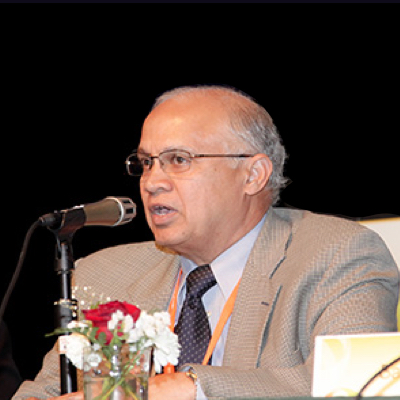
The leadership has experience in the operational side of software. Balasubramanian’s earlier company developed payment-processing solutions. KARYA’s current management page identifies him as Executive Chairman. Chief operating officer Ranganathan Gopalakrishnan’s biography spans public finance, ERP implementation, and payments. That background helps explain the company’s attention to financial workflows and the business rules inside applications.
The work between the software
An enterprise software license gives a business a platform. KARYA supplies the people who adapt it to the business. Its Dynamics practice covers discovery, implementation, migration, extensions, integration, stabilization, training, and application support. It works with both Dynamics 365 and older products such as AX, GP, and NAV. The installed system is often the starting point.
Consider its July 2026 Dynamics GP stabilization case. Accumulated data, aging plug-ins, and conflicting customizations had contributed to slow screens, failed patches, and unreliable integrations. KARYA describes database tuning, customization audits, rewritten integration workflows, and monitoring. The immediate objective was to restore predictable operations and give management time to plan its ERP future.
That work places KARYA among enterprise systems integrators and implementation partners. Buyers can also choose another specialist consultancy or use an internal IT team. KARYA’s proposition is the breadth of work it can carry across an engagement: enterprise applications, data, cloud, security, testing, and ongoing support. Breadth is useful when a problem crosses those boundaries.
Its published customer work ranges from an Australian hospital foundation’s fixed-asset processes to warehouse and sales analytics for a bicycle manufacturer. A UK housing association case concerns tenant requests and repairs. These examples make the market clearer than a list of technologies: organizations with financial, physical, and administrative operations that need to work together.
Who owns the definition of revenue?
KDAPT extends that integration pitch into the interface. Its advertised features include natural-language questions, SQL and NoSQL query generation, customizable dashboards, forecasting, and connections to databases, spreadsheets, and APIs. The attraction is straightforward: a business user can ask a follow-up question without commissioning a new report each time.
There are several ways to use the product. A finance team might explore cash movements; a sales team might investigate customer patterns. KDAPT also advertises shared reports, annotations, audit logs, and encryption. White-label support allows partners to present the platform under their own branding, extending its potential distribution beyond direct enterprise deployments.
The less theatrical detail is the semantic layer, where business definitions and relationships are established. KDAPT’s role documentation separates the Modeler, who defines metrics and maintains data models, from the Analyst, who uses those models to explore information. Admins control configuration and permissions; Explorers consume shared insights. Custom roles provide further flexibility.
A plain-English question still needs a shared definition of the answer.
Editorial perspective
That distinction matters. In our reading, a conversational interface becomes useful when the organization agrees on the underlying terms and permissions. If two departments calculate revenue differently, someone still has to settle the definition. A fluent answer alone cannot settle an accounting disagreement.
KARYA’s September 2026 intelligence case adds another piece: joining live ERP and SQL data with PDFs, manuals, policies, and operational documents. The problem described is familiar - employees switching between reports and documents to assemble an answer. KDAPT’s proposed role is to bring the business context into the same conversation as the numbers.
People remain part of the delivery model. KARYA describes learning programs, flexible schedules, and hybrid working on its careers page. For a services buyer, the relevant question is who carries knowledge between discovery, implementation, and support. A well-documented system is easier for the next person to maintain.
Buy the connection, measure the result
The commercial arrangement has several parts. KARYA lists implementation projects, enhancement requests, SLA-based support contracts, resource augmentation, and license procurement. Those commitments should be priced and evaluated separately. KDAPT’s self-hosted edition advertises customized pricing and deployment within a customer’s own infrastructure.
Support deserves particular attention because integration continues after launch. KARYA describes contracts covering applications, databases, clouds, infrastructure, and security, with monitoring and preventive maintenance. Its staffing option includes developers, testers, and administrators for short or long assignments. A buyer can therefore commission a defined project, supplement an existing team, or arrange continuing operational help.
For a buyer, our recommendation is simple: take a real question to the demo. Bring a known answer, a disputed metric, and a user with restricted access. Check how the model handles each. Scope the integration work, ongoing support, and responsibilities for maintaining definitions before judging the interface. Ask the team to trace one result back to its records and explain which permissions applied. Then change the question. That small exercise helps establish whether the implementation understands the business terms and whether a user can investigate an unexpected answer.
The approach depends on accessible data, workable permissions, and someone accountable for business logic. An organization with a single uncomplicated application may need much less machinery. KARYA is most interesting where the software estate has become complicated enough that connecting it is a business problem in its own right.