In 2009, John Schnatter paid $250,000 to get his old Camaro back. He had sold the gold-and-black Chevrolet years earlier to help rescue his father’s tavern and finance the beginnings of a pizza business. By the time he recovered it, the car had become a company origin story with wheels. A sports car can be a reward for making money. Schnatter wanted the one he had owned before.
The search became a promotion, complete with a road trip in a replica and free pizza for Camaro owners. The original turned up in Kentucky. There was a title to inspect, an owner to pay, and a satisfying reunion. A quarter of a million dollars is expensive nostalgia, but at least the transaction came with a clear answer about who owned what.
That neatness has become harder to find elsewhere in his life. Schnatter built a restaurant chain around a product, a promise and his own face. After his departure from its leadership, Papa Johns continued serving pizza under the familiar name. Its founder began a prolonged argument over what that name should mean. The Camaro story has an ending. The story of Papa John has required rather more paperwork.
01A broom closet, a business degree, an oven
Before the television advertisements, there were dishes. Schnatter started working at Rocky’s Sub Pub in Jeffersonville, Indiana, at 15, moving from washing up to making pizzas. College supplied a business education; restaurant work supplied a product he already understood. He graduated from Ball State University in 1983 and returned to Jeffersonville, where his father’s bar, Mick’s Lounge, was struggling.
His father, Robert, had worked as a judge and prosecutor as well as pursuing business ventures. His grandfather, Louis Ackerson, was an attorney and business owner. Schnatter has described both as early influences: his father for refusing to quit, his grandfather for insisting on work and craft. His eventual company began close enough to those family lessons to smell the oven.
In 1984, he converted a broom closet at the tavern into a pizza kitchen. The equipment was secondhand; an early company account puts its cost at $1,600. Selling the Camaro helped keep the family business afloat and provided money for the new operation. In 1985, a standalone Papa John’s restaurant opened in Jeffersonville. The future chain had acquired its first proper address.
His initial target was an annual income of $50,000, he recalled in 2017. The ambition sounds almost quaint beside the business that followed. It also makes the beginning easier to recognize: a young graduate, a family problem, a skill that could bring in money. The broom closet was available. That was sufficient architectural inspiration.
All I wanted to do was make $50,000 a year.
JOHN SCHNATTER / RECALLING THE BEGINNING, 2017
02Making a promise repeatable
The first franchise followed in 1986. The 100th restaurant opened in 1991, and the company went public in 1993. Its 500th restaurant arrived in 1994. The early milestones came close enough together that the small-business story became a different sort of undertaking: teaching other people to deliver the same promise, in other kitchens, to customers the founder would never meet.
That promise was “Better Ingredients. Better Pizza.” The phrase made the ingredients part of the sales pitch and gave the founder a simple part to play in advertisements. Customers were being asked to associate the product with a person who appeared willing to vouch for it. The red shirt and the first name helped bring a large restaurant business down to the scale of an introduction.
By the end of 2017, the chain counted 5,199 restaurants. Of those, 4,456 were franchised and 743 were company-owned. Those figures matter because the expansion involved thousands of other operators. A founder can write the promise on a box; franchisees and their employees have to make it credible on an ordinary evening, when orders arrive faster than compliments.
Schnatter’s executive career also had intervals. He stepped down as CEO in 2005 and returned in 2008. During the intervening period he remained chairman; a 2007 announcement moved him into a non-employee chairman role while retaining his advertising work. Even a reduced management schedule left him publicly attached to the pizza. Running the business and representing it were separate jobs, occupied by the same familiar person.
03The face was part of the business
The Camaro reunion belonged to this larger habit of putting biography to commercial use. A car sold to finance an oven was a story customers could remember without consulting an annual report. In 2009, the search took Schnatter through a 12-city promotional trip. It combined something personal with something a restaurant chain could advertise. Sentiment had found a marketing budget.
The connection was strong enough to appear in the company’s risk disclosures. Its annual report filed in February 2017 warned about losing Schnatter’s services or damage to his reputation. It explicitly connected the availability of his image and spokesman work to the business and brand. The caution was published before the events that made the risk painfully concrete.
By then, Schnatter had collected the conventional evidence of entrepreneurial arrival: the 1998 Ernst & Young Retail/Consumer Entrepreneur of the Year award, a 2007 induction into the Junior Achievement U.S. Business Hall of Fame, and an invitation to address Ball State’s 2015 commencement. His book, Papa: The Story of Papa John’s Pizza, put his account into print. The graduate who had gone home to a troubled bar could return to campus as the speaker.
04When the spokesman became the story
In November 2017, Schnatter blamed the NFL’s handling of player protests during the national anthem for hurting the business. Papa John’s was a league sponsor. His comments drew criticism and moved an argument about football and racial injustice into the pizza company’s public identity. Steve Ritchie succeeded him as CEO on January 1, 2018; Schnatter remained chairman.
Then came a May 2018 conference call with the marketing agency Laundry Service. The conversation concerned his public role and preparation for discussing race. During it, he used a racial slur while referring to Colonel Sanders. The remark became public in July. Schnatter acknowledged using the word and apologized. He resigned as chairman that month, and the company moved away from using his image.
He later challenged the account of the call, arguing that the disclosed material misrepresented his meaning. The distinction between the words he acknowledged saying and his claim about their context became central to his public defense. Meanwhile, the separation widened. In March 2019, an agreement with Papa John’s set the terms for his departure from its board.
The same visibility that had made the business approachable now made disentanglement difficult. His first name was on the restaurants. His face had been on the boxes. A corporate board could change responsibilities and advertising arrangements; customers still had years of associations already delivered to their doors. The founder’s biography had become part of an asset held by a public company.
05Forty pizzas and six years of litigation
In a November 2019 television interview, Schnatter said he had had more than 40 pizzas in 30 days and criticized the product. The number traveled briskly around the internet. He later clarified that he meant tasting or inspecting pizzas, rather than eating 40 whole ones. Quality control had somehow acquired the public relations problems of competitive eating.
The episode captured the peculiar job he had made for himself after leaving. He was still talking about the pizza, still presenting himself as its judge, while doing so from outside the company’s leadership. His public identity remained attached to a business whose decisions he no longer directed. He could comment on the product; the commentary itself became another product for the internet.
His argument with Laundry Service moved through court. He alleged that disclosure of the call breached a nondisclosure agreement; the agency disputed his claims. On September 10, 2025, the Sixth Circuit upheld a ruling that the agency had lost its right to compel arbitration after litigating extensively in federal court. That decision concerned the forum for the remaining dispute, rather than a final verdict on the alleged breach.
The parties announced a settlement on May 14, 2026. Their joint statement acknowledged that a Laundry Service employee had recorded the meeting without Schnatter’s knowledge and consent. It identified the claim that the disclosed portion was misleading as Schnatter’s position, and acknowledged harm to people and communities, including him. Laundry Service agreed to make a charitable donation. The resolution closed a lawsuit without supplying the clean, public jury verdict that a long fight can seem to promise.
06Another kind of return to Louisville
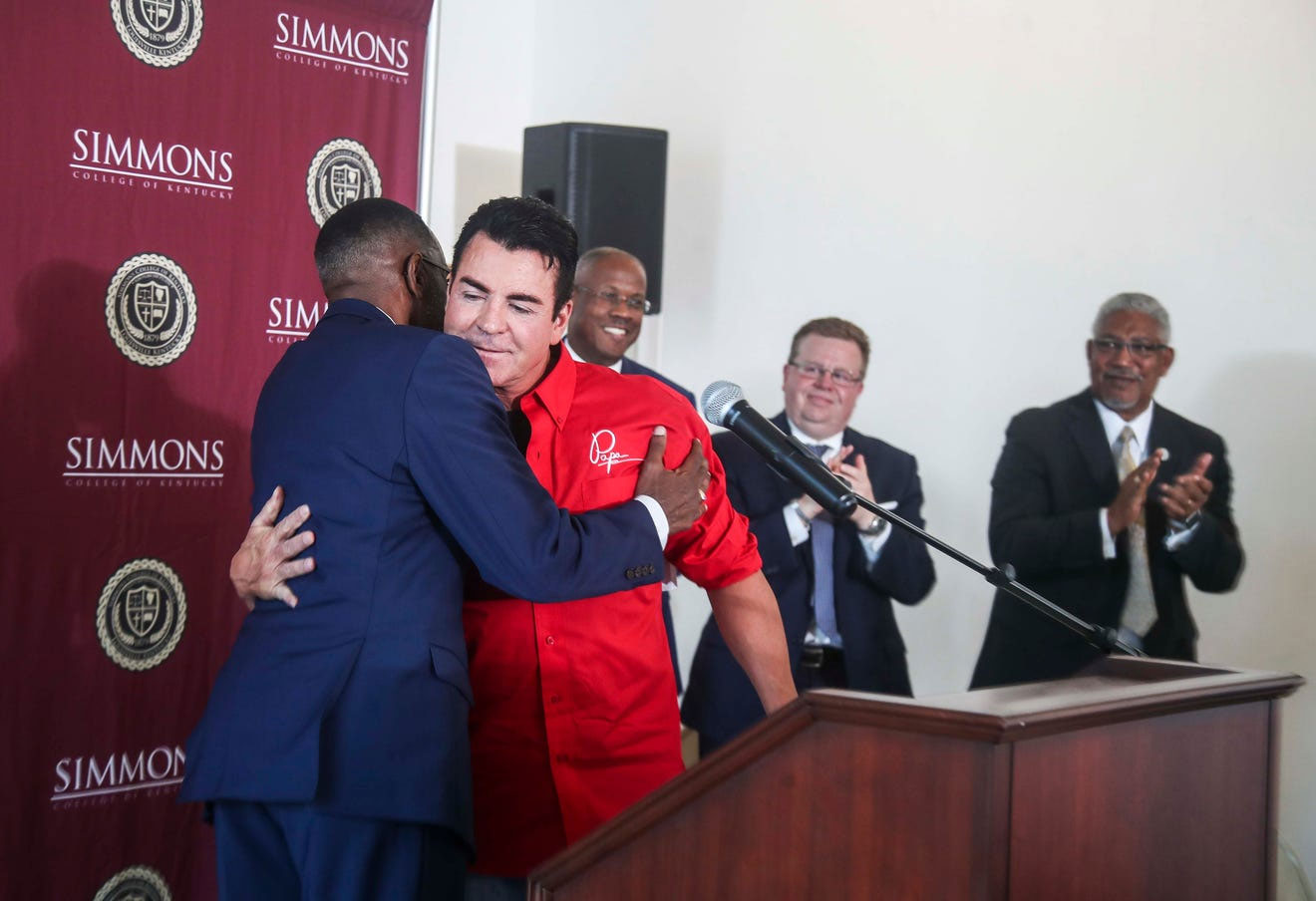
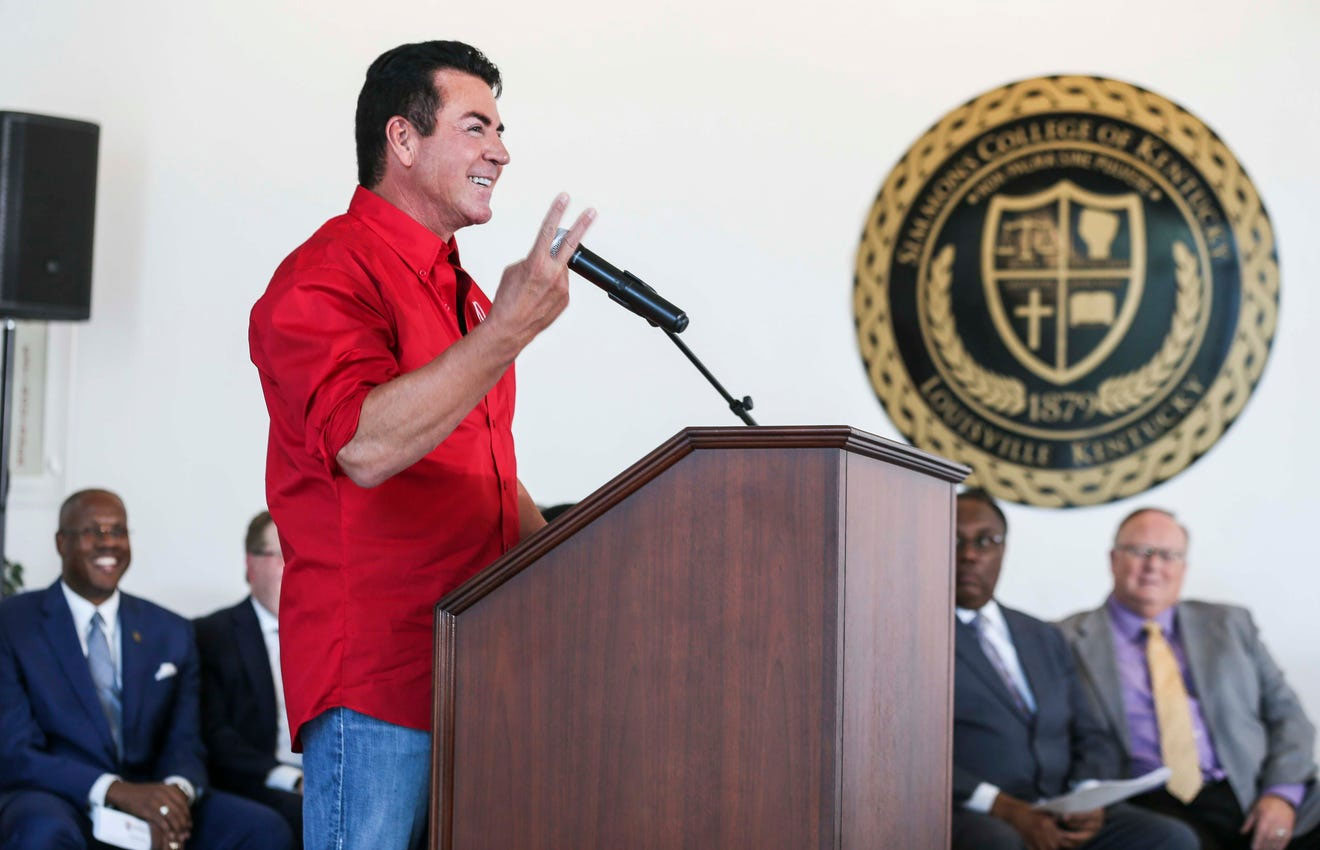
Alongside the disputes, Schnatter continued supporting institutions in the Louisville area. In March 2026, Simmons College of Kentucky announced a $2.5 million commitment from him and the John H. Schnatter Family Foundation. The money was designated for purchasing, renovating and expanding newly secured residential condominiums at College Court. At the historically Black college, the gift had a practical destination: more space for a growing institution.
The following month brought a different announcement. On April 23, the University of Louisville said it was reconciling with Schnatter, a former trustee and major benefactor. President Gerry Bradley said the university had gained a broader understanding of the circumstances surrounding its 2018 split and would have approached the situation differently with its current understanding. The statement described a desire to re-engage and the prospect of future collaboration.
Those developments place his recent story back among Louisville’s institutions and relationships. They involve college property, students, trustees and the prospect of working together again. They also show why a founder’s later chapters cannot be read entirely through the fortunes of the company he started. A restaurant brand is one enduring connection. A community contains others.
Simmons College
$2.5 million commitment announced for College Court property plans.
University of Louisville
Reconciliation announced with its former trustee and benefactor.
Laundry Service
Joint statement announces settlement and a charitable donation.
The young Schnatter sold something he loved because a business needed cash. The older Schnatter had the means to buy it back. Recovering a public reputation involves more people, more memories, and no transferable title. For now, his story contains both the restored Camaro and the harder work of renewed relationships. The car remains the easier part to explain.
Keep reading. Or listen to Papa.
FOLLOW JOHN SCHNATTER
Related profile: Papa Johns ↗