A chip is supposed to be repeatable. Make the design, manufacture the design, make it again. John Chang’s business pays attention to the minute differences that survive all that repetition. Inside the orderly world of semiconductor production, each piece of silicon retains physical variations. Jmem Tek, the company he founded in Taiwan, uses those differences to help give a device an identity of its own. The factory’s inability to make everything absolutely identical turns out to have a useful second career.
At the center of the idea is a secret key. Devices need keys to authenticate themselves and protect information. Storing a key creates something an attacker can try to extract. Jmem Tek’s JPUF technology instead generates keys from a chip’s physical characteristics, with the keys existing as temporary responses. Think of it as asking the hardware to establish who it is when needed. There is no little drawer marked “secret” waiting to be opened.
Chang is Jmem Tek’s founder, chairman and chief executive. The job places him between the physics of a device and the economics of persuading someone to put it in a product. His education happens to cover both sides of that conversation.
Circuits, money and a research idea
At Queensland University of Technology in Australia, Chang studied electrical engineering alongside banking and finance. It is an unusually appropriate combination for a semiconductor founder. One subject concerns what a device can do. The other supplies questions about what it costs, how it gets funded and whether a customer will pay. A transistor remains unimpressed by a financial forecast; an investor usually wants more than a circuit diagram.
He continued his studies in Taiwan at National Chiao Tung University, now part of National Yang Ming Chiao Tung University. His current company biography lists him as an electrophysics PhD candidate and also records a mechanical engineering master’s. It describes more than a decade of semiconductor industry experience spanning design, operations and sales. His working vocabulary includes the laboratory and the purchase decision.
Jmem Tek’s product concepts grew out of his doctoral research. The founding group included Paul Lo, Johnny Lu and Jerry Chang, fellow members of the university’s engineering community. Established in 2022, the business gave those research ideas a commercial home. That move brought an additional test: an interesting device structure had to become something another company could actually use.
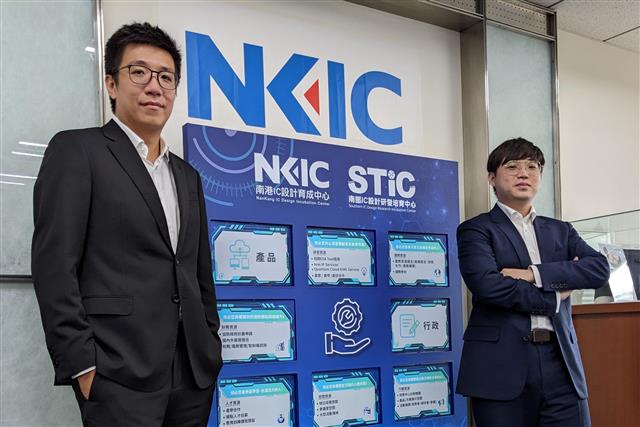
The early division of labor was specific. Chang handled operations and individual device design. Lo, the chief technology officer, handled circuit design; other colleagues worked on packaging and testing. Professors contributed mentorship and angel investment. Alumni helped introduce possible chip-design customers. Before formal registration, the team had worked quietly with incubation resources, including design tools and opportunities to manufacture experimental chips.
That is a crowded cast for an object measured in microscopic dimensions. Chipmaking depends on this sort of coordination. A design must move through tools, manufacturing and validation before its proposed advantages can carry much commercial weight. For Chang’s early team, proving the technology in silicon was a concrete business requirement.
A fingerprint small enough to fit inside a chip
The technical phrase is “physically unclonable function,” mercifully shortened to PUF. Its usefulness comes from manufacturing variation. Two devices can follow the same design while retaining differences that can be used to produce distinct responses. Jmem Tek describes JPUF as a way to derive a chip’s digital fingerprint and support authentication without storing its secret key in nonvolatile memory.
The company also describes error correction and measures to keep key generation reliable over a device’s life. That detail matters to the idea: a useful identity must remain recognizable when the conditions around a device change. A fingerprint that forgets its owner would create a rather unfortunate customer-service department.
Conceptual illustration of the company’s approach. PUF identity is one component of a security system.
Chang has presented the work in terms of ordinary product constraints as well as security. Connected devices may have little space and tight cost limits. Automotive applications introduce lengthy qualification requirements. The company’s early strategy put connected devices before a gradual move into automotive work. The sequence reflects the time it takes to turn a promising capability into an accepted component.
New York asks the awkward question
By June 2024, Chang was presenting Jmem Tek in Manhattan. The Taiwan Demo Day on June 21 formed part of the IP2 Scale Out Program, organized through i2i and the US accelerator EntreCamp. He brought a proposition combining PUF technology with post-quantum cryptography. He also came to learn whether the proposition suited the market.
In describing that experience, Chang emphasized assessing local demand, finding a practical entry point and listening to feedback from mentors, investors and industry contacts. International expansion can sound satisfyingly complete when reduced to a dot on a map. His account dwells on the less photogenic part: determining whether the company’s offering fits the people who might buy it.
“Even high-tech products need to focus on the real needs of customers.”
John Chang, discussing the New York accelerator experience
There is a useful bluntness to the observation. Technical difficulty does not relieve a business of explaining its usefulness. Chang’s finance studies and operational responsibilities sit comfortably beside that view, though the market still gets to decide. A founder can understand the technology thoroughly and have more to learn about the customer.
The company also collected a different form of attention in 2024: it won the Taiwan regional Startup World Cup, earning a place in the San Francisco competition. A regional victory brings visibility and another audience for a pitch. It also gives a young company another occasion to explain why an invisible feature deserves a place in someone else’s hardware.
A future threat, a present timetable
Post-quantum cryptography adds another time horizon to Chang’s work. These are cryptographic approaches intended to resist attacks from future quantum computers. The term describes the protection being developed; it does not mean customers need a quantum computer to use it. Jmem Tek seeks to combine that mathematical protection with identity rooted in physical silicon.
Chang has argued that preparation matters even while practical quantum threats remain a future concern. Information collected today could be targeted for decryption later. For products intended to operate for years, the question of future security can enter a design decision long before the feared machine arrives.
In December 2024, Jmem Tek joined semiconductor accelerator Silicon Catalyst. Chang has described the value in terms of experienced mentors, industry connections and technical resources, particularly for expansion in North America and Europe. His growing network also reaches back to Australia: the University of Queensland lists him as an industry guest lecturer in Information Security Essentials. The student from QUT now has a teaching connection at another Queensland institution.
Brno enters the circuit
On April 17, 2026, Brno University of Technology hosted the launch of Jmem Tek’s European branch. The gathering brought together Taiwanese and Czech representatives from academia, industry and public institutions. The subject was semiconductor security; the setting made visible how many organizations are involved in getting such technology into use.

Chang connected the expansion to work with Brno’s academic community through the Advanced Chip Design and Research Center, established by Taiwan and Czechia in 2024. He described semiconductor talent training in Taiwan and returning to the Czech Republic. The relationship involves the movement of expertise as well as the movement of a company.
The European research and engineering ambition follows a model of Czech design paired with Taiwanese production. Plans include hardware cybersecurity research, integration of post-quantum cryptography into chips, university projects and collaboration with industrial partners. For Chang, Europe has become part of the company’s development strategy, with the proposed Brno center intended to give that strategy a local engineering base.
The groundwork predates the ceremony. A September 2024 online workshop on cybersecurity implementation in chips listed Chang alongside Codasip’s Tadej Murovič. Its program included hardware security, global trends and the approaches of both companies. Two years before the formal launch, there was already a scheduled conversation about how the technology worked.
The next proof belongs on silicon
Another partnership reaches Canada. In March 2026, Quantum eMotion announced support of up to C$600,000 from Canada’s NRC IRAP for research undertaken with Jmem Tek. The combined development project represented more than C$2.5 million in investment. Its purpose was to advance hardware architectures bringing together quantum entropy, device identity and a root of trust.
On May 19, the companies announced a signed consortium agreement. Their proposed Universal Security system-on-chip combines Quantum eMotion’s diode-based quantum entropy source with Jmem Tek’s secure semiconductor capabilities. The agreement sets out work toward a prototype, boards, server appliances and software interfaces. Its project term runs through June 30, 2027.
Those are development commitments, with engineering still to be done. They give Chang’s ambitions a practical timetable and a shared set of responsibilities. From the early research team to international collaborators, his company keeps returning to the same task: making an idea work inside a device that someone else can use.
The scale has changed since the university beginnings. The object at the center remains small. Somewhere inside the chip, a physical difference becomes a way to establish identity. Chang is building the organization around it, one that must earn its own recognition through the much more familiar tests of customers, colleagues and working silicon.
Follow the circuit
More from Chang and the people working with him.