Company Dossier · Femtech
Willow Innovations
The company that looked at a machine unchanged for 160 years, asked "what if it fit inside a bra," and turned that question into a category worth more than half the US breast pump market.
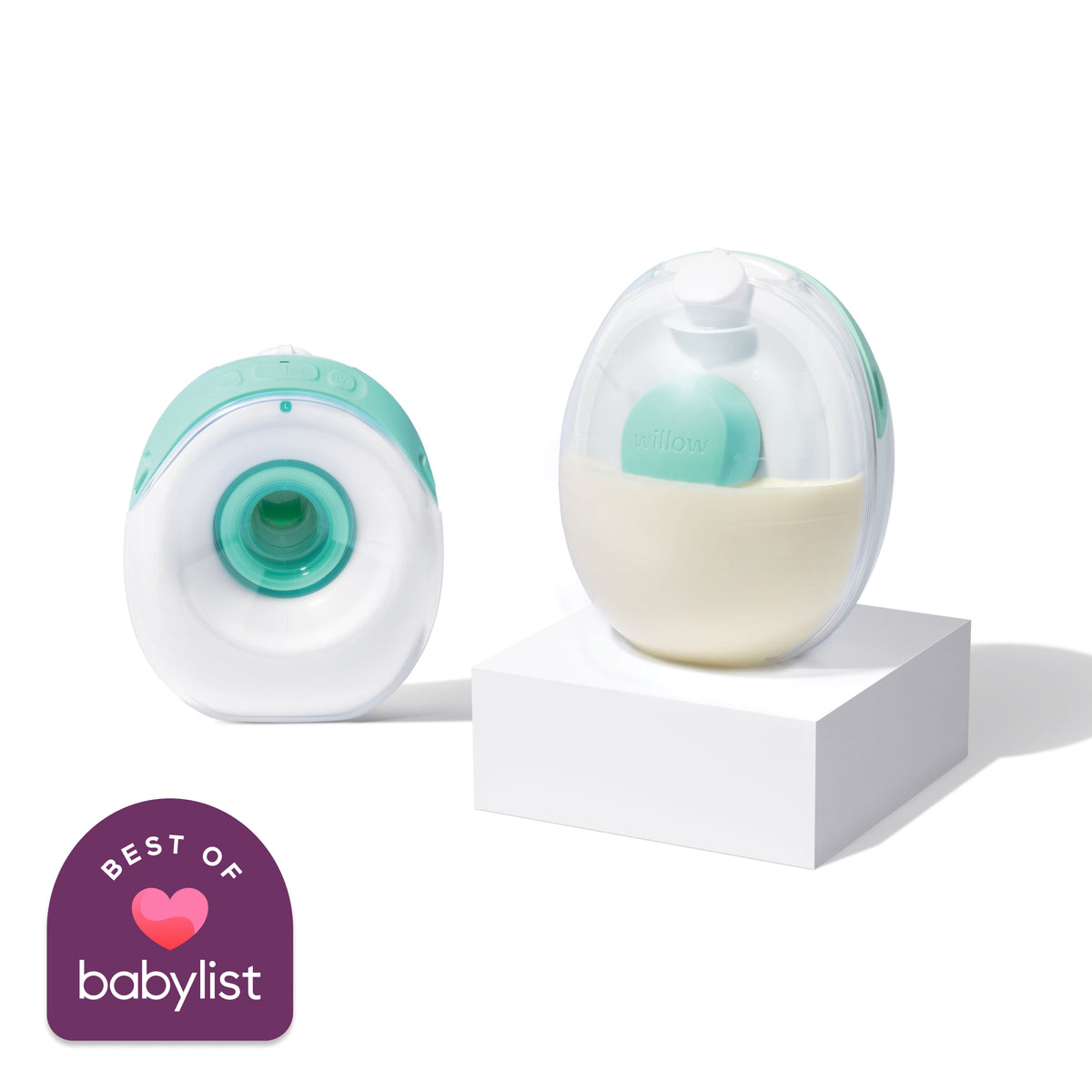
The company that looked at a machine unchanged for 160 years, asked "what if it fit inside a bra," and turned that question into a category worth more than half the US breast pump market.
Here is a fact that should be more surprising than it is: the breast pump is basically a Victorian invention that spent most of its life attached to a wall.
The mechanical breast pump was patented in 1854, and for the next century and a half the design brief was, more or less, "add a motor." You get suction, you get tubes, you get bottles that hang off the body, and you get a cord that ends at an electrical outlet. The whole apparatus assumes the user will sit still, in a private room, doing nothing else. Which is a strange assumption to make about a person who has just added a newborn to their life and, frequently, still has a job.
Willow Innovations was founded in 2014 to disagree with that assumption. The company came out of ExploraMed, the medical-device incubator run by Dr. Josh Makower, a serial inventor whose day job is essentially "notice a category everyone has stopped questioning, then question it." Makower is Willow's founder and chairman; John Chang, the co-founder and chief technical officer, ran the engineering. With design help from IDEO, they set out to build something the industry had treated as roughly impossible: a pump that lived entirely inside the bra, with no cords, no tubes, and no bottle swinging in the breeze.
In 2017 they shipped it. TIME put it on the list of the 25 Best Inventions of the year, which is the kind of validation that is nice for a press release and, more importantly, signals that a jury of non-parents grasped the point. The point is not that the machine is clever - though it is - but that it removes a constraint. A wearable pump does not ask the user to stop being a person for twenty minutes. You can pump and answer email, pump and drive, pump and stand in a meeting wearing a slightly bulkier sweater than usual. This is a small thing and an enormous thing at the same time.
We believe moms deserve better.
There is a version of this business that is just a gadget - a neat trick, a premium accessory, a thing you see at a trade show and forget. Willow is not that, and the reason is a number. Since the wearable pump became available in 2017, the category it created grew to represent roughly 57% of the entire US breast pump market. When you invent a product category and then that category eats more than half of the incumbent market in under a decade, you have not made a gadget. You have made a market, and then taken most of it.
A pump, yes. But increasingly a pump wrapped in software, sensors, and a support team.
The flagship is the Willow 360, and its headline features read like an argument against everything a traditional pump gets wrong. It is 100% leak-proof in any position - meaning a mother can pump lying down at 3am without losing an hour's worth of milk to gravity, a sentence that will mean nothing to some readers and everything to others. It uses "Smart Suction" that detects letdown and automatically shifts from stimulation to expression. And it has sensors that stream real-time milk volume to an app, which you can control from your phone or, if you would like to feel like you are living in the future, from an Apple Watch.
Below it sits Willow Go, the more accessible model - fewer smarts, but a higher capacity of up to 7 oz per side and nine levels of hospital-grade suction. In 2025 the company widened the range again with Willow Sync, an app-controlled pump built to move through insurance channels, and Willow Wave, billed as the first wearable manual pump. The lesson embedded in that lineup is a familiar one for hardware companies that grow up: you do not win by selling one perfect object at one price. You win by covering the range of budgets and needs, then selling the milk bags, coolers, and replacement parts that follow.
100% leak-proof in any position, Smart Suction that detects letdown, real-time milk sensors, and 360 Care lactation support.
Up to 7 oz per side, nine levels of hospital-grade suction, app control, leak-proof up to 45 degrees.
Sync widens access through insurance; Wave is billed as the first wearable manual breast pump - cordless and hands-free.
The part that is easy to miss is the service wrapped around the hardware. Willow 360 buyers get 360 Care - personalized onboarding, sizing help, and direct access to board-certified lactation consultants. This matters because a breast pump that does not fit correctly is not a mildly worse product; it is a product that fails at its one job and makes the user feel like the failure is theirs. By bundling human help with the device, Willow is quietly answering a question a lot of hardware companies get wrong, which is: what is the product? Here the product is the object plus the support, and the support is where the loyalty lives.
Share of the US breast pump market. Willow reports the #1 customer-satisfaction rating among all pump brands - not just wearables.
The origin story is engineering: Makower's incubator, Chang's technology, IDEO's industrial design. The current chapter is arguably more interesting, because it belongs to Sarah O'Leary, who became CEO in January 2024. O'Leary did not arrive as a career device executive. She started in consulting, moved into brand and growth in e-commerce and retail, had her first child in 2018, and spent a year trying to pump and breastfeed while working - which is to say she was a member of Willow's target market before she was its chief executive. A recruiter brought her to the company in 2019. She ran growth, then marketing, then commercial, then the whole thing.
There is a tidy lesson in this, and it happens to be true: the person who lived the problem tends to make better decisions about the product than the person who studied it. O'Leary has been explicit that Willow is "a team built of women innovating for women," and positions it as the only leading US-founded pump brand with that particular claim. Whether that is a durable moat or a marketing line is the sort of thing reasonable people argue about. What is not arguable is that a company selling a product used exclusively by mothers is probably better off being run by someone who has stood in the locked office at lunch, wires everywhere, trying to make it work.
Over $166 million raised - some sources put the all-in figure north of $228M across seven rounds.
The cap table is a who's-who of health investors: NEA and Meritech Capital Partners as long-term backers, with Lightstone Ventures, Perceptive Advisors, and Endeavour Vision joining along the way. The interesting thing about that list is not the names but what their checks imply. For a long time, "women's health" was treated by venture capital as a niche - a polite way of saying "small." Willow raising nine figures to solve a problem that roughly half the population is routinely told to just tough out is evidence that the niche framing was always wrong. Capital follows conviction, and the conviction here is that the old status quo was never actually acceptable, merely unquestioned.
Now for the part that reads like a business-school case study written by someone with a sense of humor. In 2023, Willow sued Elvie - its closest rival, a UK femtech pioneer - alleging infringement of seven US patents. Elvie countersued over four of its own. This is the normal choreography of two companies that have converged on the same good idea and would each prefer the other stop having it.
Then in March 2025, Elvie moved into administration - the UK equivalent of bankruptcy - and Willow bought its assets. The cross-litigation, obviously, came to a close, because it is difficult to sue a company you now own. What Willow got was Elvie's product portfolio: not just breast pumps but smart pelvic-floor trainers and sleep solutions, plus a second iconic brand and global distribution. What it described was bigger than a product grab. Willow framed the deal as the first step in becoming a platform - a single trusted brand for postpartum care, so mothers are not forced to assemble their own toolkit from a dozen fragmented products.
Pumping IS breastfeeding.
There is a quiet ambition in that "platform" language. It is one thing to sell the best wearable pump. It is another to decide that the pump was only ever the entry point, and that the real business is owning the postpartum period - the feeding, the recovery, the sleep, the tracking. Whether Willow can execute on that is the open question that will define its next decade. Acquiring your fiercest competitor's assets at the moment they run out of runway is, at minimum, an aggressive way to start.
Created inside Josh Makower's ExploraMed incubator to reinvent the breast pump.
The world's first all-in-one, in-bra pump lands on TIME's 25 Best Inventions list.
An additional $20M lifts cumulative capital to roughly $100 million.
NEA, Meritech, Lightstone and Perceptive back further innovation; Gen 3 debuts at CES.
A more accessible model launches; a $26.8M extension lifts total Series C to $81.8M.
Sarah O'Leary is elevated to CEO; the smart, leak-proof Willow 360 arrives with 360 Care.
Willow acquires Elvie's assets and launches Willow Sync and the manual Willow Wave.
Wearable, in-bra breast pumps - Willow 360, Willow Go, Willow Sync and the manual Willow Wave - plus feeding and postpartum accessories and a companion app.
Willow was founded in 2014 out of ExploraMed by Dr. Josh Makower (Chairman) with co-founder and CTO John Chang. Sarah O'Leary became CEO in January 2024.
It was the first all-in-one pump worn entirely inside the bra, with no cords or tubes. The Willow 360 is 100% leak-proof in any position and streams real-time milk data to an app and Apple Watch.
Yes. In March 2025 Willow acquired the assets of UK femtech company Elvie as Elvie entered administration, ending prior patent litigation and combining two brands into one platform.
Over $166M (some sources cite $228M+ across seven rounds) from investors including NEA, Meritech, Lightstone Ventures and Perceptive Advisors - most recently a Series D in 2022.
Sources include Willow press releases (onewillow.com), PR Newswire, MobiHealthNews, TechCrunch, Femtech Insider, Crunchbase, Tracxn and IDEO. Figures such as revenue and cumulative funding are approximate and reflect publicly reported estimates for a private company.