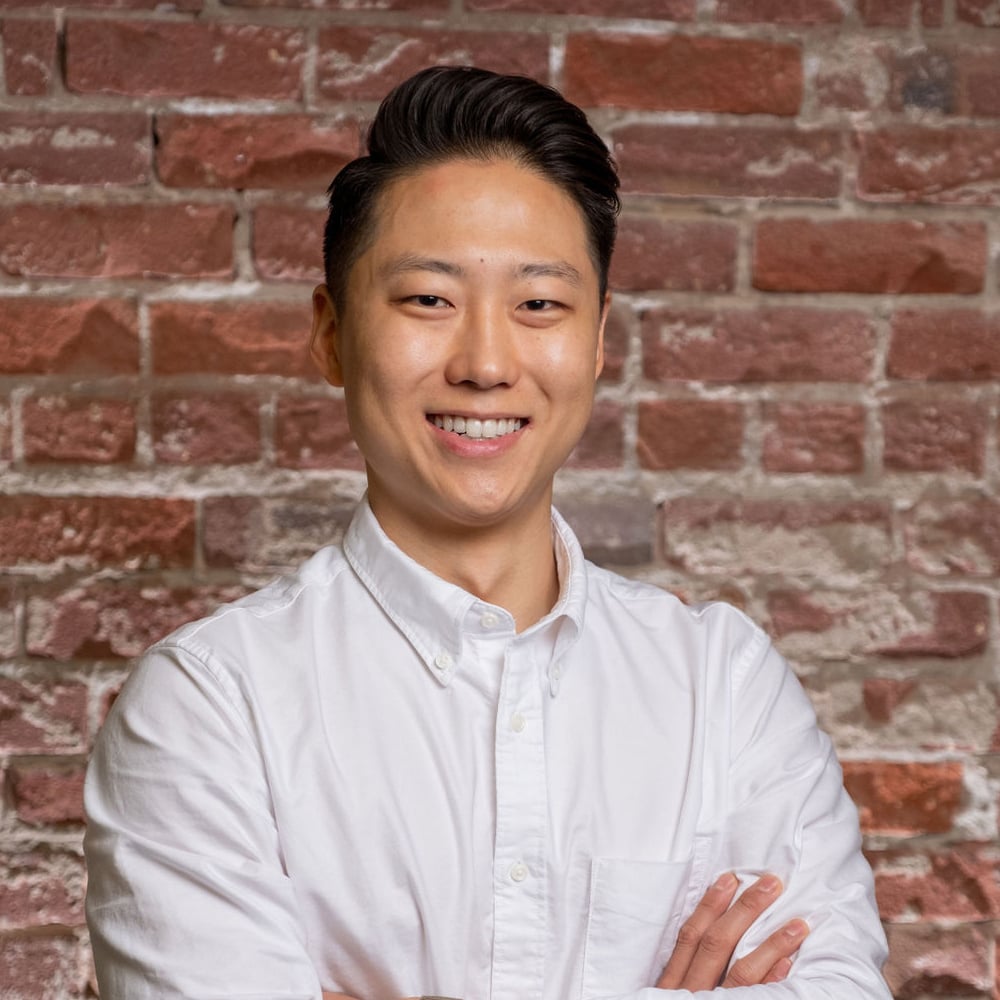
The CPA Who Couldn't Leave - Until He Found a Reason to Stay
At Ernst & Young, Jin Chang spent his early career doing what thousands of freshly minted accountants do: working through stacks of audit evidence, reconciling spreadsheets, chasing clients for documents that should have arrived last Tuesday. He was good at it. He found it excruciating.
By his own account, Chang tried to quit the accounting industry multiple times. Not once. Multiple times. The tedium of grunt work - the copy-paste loops, the fragmented software stack, the endless email threads - had the cumulative effect of making a profession that is, as he now says, "quite noble and important for the business world," feel like anything but.
What kept pulling him back wasn't inertia. It was a specific irritation: the gap between what the work could be and what the tools were. Every senior auditor Chang worked with eventually got interesting work - the judgment calls, the client relationships, the interpretation of complex risk. The problem was the mountain of procedure standing between a new practitioner and that higher-altitude work.
It's only getting worse. I would call it existential.
- Jin Chang on the accounting profession's talent crisisChang left EY in 2017 and tried his hand at a blockchain-era tax startup, Lydia Tax. Then he joined Atrium - the AI-powered legal firm co-founded by Justin Kan (of Twitch fame) - as Chief of Staff to the CEO. That's where he met Chris Szymansky, who would become Fieldguide's CTO. When Atrium shut down in early 2020, the two didn't waste the moment. They started Fieldguide.
The timing looks prescient in retrospect. Fieldguide was built as AI-native from day one - years before ChatGPT made "AI-native" a marketing category. Chang was drawing on hard-won practitioner insight, not hype cycles. He knew exactly where the bottlenecks lived because he had personally sat inside them for years.
"Instead of offshoring the work, our AI agents execute the first pass of the work, then humans come in to review the results. What we are leaving for expert humans is to interpret the results - and free up the time so that they can do more value-added work, which is building trusting client relationships."
Fieldguide's pitch isn't that AI replaces accountants. It's that AI absorbs the parts of accounting that make accountants want to leave - which, as of 2020, was working very well. The U.S. profession had already seen a 300,000-person exodus over two years. Accounting majors were declining 7.8% annually. Three-quarters of AICPA members were close enough to retirement age that the industry's pipeline was basically a category-five accounting emergency.
Chang wasn't just building software. He was building infrastructure for a profession that was quietly hemorrhaging the next generation of practitioners.
From Fragmented Stack to Operating System
Fieldguide's product strategy is deliberately end-to-end. Where most audit software solves one slice - document management here, client request tracking there, workflow here - Fieldguide built for the full engagement lifecycle. Client onboarding, evidence collection, control testing, report drafting, and quality review, all in one system with AI running through each layer.
The platform's agentic AI features - what Fieldguide calls "Field Agents" - handle the repetitive, data-intensive stages of an audit engagement autonomously. The AI does the first pass. The human reviewer decides what it got right. This architecture - AI-executes, human-reviews - is a meaningful departure from legacy software that just digitized paper workflows.
Chang describes the existing landscape as "a fragmented technology stack." Fieldguide is the argument against fragmentation: a single platform that replaces an archipelago of tools that don't talk to each other. In May 2026, Fieldguide became the first AI audit platform to achieve AIUC-1 Certification - a marker that matters a great deal to the compliance-obsessed firms that run on it.
The client roster tells the story: KPMG, RSM US LLP, Baker Tilly, BDO, CBIZ, Wipfli, Mazars, Aprio. Nearly half of the Top 100 U.S. accounting firms. These are not early-adopter boutiques experimenting with a startup. These are major institutions, and they are standardizing on Fieldguide.
The firms that embrace AI not merely as technology - but as a partner that amplifies an auditor's expertise - will expand the capabilities of the profession.
- Jin ChangHow $125 Million Got Raised
The $75M Series C announced in February 2026 was led by Goldman Sachs Alternatives, with participation from Geodesic and existing investors Bessemer Venture Partners, 8VC, and Thomson Reuters. The round pushed Fieldguide's total funding to $125M and its valuation to $700M.
Goldman's growth equity team does not bet on audit software startups speculatively. Their backing is an indicator of something more structural: the belief that Fieldguide is becoming category-defining infrastructure for a $230B industry that has historically resisted software. The proceeds are earmarked for geographic expansion into Asia, the Middle East, and Europe, along with significant hiring in engineering and customer-facing roles.
Chang's plan is expansion - and not just market share expansion. He is pushing into the international accounting markets where the same talent-shortage dynamics are playing out, and where Fieldguide's platform has an argument that translates across regulatory contexts.
Operator. Mentor. First-Generation Founder.
Chang describes himself as a first-generation founder - meaning he navigated early career without a roadmap handed down through a family of founders or investors. His reference points come from books and podcasts: Ben Horowitz's What You Do Is Who You Are, Simon Sinek's Leaders Eat Last, the Starting Greatness podcast by Mike Maples, the 20VC podcast with Harry Stebbings. The Quest by Justin Kan - his former boss at Atrium.
He is also a mentor. In addition to running Fieldguide at scale, Chang has invested time in mentoring fellow technology startup CEOs and founders globally. This is not a perfunctory LinkedIn credential. Multiple profiles and award citations note it as a defining characteristic - the person who, having navigated the terrain, turns around and helps others find the path.
His team at Fieldguide is 200 people, about 25% of them former auditors and practitioners - people who lived the problem before joining the solution. This is deliberate. Chang's hiring philosophy prioritizes "Silicon Valley AI engineering" combined with "subject matter expertise directly from the field." The assumption is that neither half alone builds the right product.
The profession recognized what was happening. Accounting Today's Top 100 Most Influential People in Accounting (2024). CPA Practice Advisor's "20 Under 40" Influencer - 2021, 2023, 2024. Five consecutive years winning the CPA Practice Advisor Technology Innovation Award. The AICPA conferences invite him as a speaker on AI, audit innovation, and professional services transformation.
We will see less burnout in the industry, because the work does get interesting at the more senior levels.
- Jin ChangThat quote contains the whole argument. Chang is not trying to eliminate the accounting profession. He is trying to make the first decade of it worth staying through - so that the people with the judgment and expertise that the field actually needs don't walk out the door before they reach the interesting work.
He came close to being one of those people. Instead, he became the one trying to make sure the next generation doesn't have to make the same choice.
In His Own Words
"Auditing, on its own, is quite noble and important for the business world."
"We are replacing a fragmented technology stack."
"Practitioners needed more than just incremental improvements to existing tools - they needed a fundamental reimagining."
"We built Fieldguide to support the people doing this work, and to solve a structural problem in the profession."
"Technology-enabled services are no longer just a competitive advantage - they're becoming a fundamental requirement."
"The future of audit and advisory is complicated, but brighter than ever."