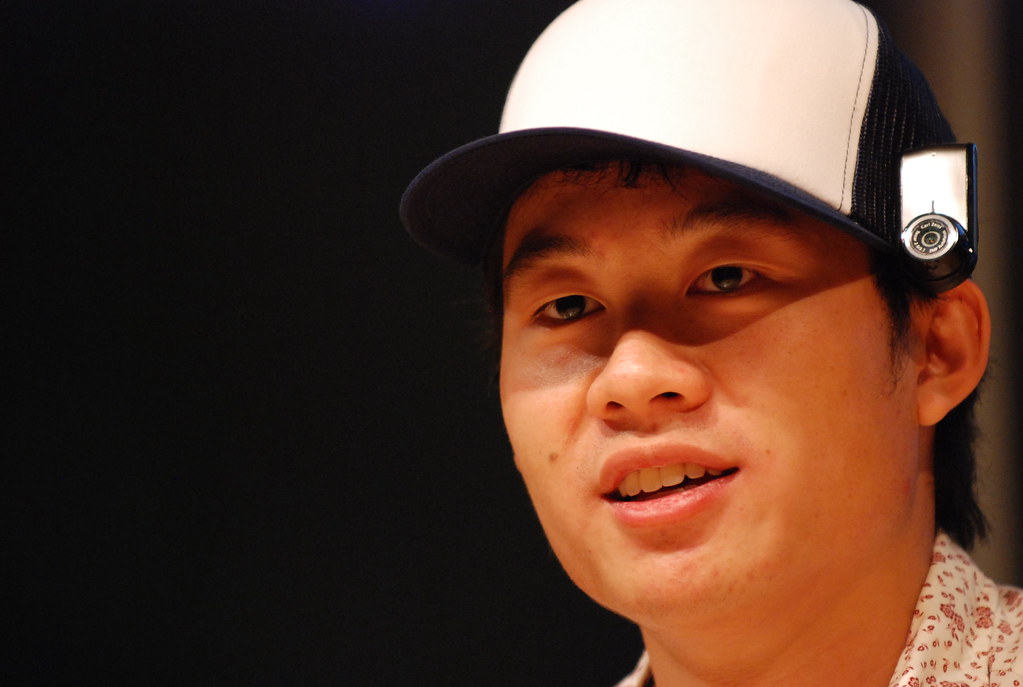
In 2007, Justin Kan strapped a webcam to his head and started broadcasting his life. Everything. Eating. Walking. Sleeping. Showering. He called it lifecasting, and most people called it absurd. "It turns out no one wants to see me take a shower and walk around town, talking to other dudes," he admitted later. But that weird experiment wasn't the point. The infrastructure he built to stream himself became Justin.tv, which evolved into Twitch, which sold to Amazon for $970 million.
That's the headline version. The one that sounds like pure Silicon Valley fairy tale. But Kan's story is messier, stranger, and more instructive than the tidy arc suggests. He's a Yale physics and philosophy major who sold his first startup on eBay for $258,100. A serial founder who built seven companies, sold two for hundreds of millions, and watched another spectacular failure drain $75 million before shutting down. An entrepreneur who became a near-billionaire and was still unhappy. A tech executive who quit drinking, started therapy, and went public about it all.
The Origin Story Nobody Expected
Born July 16, 1983 in Seattle to Chinese immigrant parents, Kan grew up with two brothers who both became entrepreneurs. Daniel Kan would go on to found Cruise, the self-driving car company. But first, Justin headed to Yale, where he pursued the unusual combination of physics and philosophy - analytical rigor meets existential questioning. That duality would define his career.
In 2005, fresh out of Yale, Kan joined the inaugural batch of Y Combinator with Kiko Calendar, a web-based calendar app. This was pre-Google Calendar dominance, when a simple scheduling tool felt revolutionary. When Kiko couldn't compete, Kan did something unconventional: he sold the company on eBay. Not through an acquisition, not a quiet shutdown - literally auctioned it off like furniture. Final price: $258,100. It was bizarre. It was brilliant. It was the first signal that Kan didn't follow the playbook.
The Camera That Changed Everything
What do you do after selling a calendar app on eBay? If you're Justin Kan in 2007, you mount a webcam to your head and stream your entire existence to the internet. This was before YouTube had figured out monetization. Before Instagram. Before anyone used "content creator" as a job title. The concept of personal livestreaming didn't exist because the infrastructure didn't exist.
So Kan built it. Justin.tv launched as a platform where anyone could broadcast live video. It sounds obvious now - we live in a world of Instagram Live, TikTok streams, Twitch marathons. But in 2007, this was alien. The site grew to 30 million monthly users, became one of the largest live video platforms globally, and created an entirely new category of media.
Inside that platform, a specific vertical kept exploding: gaming. People were broadcasting themselves playing video games, and thousands of others were watching. Not playing - watching. Traditional media executives thought it was insane. Why would anyone watch someone else play a game? But Kan saw the numbers. In 2011, he spun out the gaming section into its own platform. He called it Twitch.
The Pivot That Built an Empire
- Justin.tv launched in 2007 as a lifecasting experiment
- Gaming content unexpectedly dominated viewership
- Twitch spun out as dedicated gaming platform in 2011
- Amazon acquired Twitch for $970M in August 2014
- Justin.tv shut down to focus resources on Twitch
- Twitch became the default platform for gaming culture
The Other Ventures: Wins and Spectacular Losses
Kan didn't wait for the Twitch exit to start building again. In 2011, he launched Socialcam, a mobile video sharing app that rode the smartphone boom. Autodesk bought it for $60 million in 2012. Two exits before 30. The pattern seemed unstoppable.
After Twitch sold to Amazon, Kan became a partner at Y Combinator, the accelerator that had launched his career. He spent three years advising hundreds of startups, investing in companies like Reddit, Cruise, Ramp, Mercury, and Rippling. In 2017, he left to start his own incubator, Zero-F, and to co-found Atrium, a legal tech startup that promised to reinvent how startups access legal services.
Atrium raised $75 million. It had Kan's name, pedigree, and network behind it. And in March 2020, it shut down completely, laying off over 100 employees. The autopsy was brutal and public. Lack of product-market fit. A confusing two-company structure that created internal conflict. Operational costs that made profitability impossible. And, as Kan admitted with rare candor: he had no real passion for legal tech.
That failure taught Kan more than his successes. He went public with the lessons: don't build in spaces you don't care about. Don't ignore unit economics. Don't assume your reputation guarantees product-market fit. It was a masterclass in transparency that most founders avoid. When you've sold companies for nearly a billion dollars, admitting a $75 million mistake takes courage.
The Current Chapter: Web3, Music, and What's Next
Kan didn't retreat after Atrium. In 2020, he co-founded Goat Capital with Robin Chan, a San Francisco-based VC firm with over $100 million under management, focusing on early-stage investments in technology, healthcare, and gaming. He's now a general partner, investing in the next generation while building his next ventures.
In late 2021, he launched Fractal, a Solana-based NFT marketplace for gaming. It raised $35 million in seed funding from Paradigm and Multicoin Capital. By 2024, Fractal had rebranded to Stash and pivoted from NFTs to a direct-to-consumer platform for game developers, offering integrated payments and customizable webshops. He also co-founded Rye, a Web3 commerce protocol that raised $14 million from Andreessen Horowitz's crypto arm.
In 2026, Kan entered a completely new domain: music. He launched Thin Ice Entertainment with artist manager Nicholas Parasram, offering artist and producer management, publishing, distribution, and an "incubation lab" to help clients bridge emerging technologies. It's Kan doing what he does best - seeing where infrastructure can unlock new creative economies.
Career Timeline
The Philosophy: Pivots, Coins, and Gut Instincts
"My entire career has been pivoting from company to company," Kan once said. "Some people call it lack of planning or direction, I call it flexibility and good improvisational skills." That's the key. He's not chasing a single grand vision - he's following what's working, killing what isn't, and staying honest about the difference.
His advice on decision-making: flip a coin. If you regret the way it lands, go with your gut. It's a simple heuristic that cuts through overthinking. He applies the same pragmatism to work-life balance: "I try to work the hardest I can without burning myself out. It's not that I think working all the time is the key to success." After watching too many founders implode, he knows intensity without sustainability is just slow-motion failure.
Justin Kan's Startup Principles
- Everything you build will likely be killed or iterated
- Great products are created by incremental improvements, not grand visions
- External circumstances you can't control will affect outcomes - be OK with that
- Join startups to access jobs you're unqualified for - that's where you learn fastest
- Flip a coin for decisions; if you regret the result, follow your gut instead
- Work intensity matters, but burnout destroys everything
- Show gratitude to people regularly - it's the foundation of lasting relationships
The Part Nobody Talks About: What Success Costs
Here's what makes Kan unusual in Silicon Valley: he talks about being unhappy after the exits. Selling Twitch for nearly a billion dollars didn't fix his anxiety. It didn't deliver fulfillment. "I sold Twitch for $970M and was still unhappy," he's said publicly on podcasts and YouTube. That kind of transparency is rare when the tech world celebrates wealth as the ultimate scoreboard.
Kan used alcohol to manage stress for years. He resisted therapy, like a lot of founders who mistake self-reliance for strength. Eventually, he quit drinking and started seeing a therapist, and then did something even rarer: he went public about it. Not in a sanitized press release, but in real conversations about the hedonic treadmill, about achievement not leading to lasting happiness, about the importance of gratitude over accomplishments.
He now runs a YouTube channel where he posts weekly content about startups, investing, his DJ career, and his journey toward fulfillment. He has a podcast and a Substack newsletter called "The Quest Digest." He shares throwback stories, life advice, and behind-the-scenes content. It's not polished founder mythology - it's messy, honest exploration of what it means to build companies without losing yourself.
The Fun Facts That Define the Journey
Kan is also a DJ, weaving music into his creative identity beyond tech. His brother Daniel founded Cruise, making entrepreneurship a family trait. Despite founding Twitch, Kan openly admits he's not a hardcore gamer - he built the platform by understanding the audience, not being the audience. His old Facebook handle is still "thecoreissick," a relic of early internet culture he never bothered changing.
He studied physics and philosophy at Yale, proof you don't need a CS degree to build transformative tech companies. He's invested in over 100 startups, many of which became unicorns. He coined the term "lifecasting" years before influencer culture existed. And he's one of the few tech executives who publicly shares his sobriety journey, offering rare transparency in an industry that often glorifies excess.
Connect With Justin Kan
The Bottom Line
Justin Kan is what happens when you combine technical skill, timing, resilience, and radical honesty about the gaps between achievement and fulfillment. He wore a camera on his head when nobody asked him to. He built Twitch before gaming streaming was obvious. He failed spectacularly with Atrium and shared every lesson publicly. He made a fortune and admitted it didn't make him happy, then did the work to figure out what would.
Now he's a general partner at Goat Capital, co-founder of Stash and Rye, co-founder of Thin Ice Entertainment, a content creator, a DJ, and one of the most candid voices in tech about what it actually takes to build companies - and what it costs. His career is a masterclass in pivoting, failing forward, and staying curious even after you've already won.
The guy who livestreamed his life is still broadcasting. He's just figured out what's worth sharing.