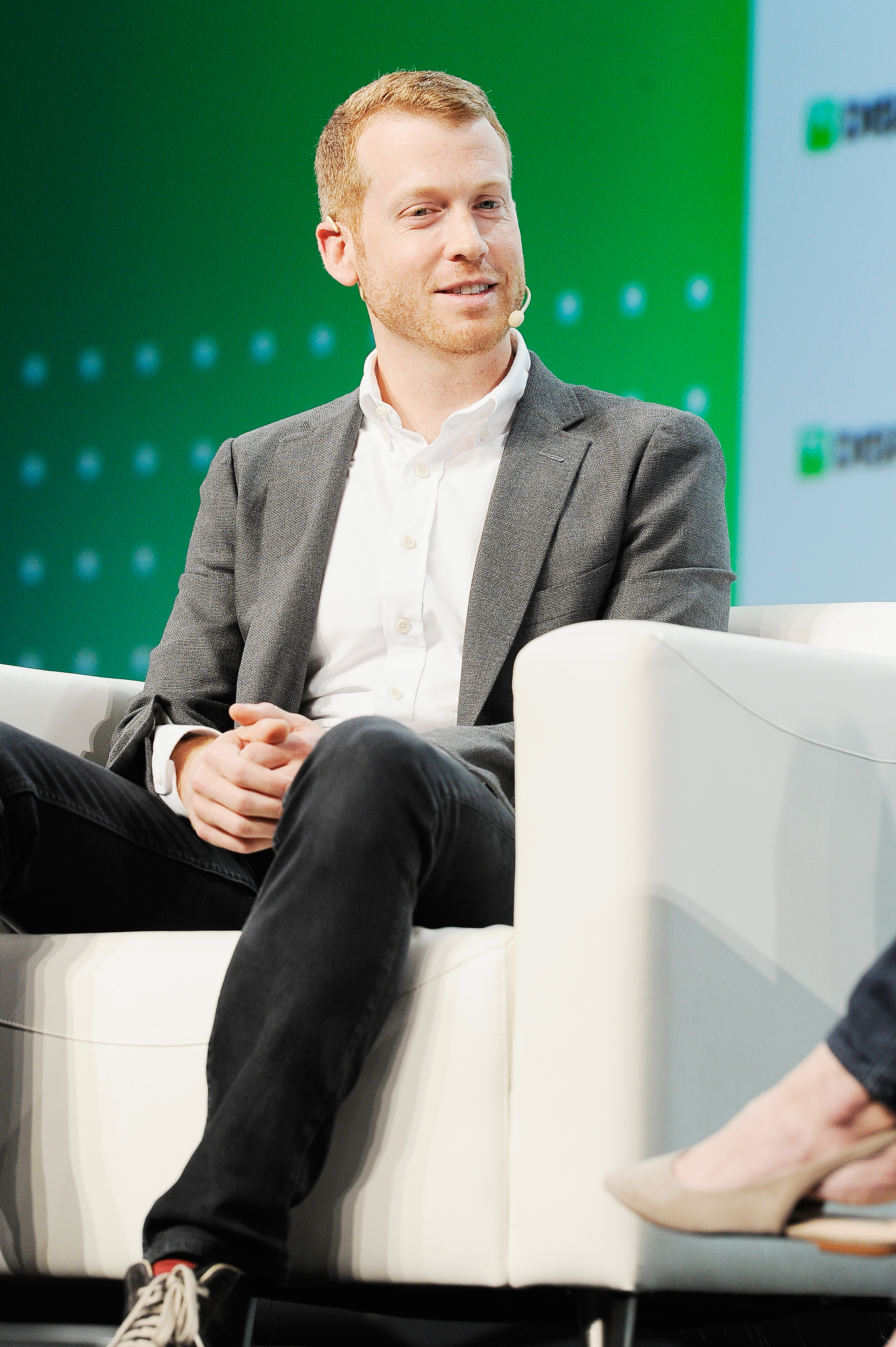
The Kansas Kid Who Refused to Wait
Most 14-year-olds in Kansas City spend their allowance on video games. Kyle Vogt spent his rigging a Power Wheels car with cameras and teaching it to follow highway lane lines. This wasn't a science fair project. This was 1999, five years before the DARPA Grand Challenge would make autonomous vehicles a Thing.
The detail matters because Vogt's entire career is a study in not waiting for permission. Not waiting for DARPA to legitimize self-driving research. Not waiting for a degree from MIT (he left junior year). Not waiting for Twitch to become profitable before spinning it off from Justin.tv. Not waiting for autonomous vehicles to be legal before founding Cruise. Not waiting for home robots to be a category before raising $150 million for The Bot Company.
He builds things, then builds the world around them.
Three Acts, Three Unicorns
By any metric, founding one billion-dollar company is rare. Two is exceptional. Three makes you either lucky or onto something fundamental about how technology adoption works.
Act One: Streaming Before Streaming Was Cool
In 2007, Vogt and his Justin.tv co-founders did something ridiculous: they strapped a camera to Justin Kan and live-streamed his entire life. The technical challenges were absurd - mobile bandwidth was terrible, encoding was painful, and literally no one had built infrastructure for this. Vogt, the team's technical anchor, solved complex coding challenges and designed camera systems that made it possible.
Four years later, they noticed something: people wanted to broadcast themselves playing video games. Not revolutionary on its face, except it was. They spun off Twitch in 2011. Amazon acquired it for $970 million in 2014.
The pattern: see what users actually want, not what you think they should want. Build for that.
Act Two: Self-Driving Cars (The Hard Way)
In 2013, Google had the autonomous vehicle market cornered. Waymo was well-funded, well-staffed, and well-ahead. Vogt founded Cruise anyway.
The bet was different. Google wanted to build perfect self-driving systems from scratch. Vogt wanted to retrofit existing vehicles, iterate faster, and get to market sooner. He went through Y Combinator with a hardware company (audacious). He focused on urban environments, not highways (harder). He sold to GM for over $1 billion in 2016 (vindication).
As CEO from 2022, Vogt pushed Cruise to deploy robotaxis in San Francisco. Real cars. Real streets. Real customers. It worked until it didn't - a 2023 incident involving a pedestrian led to California DMV suspension and Vogt's resignation. The technology was real. The regulatory environment wasn't ready.
The Cruise Chapter: A Crash Course in Hubris and Hardware
Cruise deployed actual autonomous vehicles carrying actual passengers on actual San Francisco streets. For a minute, the future arrived. Then came October 2023: a pedestrian struck by a human-driven car landed in front of a Cruise robotaxi, which dragged her 20 feet. California pulled the plug. Vogt resigned in November.
Lesson learned: Moving fast and breaking things works great in software. In physical-world robotics, breaking things breaks people.
Act Three: The Bot Company (Robots That Actually Help)
Six months after leaving Cruise, Vogt launched The Bot Company with $150 million in seed funding. The pitch: household robots that handle the thousand small tasks between doing dishes and doing laundry. Putting Legos in bins. Organizing closets. Tidying rooms. Tasks too varied for appliances, too tedious for humans.
The technical approach borrows from his Cruise days: combine mobility, manipulation, and large language models. Tell the robot "put the Legos in the blue bin" and it understands context, identifies objects, navigates space, and executes. No programming. Natural language.
By March 2025, The Bot Company had raised another $150 million at a $2 billion valuation. No product released. Just Vogt's track record and a team that includes ex-Tesla AI lead Paril Jain and former Cruise engineers. By 2026, rumors of another $250 million round at $4 billion-plus valuation.
It's audacious. It's also exactly the Vogt playbook: identify a problem everyone assumes is decades away, treat it like it's solvable now, hire brilliant people, raise enough capital to survive multiple pivots, and ship something tangible.
The Vogt Formula
- Identify a future that feels inevitable but distant
- Build the technology now, not later
- Focus on real-world deployment, not lab demos
- Accept that regulation and society lag behind technology
- Iterate until the world catches up
- Sell or scale when the timing's right
The Accidental Vegan Billionaire
In 2016, the same year GM acquired Cruise, Vogt and his wife Tracy founded Charlie's Acres, a 32-acre farm animal sanctuary in Sonoma. They rescue cows, pigs, chickens, goats - animals destined for slaughter.
Vogt went vegan the same year. The reason: cognitive dissonance. Hard to justify eating animals while spending weekends saving them. It's a rare glimpse into Vogt's internal logic - when the data contradicts the behavior, change the behavior.
Charlie's Acres isn't a side project. It's a commitment. Vogt doesn't do performative anything. If he's building robots, he's raising $150 million and hiring ex-Tesla engineers. If he's rescuing animals, he's buying 32 acres and restructuring his diet.
What Makes Vogt Different
Silicon Valley has no shortage of serial entrepreneurs. What separates Vogt is the domain variance. Streaming video, autonomous vehicles, and household robots share almost nothing technically. Different hardware, different software stacks, different regulatory environments, different customer bases.
The through-line isn't technical. It's behavioral. Vogt identifies markets where the technology exists but the deployment doesn't. Then he deploys it.
Most founders optimize for product-market fit. Vogt optimizes for reality-market fit. He builds things that work in the real world, not in demos. Justin.tv streamed 24/7, not in controlled environments. Cruise deployed in San Francisco, not test tracks. The Bot Company will ship physical robots into actual homes, not research labs.
This creates spectacular failures (Cruise's regulatory disaster) and spectacular successes (Twitch's $970 million exit). But it also means Vogt's companies push industries forward faster than they'd move otherwise.
The MIT Dropout Who Never Needed the Degree
Vogt attended MIT to study computer science and electrical engineering. He participated in the 2004 DARPA Grand Challenge, co-leading a team that retrofitted a Ford F-150 with drive-by-wire sensors. He interned at iRobot, the company behind Roomba. He was on track for a prestigious degree and a prestigious career.
Then he left. Junior year. To join Justin.tv.
The calculus was simple: the learning rate outside school exceeded the learning rate inside. MIT teaches you to think. Justin.tv taught him to ship. One is theoretical, the other is operational. Vogt chose operations.
It's the same choice he's made repeatedly. At Cruise, he could have built incremental improvements to existing systems. Instead, he deployed robotaxis. At The Bot Company, he could have started with narrow tasks (dishwashing, laundry). Instead, he's building general-purpose manipulation.
Vogt doesn't optimize for safety. He optimizes for impact.
What Happens Next
The Bot Company is Vogt's declared endgame. After selling Twitch and Cruise, he's stated publicly he'll never sell another company. This one's built to last.
The vision extends beyond household chores. Vogt plans to advocate for regulatory frameworks around domestic robots - safety standards, interoperability requirements, baseline certifications. He's learned from Cruise that building the technology isn't enough. You have to build the ecosystem.
If it works, The Bot Company becomes the platform for home robotics the way iOS became the platform for mobile apps. If it doesn't, Vogt will have spent $150 million (and counting) on a very expensive lesson about the difference between autonomy on streets and autonomy in living rooms.
Either way, it won't be boring.
Fun Facts & Strange Specifics
- Competed in two seasons of BattleBots as a teenager - robots fighting robots before robots drove cars
- Interned at iRobot (makers of Roomba) before founding a company that might replace Roomba
- Purchased San Francisco's most expensive home in 2016 at age 30
- Charlie's Acres sanctuary rescues farm animals across 32 acres in Sonoma
- Has 60.6K followers on Twitter/X (@kvogt) where he occasionally tweets about robots
- Grew up in Johnson County, Kansas, attending Olathe and Shawnee Mission public schools
- One of the few people to found three separate billion-dollar companies
- The Bot Company raised $150M without releasing a single product - purely on Vogt's track record
- Went vegan in 2016 after realizing the irony of eating animals while rescuing them
- Never completed his MIT degree but probably learned more dropping out than staying in
The Verdict
Kyle Vogt is what happens when raw technical talent meets strategic impatience. He doesn't wait for markets to mature. He doesn't wait for competitors to validate ideas. He doesn't wait for perfect conditions.
He builds the future, ships it, and deals with the consequences. Sometimes that means a $970 million acquisition. Sometimes that means a regulatory shutdown and a resignation. Sometimes it means a $2 billion valuation on vaporware.
But it's never boring. And in an industry full of incrementalism disguised as innovation, Vogt remains one of the few founders actually trying to change how the world works.
The Bot Company will either revolutionize household labor or become a very expensive cautionary tale. Either way, it's vintage Vogt: ambitious, technically audacious, and entirely unwilling to wait for permission.
Place your bets accordingly.