Jimmy Rojas had enough money for one college application. He chose MIT. As admissions strategies go, this left remarkably little room for a second opinion. He had spent a year after high school working, helping his family and learning English from books and music. The application carried an ambition that had begun much earlier, in Costa Rica, watching an astronaut on his grandmother’s television.
Franklin Chang-Díaz had gone to MIT. For a boy of about nine, that was a useful piece of navigational information. Years later, Rojas would make it to the same institution, work on satellite propulsion and eventually turn toward hydrogen. The destination changed; the interest in how engineering could affect the world survived the journey.
A long way from the coffee harvest
Rojas grew up picking coffee for a living and became one of the first people in his family to finish high school. His education required a year of preparation before an American university could even become a possibility. Saving money and learning another language were part of the engineering problem, although neither came with a laboratory.
At MIT he earned bachelor’s degrees in mechanical engineering and nuclear engineering. In 2015, the nuclear science and engineering department awarded him its Irving Kaplan Award for academic achievement by a junior. The following year, he received the Roy Axford Award for achievement by a senior. There was evidence of sustained academic work behind the improbable application.
Space also remained a practical interest. His undergraduate research on carbon substrates for satellite propulsion contributed to patented technology that became part of Accion Systems’ work. He had encountered a consequential possibility: research could become something a company actually sold. Entrepreneurship gave an experimental result a life beyond the university.
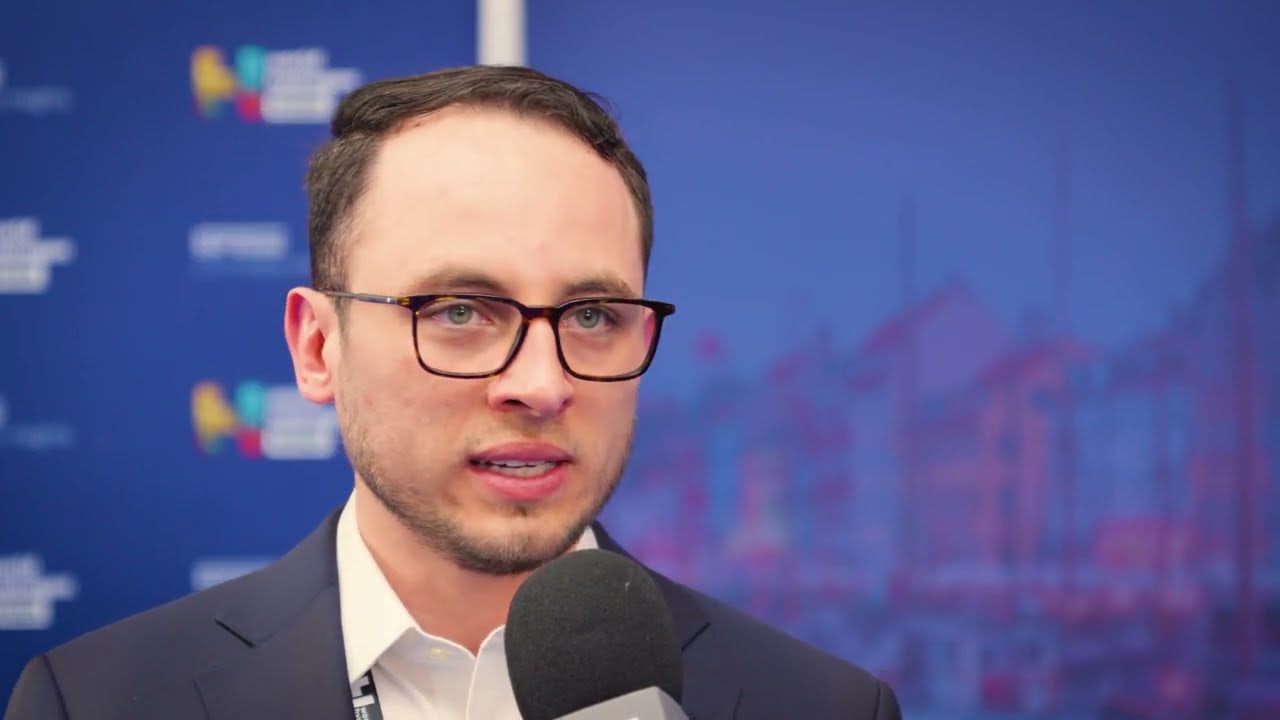 ▶ Watch the interview
The student who kept coming back
Stanford followed MIT. Rojas’s graduate education included master’s degrees in mechanical engineering and management science, and a mechanical engineering doctorate completed in 2021. His doctoral work concerned hydrogen production and energy systems, with Arun Majumdar as his adviser.
He took Stanford Climate Ventures, returned to take it again, became a teaching assistant, then continued attending for enjoyment. Most students eventually discover a reason to stop going to class. Rojas appears to have needed a graduation ceremony.
His appetite for learning could also require a plane ticket. When his research needed a computational technique unfamiliar to both him and Majumdar, he went to Seoul to learn it from a professor there. Majumdar’s assessment was direct: “Jimmy will do whatever it takes to solve a problem.” Even while developing his company, Rojas was still trying to finish a research paper.
Those episodes help explain the range of his preparation. Mechanical engineering, nuclear engineering, management and entrepreneurship each ask a different question about the same proposed invention. Can it work? What does it require? Who would pay for it? Rojas had put himself in rooms where all of those questions were being asked.
April 2020: a company built around the factory
Before founding EVOLOH in April 2020, Rojas evaluated hydrogen businesses in venture capital, including work at Baruch Future Ventures. Looking at potential investments gave him a view across competing approaches. It also gave him repeated opportunities to decide that something essential remained unresolved.
His eventual company focused on manufacturing electrolyzer stacks, the electrochemical assemblies that split water to produce hydrogen. The industrial ambition was deliberately practical: use available materials, make the assemblies quickly and avoid turning every installation into an elaborate custom engineering exercise.
In a 2023 interview, Rojas described combining alkaline chemistry with design lessons from fuel cells and manufacturing techniques borrowed from adjacent industries. He also described a design intended to accommodate improvements in membranes over time. The company could keep improving a component without requiring its entire manufacturing argument to depend on one permanent winner.
The installation goal he described was equally physical: a stack that a single mechanic could move into place using a standard forklift. The small detail belongs beside the chemistry. Size, handling and the tools required on site affect how equipment enters a project, long after the laboratory has established that it works.
This was an ambitious use of ordinary things. Steel, plastic and aluminum feature in EVOLOH’s approach. Its investor Engine Ventures describes the company’s central challenge as making low-cost stacks through a comprehensive manufacturing system. For Rojas, the factory belongs in the invention from the beginning.
- 01Available materialsSteel, plastic, aluminum
- 02Continuous productionRoll-to-roll electrodes
- 03Stack assemblyThe hydrogen-making core
- 04Plant integrationEquipment around the stack
Conceptual process diagram. Stacks need power, water and supporting equipment to operate.
For the industries he wants to serve, hydrogen already has a job. It is used in chemical production and fertilizer manufacturing, and it offers possible routes to reduce emissions in other industrial processes. Making it with renewable electricity requires equipment that can be purchased and operated economically. Rojas’s ambition puts an engineering company in the middle of that purchasing decision. Environmental purpose supplies the reason to try; the customer still needs a workable project.
Where the coating has to behave
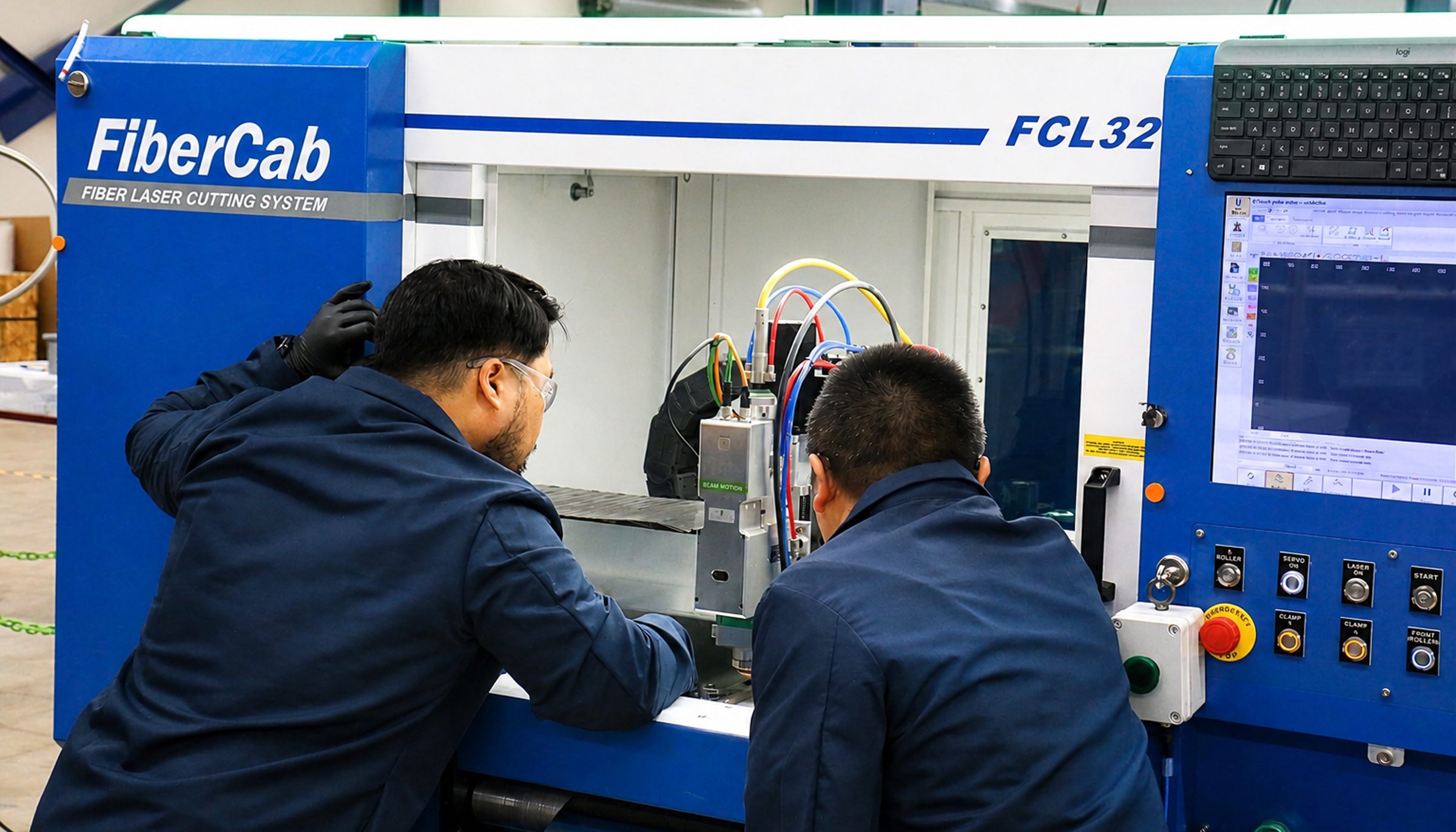
The move from an idea to a manufacturing process took Rojas to another set of collaborators. An ARPA-E program manager introduced him to the Washington Clean Energy Testbeds. There, EVOLOH worked with engineers and pilot-scale equipment to expand its electrode technology beyond benchtop experiments.
The technical difficulty included high-speed slot die coating. At industrial production speeds, coating thickness and uniformity must remain under control. A promising material is only part of that task. It also has to behave consistently while being processed in quantity. The Testbeds collaboration produced hundreds of meters of electrodes and helped refine the manufacturing method.
This is the less photogenic portion of building a technology business: repeatability, equipment settings, coatings that must stay even. Rojas credited the facility’s people and resources with helping EVOLOH secure its Series A financing. His route through the problem depended on other people’s practical expertise as well as his own research.
Money, materials and a customer’s deposit
In March 2024, EVOLOH announced a $20 million Series A led by Engine Ventures, with participation from a NextEra Energy Resources subsidiary and 3M Ventures. The round would support manufacturing expansion and further development of the Nautilus stack platform. Katie Rae, Engine Ventures’ chief executive and managing partner, was a member of the company’s board.
The relationship with 3M extended into how the product could be assembled. At CES 2025, Rojas and 3M business director Ryan Rogers were scheduled to discuss renewable hydrogen together. The presentation described using 3M’s extrudable VHB tape to support automated assembly of electrolyzers. A familiar materials company had a role inside the unfamiliar energy equipment.
There was also a commercial test of the argument. In December 2024, EVOLOH announced a supply agreement for 0.5 gigawatts of stacks with an unnamed American renewable energy developer. A non-refundable deposit secured the agreement, with supply tied to completion of the Lowell, Massachusetts manufacturing center. An agreement and a delivered installation are different milestones; the deposit nevertheless brought a customer’s money into the manufacturing plan.
Rojas’s company now spans a headquarters in Santa Clara and a manufacturing center in Lowell. That geography fits the work: research and testing on one coast, manufacturing development on the other. It also brings a founder’s abstract promise into contact with facilities, production schedules and deliveries.
March 2024
December 2024
Operation targeted for 2027
Financing, contracted supply and a planned pilot measure different things. These figures do not represent delivered capacity.
His early factory plans also favored existing buildings. In 2023, he described adapting brownfield facilities and using less floor space and capital than conventional factory proposals. It is a revealing preference for a founder with an extensive academic background: the production method should borrow what already works. Each familiar machine or available material reduces the number of new problems the company asks a customer or financier to accept at once.
The teacher inside the chief executive
Asked about leading the company, Rojas talks about helping colleagues develop. He enjoys explaining investment to scientists and technology to investors. Lawyers, financiers and researchers bring different vocabularies to the same business; he sees part of his job as making those conversations useful.
“The growth of a company is limited by the growth of the CEO.”
Jimmy Rojas, Hydrogen Innovators, 2025
It is a revealing principle for someone whose résumé contains five degrees. Formal education gave him considerable technical range. His account of leadership leaves room for the people around him to keep extending it. Teaching becomes reciprocal: colleagues who learn more can, in turn, ask more of the founder.
Public recognition arrived along the way. He joined the Breakthrough Energy Fellows program in 2021 and appeared on Forbes’ 2022 30 Under 30 list in Energy. The fellowship placed his work within a network designed to help climate inventions move toward commercial use. Awards may open a conversation; the equipment still has to earn the next one.
The next examination is inside a plant
In November 2025, EVOLOH announced successful testing of its megawatt-scale Nautilus stack and the start of commercial manufacturing. The company described modules sized for conventional shipping containers, a detail that makes the manufacturing philosophy tangible. Getting equipment to a customer belongs in the design brief, too.
Then, in May 2026, it announced an agreement for a commercial-scale pilot at a 3M manufacturing facility. The 2.5-megawatt S440 packaged system is planned to operate in 2027, subject to required regulatory approvals. The partners intend to collect performance data in a working industrial environment. 3M is now connected to the venture as investor, materials supplier and proposed host.
For Rojas, this is the examination that follows the degrees, grants and fundraising: a machine working where a customer needs it. His childhood inspiration involved leaving Earth. His present ambition depends on staying close to the details of making things here. A coating, a seal, a shipping container, a factory floor: each has a vote in whether hydrogen becomes ordinary enough to use.
Keep the conversation going
More from Rojas and the people building alongside him.
- EVOLOH
- Jimmy on LinkedIn
- World Hydrogen Week interview ↗
- ARPA-E conversation ↗
- Hydrogen Innovators: listen & read
- The Costa Rica-to-Stanford story
- Breakthrough Energy: Fellows biographies
- Electrode manufacturing at the Testbeds
- The 2024 financing announcement
- 3M’s CES 2025 presentation
- The December 2024 supply agreement
- The 2025 manufacturing announcement
- The planned 3M pilot