A computer is an awkward thing to move when somebody’s business depends on it staying put. The box has a destination. Its connections have consequences. Jim Dooling built a company around that inconvenience, starting in New York City in 1986 with complex technology relocations for Wall Street firms. Forty years later, the equipment has acquired different names and considerably greater appetites. The customer would still prefer a quiet Monday.
That preference gives Dooling’s career its shape. As founder, president and CEO of Align, he has spent four decades helping businesses change the systems they depend on. The work now extends across data center infrastructure and managed IT services. Behind those broad descriptions sits an unusually durable commercial problem: companies need new technology while continuing to use the old technology that pays for it.
Technology businesses enjoy announcing the future. Dooling’s business has to work out the sequence in which the future can be installed. There are buildings involved, along with power, networks, equipment and people who may answer to entirely different managers. A successful plan must survive contact with all of them. This is a career in the less photogenic details of progress, with occasional opportunities to dress for dinner.
A moving company for things that cannot stop
Align’s original Wall Street work put the company close to clients for whom a technology interruption could quickly become a business interruption. Relocation demanded an understanding of interconnected systems. Knowing where a machine belonged was one question; knowing what depended on it was another. The company’s subsequent expansion followed that complexity into designing and building infrastructure, migrating data and supporting ongoing operations.
Viewed across forty years, the continuity is striking. The assignment became larger as technology became more elaborate. A company that could help organize a complicated move had opportunities to help organize what came before and after it. Assessment, planning, construction and operation belong to the same chain of decisions. The mistake made at the beginning has a way of submitting its invoice much later.
The practical nature of the business gives its founder a particular vantage point. His clients encounter technology through deadlines, operating needs and decisions about where to put things. An attractive technical proposal has to fit that setting. Across the company’s expansion, the question becomes whether its people can understand enough of a client’s operation to make a change workable. That work can be difficult to describe in an anniversary speech. It becomes much easier to appreciate when a move is approaching.
The company’s history includes preparing clients for the Y2K transition and supporting business continuity and recovery after September 11, 2001. During the 2008 financial crisis, it diversified beyond financial services. Those episodes imposed different pressures. Together, they show a founder repeatedly adjusting the business around clients whose circumstances had changed, sometimes abruptly.
There is a distinction between having a long history and finding uses for it. An old solution can become a habit. A long relationship can offer advance notice that the solution needs replacing. Dooling’s account of Align’s evolution puts considerable weight on understanding where clients are going. That is a demanding promise for a service company: being useful today does not settle the question of tomorrow.
The architecture student and the empty room
Before Align, Dooling majored in architecture at Miami University in Ohio. Architecture makes an appealing point of entry to his later career. Rooms have constraints. Connections need routes. A decision that looks tidy on a drawing must remain workable when someone occupies the space. The resemblance is an editorial observation, but his interest in the practical arrangement of technology is explicit.
In a 2022 discussion with Align’s Tom Weber, Dooling placed network architecture near the beginning of data center planning. The network influences how power and cabling are arranged, how equipment can be maintained and how costs develop. Empty space offers choices. It also offers opportunities to make expensive choices in the wrong order.
“It really starts with the network design”
Jim Dooling, on planning a data center
He drew a useful distinction between hyperscale operators with repeatable plans and enterprise clients undertaking a major data center investment after a long interval. The latter may have to relearn both technology and the market for the services surrounding it. Experience, in this setting, means knowing which questions to ask before somebody starts running cable.
In March 2024, Align received recognition in the inaugural RedHawk50 program, which celebrates growing private businesses founded or led by Miami University alumni. Dooling credited his university experience with helping shape his entrepreneurial journey. It was a public return to the institution where he had studied a different sort of building. His eventual business would give the word infrastructure a rather broad job description.
A founder has to let the business change
Founding a company gives a person considerable responsibility for its early identity. Keeping it useful can require loosening that identity. One of the more revealing accounts of Dooling’s leadership comes from Vinod Paul, now president of Align Managed Services. Paul described being attracted by the company’s reputation and by the opportunity Dooling gave him to develop its managed services operation.
Paul’s account includes a difficult change in direction. Align moved toward a more specific focus on alternative financial services and changed its service model. That involved decisions about existing clients as well as technology. He credited Dooling and the management team with supporting choices that could make familiar business relationships uncomfortable.
This is a useful glimpse of the founder away from the anniversary photograph. An existing customer represents income, history and people who expect a call back. Narrowing a business asks management to weigh those obligations against the company it wants to become. Paul’s recollection gives the change a human cost that a diagram of service offerings would politely omit.
The resulting organization has two principal businesses. Professional Services covers technology infrastructure across the data center lifecycle. Managed Services provides IT and cybersecurity services to the alternative investment industry. The division makes Dooling’s long-running challenge visible: retain enough shared experience to be dependable, while developing expertise specific enough to matter to a particular client.
The new machines need old-fashioned agreement
Artificial intelligence has given infrastructure providers another set of physical demands to consider. In a 2024 discussion, Dooling contrasted traditional cabinets averaging about 10 kilowatts with AI configurations requiring 50 kilowatts or more. These were examples from his discussion, rather than specifications for every installation. Their point was scale: equipment requirements can change the assumptions behind a room.
Illustrative cabinet loads discussed in 2024. Requirements vary by installation; the longer bar represents 50 kW.
His concerns included security, sustainability, compliance and the balance between innovation and cost. He also emphasized coordination among real estate, facilities and technology teams. It is an almost domestic requirement for such formidable machinery: the people sharing responsibility for the building must talk to one another.
That observation connects the present to Align’s origins. A relocation needs a common plan because different systems depend on each other. A new data center needs one because different departments depend on each other. Faster equipment can increase the stakes of a disagreement. It cannot chair the meeting that resolves it.
Who gets to build the next forty years?
In August 2026, Align appointed Noel Kilcooley chief technology officer. Dooling highlighted more than 25 years of Kilcooley’s involvement in the company’s development. His responsibilities include technology strategy and executive oversight of AI, cybersecurity and compliance. The appointment places some of the newest demands on the business in the hands of someone who knows a substantial portion of its past.
That choice sits alongside the culture described in Dooling’s company biography: a family-like atmosphere and a willingness to take on difficult work. Such descriptions become more interesting when attached to specific careers. Paul’s opportunity to develop managed services and Kilcooley’s move into the CTO position offer concrete examples of colleagues taking responsibility for what the company becomes.
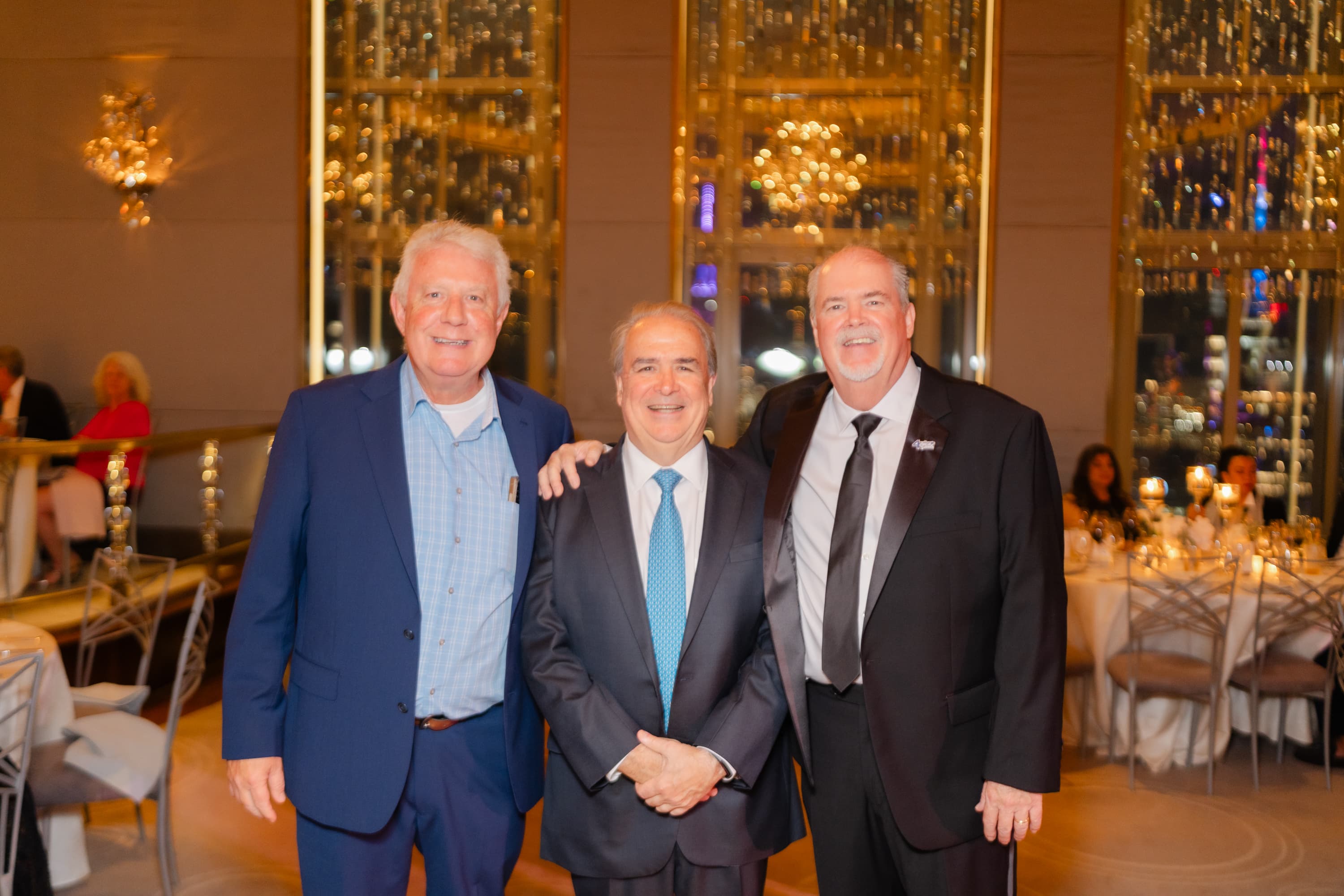
Align marked its fortieth anniversary with gatherings in Virginia and New York. The Virginia celebration brought together professionals and supporters in a region central to the data center industry. The New York weekend returned the business to its founding city, culminating at the Rainbow Room with family, partners, longtime supporters and current and former colleagues.

The Rainbow Room also supplied a change of perspective. Align began in the city with the practical task of getting clients’ technology from one place to another. Its fortieth year brought people back together there. Among those invited were former colleagues as well as current ones, a reminder that a company’s history extends beyond its latest organization chart. The business had changed shape several times. A celebration could accommodate those earlier versions in the same room.
There is something fitting about celebrating this particular career in a room full of people. The professional story is crowded with networks and systems, but the decisions belong to clients, colleagues and partners. Forty years of business produces a long list of introductions. At an anniversary party, some of the connections can finally dispense with a project schedule.
“Our clients have never stopped evolving, and neither have we.”
Jim Dooling, October 2026
Dooling’s stated ambition for the next decade continues that pattern: develop the capabilities clients will need as their businesses change. The founders’ dilemma remains on the desk. He must preserve the experience people trust while making room for work the company has yet to learn. For someone whose early business involved moving technology, it is a familiar kind of responsibility. The destination matters. So does everything that has to keep running on the way there.