Barry Sloane has a useful correction for anyone tempted to call his business an overnight success. When Bob Coleman congratulated him in May 2025, Sloane thanked him, then adjusted the clock: “It’s an overnight success - it just took over twenty-two years to get here. That’s all.” The joke is economical. The career behind it has been rather less so.
There was a family store in Brooklyn. There were department stores, mortgage securities, investment banks, an earlier company of his own, and eventually a spare bedroom in a New York apartment. Much later came a national bank. Sloane, the founder, chairman, president and chief executive of NewtekOne, has spent those years trying to bring a broad collection of financial and business services within reach of independent owners. He is still adjusting the machinery.
The counter before the capital markets
His early preparation involved actual merchandise. After graduating from the University at Buffalo in 1981, Sloane entered the buyer training program at Abraham and Strauss, preparing for the family retail business. His father and grandfather had sold housewares from a pushcart on New York’s Lower East Side. This was a family in which commerce had an address, a customer and something to carry home.
He worked at the department store and for his family, then changed direction. By 1982 he was at Paine Webber selling mortgage-backed securities. The transition sounds abrupt on a résumé: from choosing goods to selling claims on streams of mortgage payments. Both jobs, however, required someone on the other side of the transaction to believe that the thing being offered was worth buying.
Sloane later credited Wall Street with teaching him how to recover after a setback. His account of his upbringing emphasized fair treatment and hard work. Those two educations sit together in his story: an understanding of competitive markets and an attachment to the person running the shop.
He also earned an MBA in Finance at New York University, following a bachelor’s degree completed magna cum laude. The academic preparation was followed by a series of jobs in which financial products had to be understood, priced and sold. Bear Stearns, L.F. Rothschild and E.F. Hutton feature in that earlier securities career. The list reads like a small exhibit of Wall Street names, several of which have since disappeared from the street.
At Donaldson, Lufkin & Jenrette, where he was a senior vice president from 1988 to 1991, he directed mortgage-backed securities sales. He then founded and ran Aegis Capital Markets, a consumer-loan origination and securitization business. From 1993 to 1995 he was a managing director at Smith Barney, directing commercial and residential real estate securitization. Before Newtek, he had already practiced both working inside a large institution and starting a business.
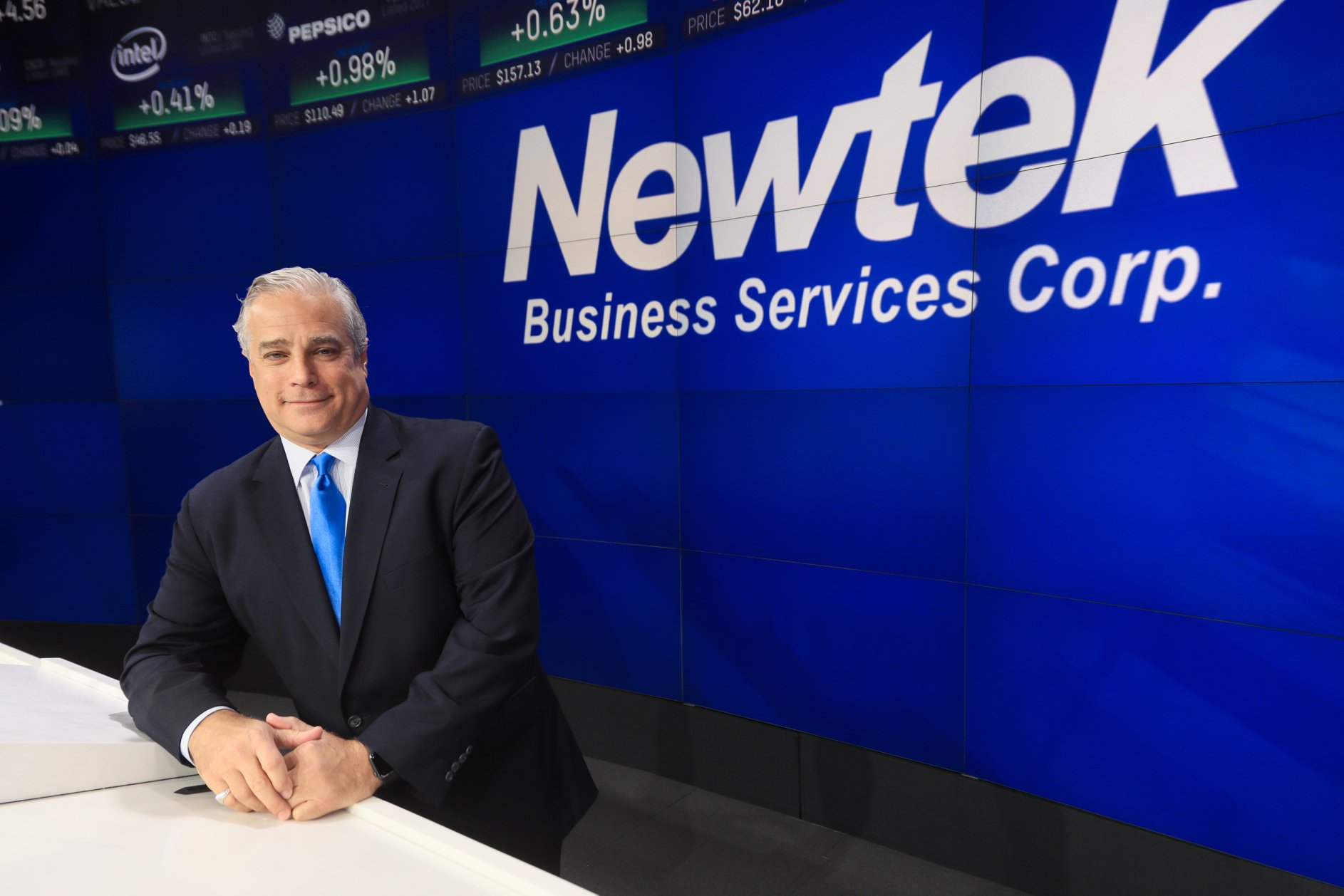
A spare room with a long lease on an idea
Newtek was founded in 1998, out of a spare bedroom in a New York City apartment. Sloane has described it as bootstrapped. The modest setting supplies a pleasing origin image, but the more revealing detail is how consistently he describes the intended customer. He prefers “independent business owners,” a phrase that puts a person back into the abbreviations used by financial services.
In a 2025 investor conversation, he described the original purpose as providing a full menu of business and financial solutions. By then, the company encompassed roughly 600 employees, he said. These were different surroundings from an apartment bedroom, yet the explanation of what the business existed to do remained familiar. The ambition was to cover more of an owner’s working day.
A loan is one part of that day. Taking a customer’s payment, paying employees and arranging business insurance are others. Newtek’s service range put those activities alongside financing. The logic is readily understood by anyone who has run a small operation: the same owner may have to make decisions across all of them, often between doing the work that actually earns the revenue.
- RetailThe family business
- 1982Mortgage securities
- 1998Newtek begins
- 2023A bank joins
The day the plumbing changed
On January 6, 2023, Newtek completed the acquisition of National Bank of New York City, a 59-year-old institution. It renamed the business Newtek Bank, National Association, and became a financial holding company. It also withdrew its election to operate as a business development company. A long-established business had changed its financial structure.
The purchase price was $20 million, plus certain expenses. Newtek contributed another $31 million in cash and two subsidiaries to the bank. The transaction brought an operating agreement with the Office of the Comptroller of the Currency covering matters including capital, liquidity and concentration limits. These are consequential details behind a short acquisition announcement. The new structure came with its own obligations and constraints.
For Sloane, the attraction was a different way to fund the lending operation and a more regular relationship with customers. A business owner might need financing occasionally; a bank account brings the institution into the ordinary movement of money. That offered a place to connect services Newtek already provided.
Converting the idea into daily operations required staff, software, processes, wiring capabilities, accounts, policies and procedures to move into place. Sloane discussed those details during the company’s second-quarter 2023 call. The list is refreshingly unceremonial. Acquisitions may be photographed with smiles; someone still has to make sure the money can be wired.
He also clarified the company’s much-repeated description of a model without bankers. Newtek employed people with banking expertise. What it dispensed with was the traditional commercial banker and business-development structure, along with branches. The distinction matters when explaining a business that needs credit judgment and customer service even as it changes how those functions are delivered.
A lending record, and a harder audience
The strategy had an audience to persuade. After Newtek announced its proposed bank deal in 2021, its shares fell more than 30% on the announcement day. Dividend expectations were part of the problem: investors accustomed to a business development company had reasons to question what a bank conversion would mean for their income. Sloane was proposing a different future for a security they already owned.
He argued that deposits could provide cheaper funding, that more earnings could be retained, and that customer relationships could deepen. For a founder, that is a familiar tension with an unusually concrete financial expression. The institution you want to build may require shareholders to reconsider the reason they bought it.
“We make loans and we sell them.”Barry Sloane, 2025
By fiscal 2024, Newtek Bank had reached approximately $2.1 billion in SBA 7(a) approved dollar volume, up about 70% from the previous fiscal year. That placed it first by approved dollars. The measure deserves its full name: approvals are different from funded loans, and dollar volume is different from the number of borrowers served. Sloane himself distinguished the SBA’s fiscal-year figures from Newtek’s calendar-year funding figures.
Approximate approved 7(a) loan volume
First by approved dollars, not loan count
The lending model also carried risk. In the second quarter of 2024, noncurrent loans represented 2.5% of Newtek’s total loans, against an industry average of 0.91%. Sloane acknowledged that charge-offs would run higher than at a conventional bank. His argument rested on underwriting, reserves and the returns earned for taking that risk. Growth figures alone could never settle that argument.
In 2025, he described the unusual rhythm of making loans and selling them, while Newtek developed an alternative loan program alongside its SBA operation. Longer repayment periods were part of the appeal to borrowers. Even as deposits grew, investors were still working through a business that combined banking with loan sales and securitization. Sloane remained pleased with the operational direction; the market’s enthusiasm was less dependable.
Keeping more of what he built
Then, in August 2026, the emphasis shifted again. NewtekOne announced that it would retain more guaranteed portions of SBA 7(a) loans on its balance sheet. Historically, it had typically sold those portions within 90 days of origination, recognizing gain-on-sale income. The proposed change would build more recurring net interest income instead.
Sloane connected the decision to the bank’s deposit gathering capabilities, which he said had exceeded initial expectations. Management expected net interest income to account for at least 30% of total revenue in the second half of 2026 through 2027, compared with 21% in 2025. These were expectations, with future results still to establish the outcome. The acquisition had created choices about what to keep as well as what to sell.
The work on connecting services continued. In September 2026, Newtek Bank announced links to Sage, Xero, FreshBooks and Restaurant365, adding to its existing QuickBooks connectivity. Banking information could connect with applications owners already used to reconcile transactions and follow financial performance. In October, it announced Zelle for eligible business clients. The useful test for such additions is how they fit into the customer’s ordinary tasks.
Sloane’s interests also extend to the USA Track & Field Foundation, which appointed him to its board in 2020. The foundation supports elite athletes and youth programs through grants and other assistance. It is another setting in which resources have to reach people pursuing a demanding undertaking, although a business biography cannot turn a board appointment into an explanation of someone’s entire character.
His own explanation keeps returning to the business owner. In a 2026 interview, Sloane recalled working in his father’s store from age eleven, watching the direct dealings with customers and employees. He now advocates digital access backed by human service, available when owners need it. The route has involved securities desks, corporate structures and a bank charter. At the other end of the screen, someone still has a shop to run.