The accounting department noticed what the lawyers largely did not: a smaller bill. In a September 2026 customer account published by US Signal, Chicago litigation firm Swanson, Martin & Bell reported monthly cloud savings of 20–25% after moving to OpenCloud. A price increase had prompted the reassessment. The migration also hit a VPN routing problem and an early Windows Server 2025 compatibility issue. Keeping the old environment running gave the team room to resolve the latter. This is a useful place to meet US Signal: between the promise of a cheaper cloud and the work required to get there.
- US Signal combines its own fiber network with data centers, cloud platforms, and IT operations.
- It serves enterprise buyers and the managed service providers who serve other businesses.
- OneNeck widened its geography; OpenCloud widened its options for customers reconsidering virtualization.
- The lesson for buyers: price the whole move, test the awkward applications, and rehearse recovery.
The cloud has a street address
Cloud computing has an excellent publicist. It sounds weightless. US Signal’s story begins with something considerably less ethereal: fiber routes across the Midwest. The company’s anniversary history dates that beginning to 2001, followed by colocation in 2002, internet services in 2003, and infrastructure-as-a-service in 2011. The order matters. A network came first; services accumulated around it.
Today, the business sells places to put computers, connections between those places, rented computing capacity, and people to manage the result. Customers can colocate equipment they own, use hosted infrastructure, connect offices, protect data, or commission a migration. Managed services extend an internal IT team; professional services help design and implement changes. The practical appeal is the ability to assemble those pieces through one provider.
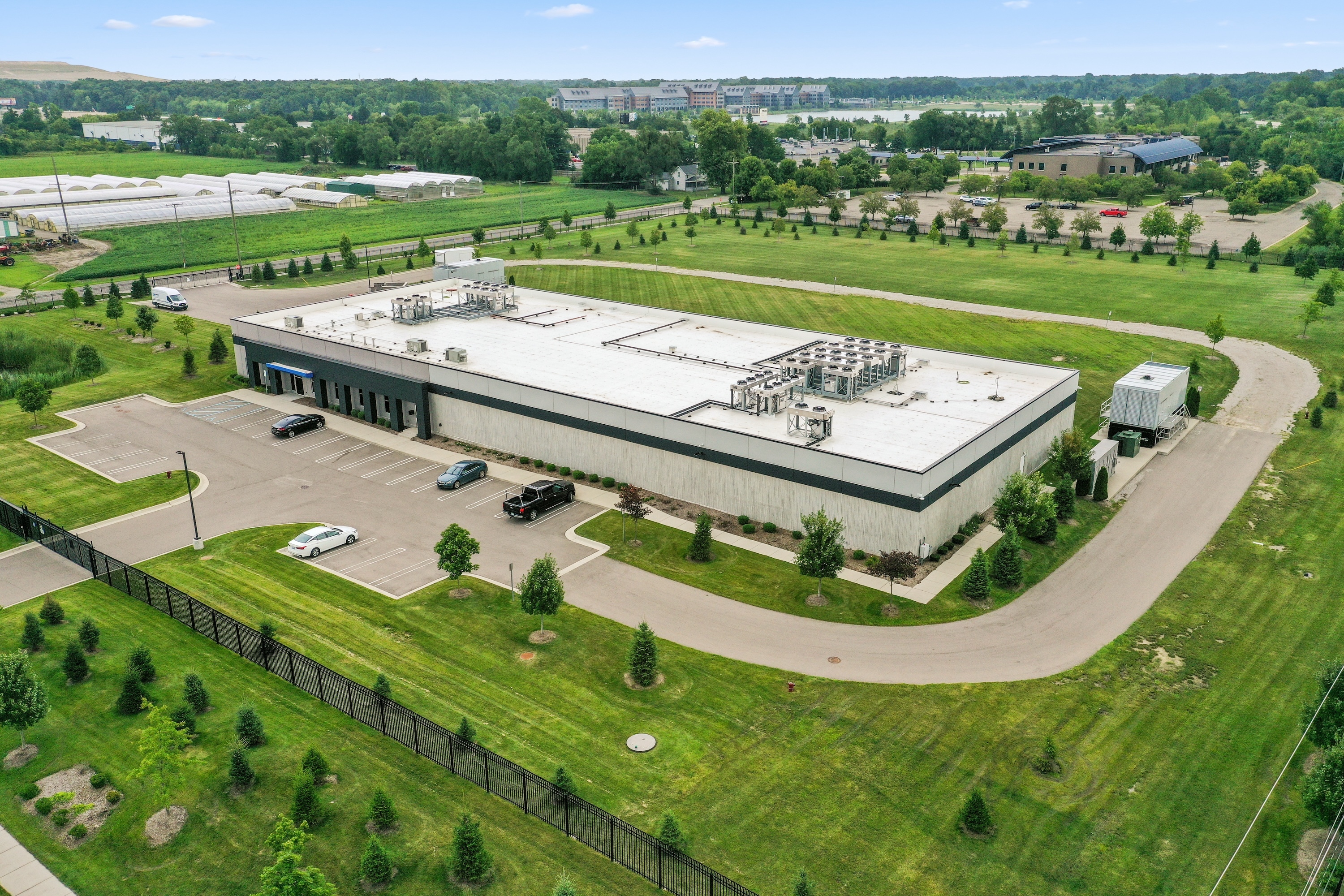
That makes US Signal a hybrid infrastructure company. It occupies the space where an organization needs cloud resources but also has existing servers, network requirements, recovery obligations, and applications that deserve individual attention. Its network ownership gives it a physical foundation for that offer. The advantage is meaningful when connectivity and workload placement need to be planned together.
Six buildings, and a different map
Igneo Infrastructure Partners completed its purchase of US Signal in February 2023. At the time, the company reported eight data centers and a 9,500-route-mile fiber network. The new owner was an infrastructure investor: an apt match for a business whose ambitions require buildings and construction budgets.
In September 2024, US Signal completed its acquisition of OneNeck IT Solutions and OneNeck Data Center Holdings from Telephone and Data Systems. The transaction took its data center count from 10 to 16, quadrupled square footage, and more than tripled commercial power under management. Phoenix, Denver, and Bend expanded the western footprint; other additions included Madison, Minneapolis, and Des Moines.
Data centers at closing. A historical comparison, not a current facility count.
OneNeck also brought a Nutanix cloud practice and managed-services capabilities. It had served more than 1,000 customers across 45 states. Those customers included organizations in banking, education, government, healthcare, manufacturing, and retail. For US Signal, geographic expansion arrived with operating knowledge and customer relationships attached.
A licensing problem becomes a product opportunity
The virtualization market supplied another reason to change. NetSource One, a Saginaw managed service provider, describes VMware licensing uncertainty as the trigger for moving internal and customer workloads to OpenCloud. Predictable costs matter twice to an MSP: once when it buys infrastructure, and again when it quotes a price to its own clients.
“Our suggestions were actually reflected in the evolution of the platform.”
Ed French, VP and CIO, NetSource One
NetSource One participated in US Signal’s advisory board. Its published customer account reports lower costs, fewer support tickets, and improved quoting predictability after the move. Those are customer-reported outcomes. The interesting organizational detail is the feedback loop: a buyer helped shape the platform it would later sell around.
OpenCloud is built on Apache CloudStack, with a KVM foundation. US Signal positions it for enterprise infrastructure, VMware alternatives, and workloads moving from public cloud. Its offer includes computing, storage, networking, migration support, and US-based engineering support. The pitch is understandable: maintain useful flexibility while making infrastructure economics easier to forecast.
The product-tour page offers month-to-month arrangements as well as discounted commitments, with consumption that can scale up or down. This is a service business earning money from infrastructure use and contracts, alongside connectivity, colocation, managed operations, project work, and hardware resale. A flexible contract still deserves a careful reading; a lower unit price is only one component of operating cost.
Recovery is a number you must earn
A Nutanix account of US Signal’s work with an unnamed industrial equipment business makes recovery concrete. The deployment supported more than 370 virtual machines and over 315 AutoCAD virtual-desktop users. Production infrastructure in Madison connected to disaster-recovery facilities in Minneapolis.
The targeted window of potential data loss.
The targeted time to restore service.
Those were the deployment’s reported recovery objectives, rather than universal terms for every US Signal customer. The distinction matters. A recent copy of data and a working application are different achievements. Recovery design has to account for both. The company’s published technical standards explicitly tie achievable recovery times to simulated failovers, environment size, and available bandwidth.
Security brings its own prerequisites. In a published account involving a Michigan financial institution, US Signal describes accelerating a Cloudflare deployment during a DDoS attack. Mitigation took effect within 15 minutes of completing the migration to Cloudflare’s network. The ordinary implementation window was two weeks; the emergency cutover compressed planning and configuration work.
The transferable lesson is preparation. Protection can depend on routing, DNS, access rules, and coordination with outside services. A dramatic response time tells you little unless you know when the clock started. Buyers should ask what must happen before protection or recovery becomes effective, and what remains to be cleaned up afterward.
The next cloud upgrade involves electricians
In June 2025, US Signal described more than $200 million of national platform expansion supported by Igneo. The plan included 3MW of additional commercial power at Detroit Metro, 6MW at Des Moines, and over 1,000 miles of dense fiber and conduit. These are announced investment and capacity plans, not a receipt for completed infrastructure.
A February 2026 announcement put the Ohio and Indiana fiber construction at approximately 30% complete, with remaining routes scheduled for early 2027. That dated progress report is more useful than treating a construction ambition as an operating asset. Capacity becomes available route by route, facility by facility.
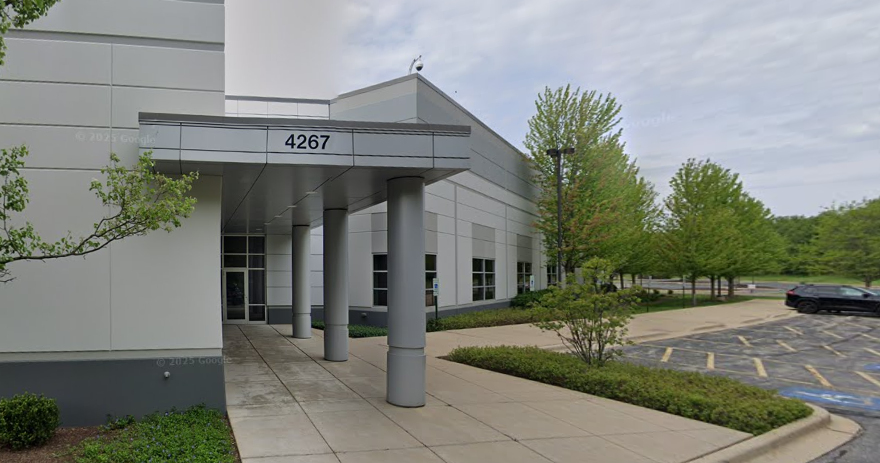
Aurora supplies another example. Acquired in December 2025, the Illinois facility became the subject of a phased expansion announcement in June 2026. The first phase called for replacing the UPS system and raising UPS-supported capacity from about 1.35MW to 3MW. A subsequent phase targeted 6MW of commercial power and 4MW of UPS-supported capacity. Future utility expansion remained a further ambition.
Meanwhile, OpenCloud ARM Compute became available in August 2026. Its Ampere-powered infrastructure targets CPU-based AI inference, smaller language models, and cloud-native applications. US Signal’s AI offer therefore includes both the physical capacity to host workloads and another architecture on which to run them. Suitability still depends on the application.
Choose the workload before the cloud
The alternatives depend on what a buyer needs. AWS, Azure, and Google Cloud are public-cloud options; Equinix and Digital Realty offer colocation alternatives. A regional managed provider may compete for a more hands-on infrastructure assignment. These businesses overlap with different slices of US Signal’s portfolio. Comparing company names alone obscures the actual decision.
My reading of US Signal’s position is that it appeals to organizations wanting infrastructure choices with operational help attached. Its combination of fiber, facilities, hosted platforms, and engineers can reduce the number of separate relationships an IT team must coordinate. Concentrating those relationships also makes supplier evaluation more consequential.
Copy the questions its customer stories provoke. Which applications can move unchanged? Which deserve rebuilding? What downtime can the business accept? Does the cost comparison include migration labor, networking, backup, and ongoing support? Ask for a recovery exercise and an exit plan before deciding that predictable pricing means predictable outcomes.
The approach becomes less attractive when a workload depends heavily on services specific to another cloud, when geography cannot meet a latency requirement, or when migration costs exceed the likely benefit. Those are buying considerations, not verdicts on a provider. US Signal’s story offers a useful reminder: cloud choices eventually become decisions about software compatibility, physical distance, bills, and the people responsible when something stops working.
Follow the fiber
Explore US Signal, its OpenCloud platform, and the product-tour request. Visit the newsroom and resource library for company updates and customer accounts.
Follow LinkedIn, X, or Facebook. Watch webinars and customer videos on US Signal’s YouTube channel, or explore its Rethink Your Cloud Strategy session.